
Entina Tina2C
4.4Editor score
Starts in 8 minutes
AI STEM learning modules
WiFi and offline control
Discover the top 10 3D printers for educational use. Compare features, speed, and safety to find the perfect device for classrooms and STEM learning.
Selecting the right 3D printer for educational purposes requires careful consideration of safety, ease of use, and learning potential. These devices transform abstract concepts into tangible objects, fostering creativity and technical skills in students of all ages.
We have evaluated ten leading models based on their reliability, print quality, and compatibility with educational workflows. Our analysis includes detailed reviews of speed, calibration ease, and safety features to help you make an informed decision.
Each product listing includes real user ratings, technical specifications, and direct links for your convenience. Please note that pricing and availability may fluctuate, so checking the latest offers before purchasing is always recommended for the best value.
4.4Editor score

4.7Editor score

4.6Editor score
This side-by-side comparison highlights the key specifications of each printer to help you quickly identify the best fit for your educational needs and budget.




The Bambu Lab A1 stands out as the top choice for educational environments due to its exceptional combination of speed, ease of use, and reliability. With a rating of 4.7, it offers a seamless experience for students and teachers alike, ensuring that time is spent on learning rather than troubleshooting.
We may earn a commission when you buy through this link, at no additional cost to you.
Its full-auto calibration system eliminates the tedious manual leveling often required by other printers, making it accessible for beginners. The active flow rate compensation ensures consistent print quality, while the quiet operation with active motor noise canceling allows it to fit well in a classroom setting without disruption.
While the AMS lite system for multi-color printing is sold separately, the base unit is robust and ready to use right out of the box. The trade-off of an open frame means it may struggle with warping materials like ABS without additional enclosure, but for standard PLA and PETG, it excels.
For educators seeking a reliable, low-maintenance printer that inspires creativity without technical hurdles, the A1 is the ideal investment. Its user-friendly interface and simplified touchscreen make it easy for students to manage their own prints independently.
The A1's auto-calibration reduces setup time significantly, allowing educators to focus more on curriculum and less on machine maintenance. This reliability is crucial for lesson planning where time is limited.
Students can experiment with rapid prototyping thanks to the blazing-fast acceleration. The ability to swap nozzles quickly encourages learning about different print resolutions and material properties.
We may earn a commission when you buy through this link, at no additional cost to you.
The Entina Tina2C is an excellent entry-level option for educational use, particularly for younger students or budget-conscious schools. With a rating of 4.4, it simplifies the 3D printing process, allowing users to start printing in as little as 8 minutes.
We may earn a commission when you buy through this link, at no additional cost to you.
Its compact design and fully assembled nature mean it arrives ready to print, minimizing setup time. The integration of AI-powered search and over 3000 models provides endless inspiration for projects, while the 20+ creative DIY modules directly support STEM learning objectives.
The small build volume may limit larger projects, but for educational models and small prototypes, it is sufficient. Additionally, the reliance on a specific app ecosystem may require students to adapt to a controlled software environment.
Educators looking for an affordable, easy-to-use device that encourages creativity without complex setup will find the Tina2C ideal. Its focus on STEM modules and safety makes it a great choice for elementary or middle school classrooms.
Designed with rounded edges and a low-noise operation, the Tina2C ensures a safe environment for children. The integrated LED lighting helps students see their prints clearly without glare.
The app provides regular STEM courses and interactive tools, turning printing into a structured learning experience. This helps students understand the design process rather than just outputting models.
We may earn a commission when you buy through this link, at no additional cost to you.
The Ugee Funbox is designed with unparalleled safety and educational focus, making it a premium choice for home and classroom use. Its UL GREENGUARD certification ensures clean air, which is critical for enclosed spaces like classrooms or bedrooms.
We may earn a commission when you buy through this link, at no additional cost to you.
The fully enclosed body with an anti-pinch door protects students from hot surfaces, while the built-in H12 HEPA filter captures fine particles. Its AI-powered features allow kids to turn text or drawings into 3D models, fostering creativity and engineering skills.
While it only supports single-color printing, the ability to assemble parts teaches planning and spatial reasoning. The premium price is justified by the safety certifications and advanced AI tools, though it may not suit every budget.
For environments where safety and ease of use are paramount, the Funbox is unmatched. It is an excellent tool for teaching design thinking and problem-solving to students of all ages without compromising on safety standards.
The anti-pinch door and cool-touch exterior prevent accidents during printing. This makes it safe for unsupervised use or younger students working independently.
The UFun App includes guided video courses that teach design thinking and spatial reasoning. This turns the printer into a comprehensive educational tool rather than just a toy.
We may earn a commission when you buy through this link, at no additional cost to you.
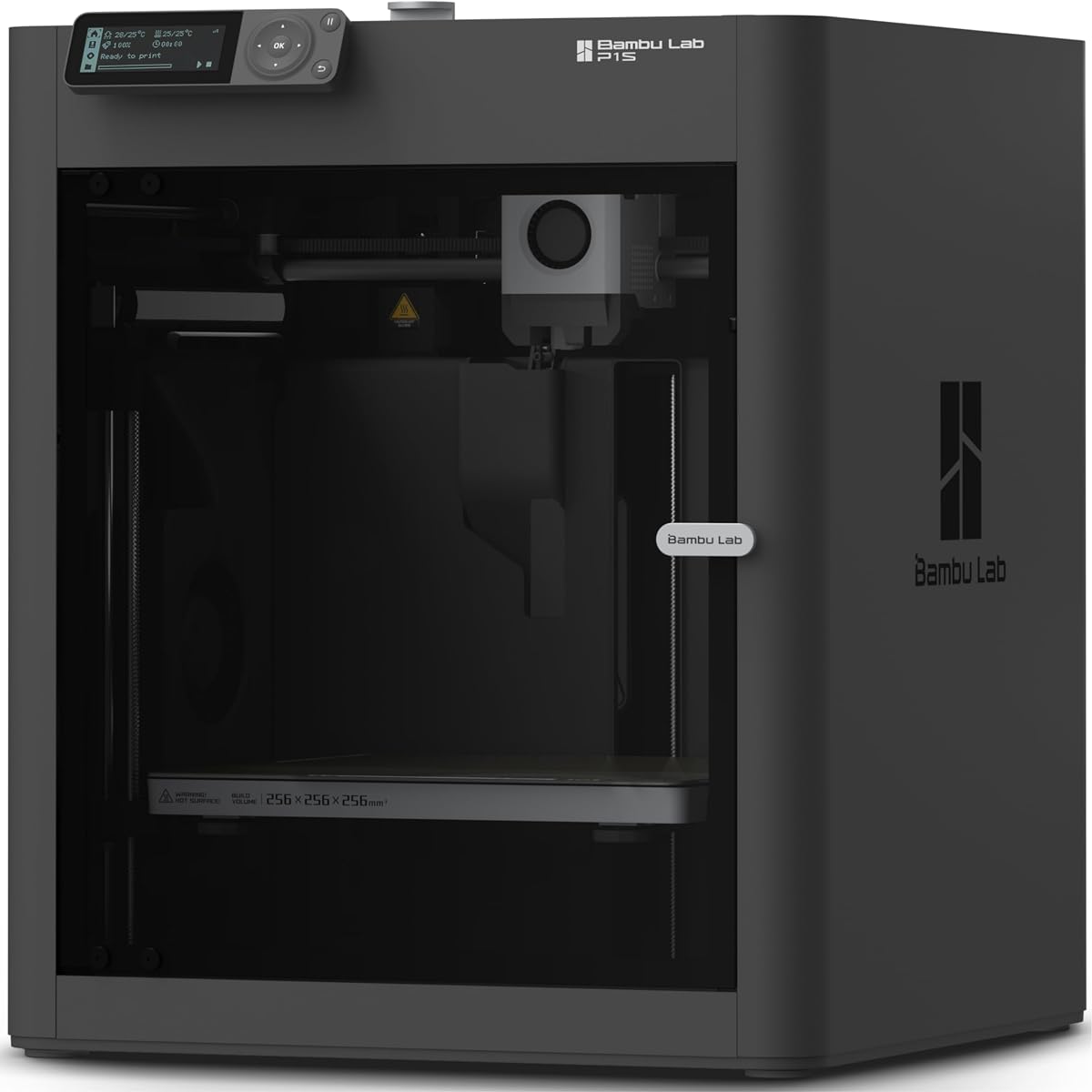
The Bambu Lab P1S offers an enclosed design that expands material compatibility to include ABS and ASA, essential for durable educational models. Its fast setup and reliable performance make it a strong choice for advanced STEM projects.
We may earn a commission when you buy through this link, at no additional cost to you.
The enclosed chamber maintains stable temperatures, preventing warping and ensuring consistent prints. This feature is particularly useful for engineering materials that require higher heat. Its high-speed printing capabilities allow for more rapid prototyping in educational settings.
While it is more expensive than open-frame models, the ability to print with stronger materials adds significant value. However, multi-color printing requires the AMS system, which adds to the overall cost.
For schools needing robust, durable parts or experimenting with engineering filaments, the P1S is an excellent investment. Its reliability and speed ensure that students spend more time creating and less time waiting.
Support for ABS and ASA allows for functional, weather-resistant parts. This expands the scope of projects from toys to mechanical components.
Auto bed leveling ensures high-quality prints with minimal intervention. This reduces frustration and helps maintain focus on the educational project.
We may earn a commission when you buy through this link, at no additional cost to you.
The Flashforge AD5M impresses with its high-speed capabilities and robust all-metal construction, ideal for environments requiring efficiency. Its auto-calibration system simplifies setup, making it accessible for students and teachers alike.
We may earn a commission when you buy through this link, at no additional cost to you.
The CoreXY motion structure ensures stability and low noise during operation, which is beneficial in shared spaces. The quick-swap nozzle system allows for easy maintenance and experimentation with different nozzle sizes for varying print resolutions.
Power-loss recovery ensures that interrupted prints can be resumed, saving time and material. However, its open frame may not be suitable for printing materials that require high ambient temperatures or have odors.
For educational settings prioritizing speed and reliability without a high cost, the AD5M is a strong contender. It supports rapid iteration and learning, allowing students to test and refine designs quickly.
With 600mm/s speeds, print times are significantly reduced. This allows for more iterations within a single class session or lab period.
The all-metal frame provides stability, reducing vibration and improving print quality over time. This is crucial for maintaining consistent results in a busy classroom.
We may earn a commission when you buy through this link, at no additional cost to you.
The Flashforge Adventurer 5M offers powerful performance with its 600mm/s speed and direct extruder capable of reaching 280°C. It is designed for efficiency, enabling rapid prototyping in educational environments.
We may earn a commission when you buy through this link, at no additional cost to you.
Features like auto bed leveling and 3-second nozzle changes simplify the workflow, reducing downtime between projects. The real-time app monitoring allows teachers to check progress remotely, ensuring smooth operation during class hours.
While its user ratings are slightly lower, its technical capabilities remain strong. The open frame design is suitable for PLA and PETG but may struggle with materials requiring enclosed chambers due to temperature constraints.
For schools needing a fast, affordable printer for standard materials, the Adventurer 5M delivers value. Its speed and app integration make it a convenient choice for active educational programs.
The 280°C extruder supports a wide range of filaments, including high-temperature engineering plastics. This allows for more advanced material exploration in STEM labs.
Teachers can oversee multiple printers via the app, optimizing workflow management. This feature is essential for classrooms with limited supervision time.
We may earn a commission when you buy through this link, at no additional cost to you.
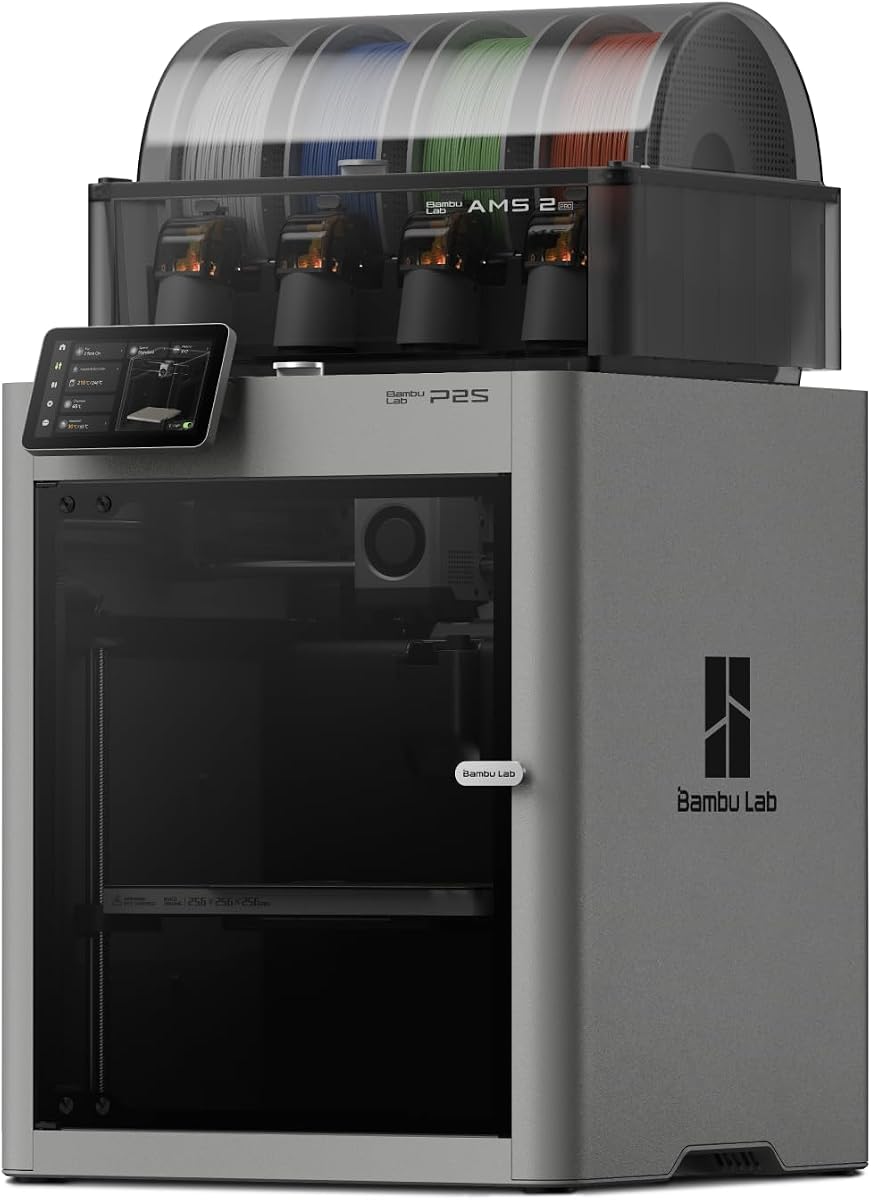
The Bambu Lab P2S Combo provides professional-grade performance ideal for advanced educational and research environments. With integrated AMS 2 Pro, it enables multi-color and multi-material printing with precision.
We may earn a commission when you buy through this link, at no additional cost to you.
The adaptive airflow system adjusts cooling and heat retention dynamically, ensuring high-quality results across different materials. Its AI failure detection adds reliability, making it a practical choice for unsupervised printing in schools.
While it offers exceptional quality, the high cost may limit its availability to well-funded institutions. The drying feature also helps maintain filament integrity, reducing waste and print failures over time.
For universities or advanced high schools seeking top-tier capabilities, the P2S is an excellent choice. It supports complex projects and professional outcomes, preparing students for real-world engineering and design challenges.
The drying feature keeps ABS and PVA dry, ensuring consistent print quality. This is essential for engineering filaments that absorb moisture easily.
Multi-color printing allows students to create complex assemblies without manual changes. This accelerates prototyping and enhances the visual quality of models.
We may earn a commission when you buy through this link, at no additional cost to you.
The Flashforge Adventurer 5M offers exceptional value with its high-speed capabilities and user-friendly features like auto leveling and vibration compensation. Its design minimizes manual adjustments, saving valuable instructional time.
We may earn a commission when you buy through this link, at no additional cost to you.
With a robust heating system and run-out sensor, it ensures reliable operation even during long prints. The ability to recover from power outages reduces material waste, making it efficient for educational use.
While it lacks an enclosed chamber, its speed and reliability make it suitable for standard PLA and PETG projects. The open design allows for easy access and visibility, which can be beneficial for teaching the mechanics of printing.
For educators seeking a cost-effective solution that balances performance and ease of use, the Adventurer 5M is an ideal choice. It supports rapid learning and experimentation without breaking the budget.
Filament run-out and power loss recovery features prevent interruptions and waste. This ensures continuity in classroom workflows and reduces frustration.
Vibration compensation maintains print quality even at high speeds. This allows students to experiment with fast prints without sacrificing detail.
We may earn a commission when you buy through this link, at no additional cost to you.
The Snapmaker U1 stands out for its ability to handle complex multi-material and multi-color prints seamlessly. With four independent toolheads and a 5-second tool change system, it simplifies the workflow for advanced projects.
We may earn a commission when you buy through this link, at no additional cost to you.
Its open-source software and large build volume provide flexibility for creating functional parts and detailed prototypes. The reduction in filament waste compared to traditional systems makes it efficient for sustained educational use.
While the learning curve for multi-material printing can be steep, the benefits for engineering and design education are significant. Students can create parts with varying properties or colors in a single print run.
For advanced technical programs or makerspaces, the U1 offers unmatched versatility. It enables students to explore complex design challenges and produce sophisticated prototypes without manual intervention.
Automatic tool switching reduces downtime and waste, enabling efficient production. This is vital for projects requiring multiple materials or colors.
The ability to mix rigid and flexible materials prepares students for real-world product design. This bridges the gap between learning and professional application.
We may earn a commission when you buy through this link, at no additional cost to you.
The Bambu Lab A1 Mini is a compact solution that brings the power of the A1 series to smaller spaces. Its full-auto calibration and quiet operation make it suitable for desktop use in offices or classrooms.
We may earn a commission when you buy through this link, at no additional cost to you.
With the AMS lite included in the combo, students can experiment with multi-color designs without additional purchases. Its speed and accuracy ensure that small prototypes are produced quickly and with high fidelity.
While the build volume is smaller than the standard A1, it remains sufficient for most educational projects. The trade-off of size is worth the flexibility it offers for tight spaces or individual student use.
For classrooms needing to accommodate multiple printers or limited space, the A1 Mini is an excellent option. It maintains the high performance of its larger sibling while fitting into diverse educational environments.
The compact footprint allows for multiple units in a small room. This supports individual learning stations and shared classroom use.
Multi-color capability with included AMS encourages creativity. Students can learn about color management and design without extra cost.
We may earn a commission when you buy through this link, at no additional cost to you.
Selecting the right 3D printer for education involves balancing safety, performance, and ease of use. This guide outlines key factors to consider to ensure a productive learning experience.
For classrooms or homes with children, safety features like enclosed bodies, anti-pinch doors, and certified air filtration are critical. Look for models with UL GREENGUARD certification and cool-touch exteriors to prevent burns and reduce exposure to fumes. An enclosed chamber also improves print quality for certain materials and ensures a safer environment for unsupervised operation.
Time is a precious resource in education, so models with fully automatic calibration and one-click leveling are ideal. These features eliminate tedious setup steps and allow students to focus on design and learning rather than troubleshooting. Look for intuitive interfaces, clear instructions, and pre-assembled units that minimize downtime.
Consider the available space and project scale when choosing a printer. Compact models like the Entina Tina2C are perfect for desks and small builds, while larger machines like the P1S offer more room for functional parts. Ensure the build volume aligns with the types of projects students will be creating.
Fast printing speeds allow for more iterations and experiments within a lesson. Models with high acceleration and optimized extruders reduce wait times, keeping students engaged. However, speed should not compromise quality; look for features like vibration compensation to maintain detail even at higher speeds.
Educational projects often start with PLA but may expand to PETG or ABS for durability. Ensure the printer supports your intended materials; enclosed models are better for ABS due to temperature stability. Always verify that the printer has safety features like auto-shutoff or filament run-out sensors.
Modern educational printers should offer WiFi or USB control to facilitate remote monitoring and file management. Apps that allow tracking progress or receiving alerts help teachers manage multiple machines. Look for models with cloud integration for easy sharing of designs and lessons.
While initial cost matters, consider long-term expenses like maintenance and consumables. Reliable machines with replaceable nozzles and durable parts reduce ongoing costs. Budget-friendly options like the Tina2C offer great value, while premium models provide advanced features that may justify their higher price for specific educational needs.
Software that supports guided projects, AI design tools, and STEM modules enhances learning outcomes. Look for printers that come with curated libraries of models and tutorials. Vendor support, warranties, and active communities also contribute to a smoother educational experience.
Begin by placing the printer on a stable, level surface away from high-traffic areas. Ensure proper ventilation and clear any obstructions around the printer to allow for safe operation and airflow.
Follow the manufacturer's setup guide to calibrate the bed and load filament correctly. Use the auto-calibration features if available to ensure the first layer adheres properly and reduce print failures.
Maintain the printer by regularly cleaning the build plate, inspecting the nozzle for wear, and keeping the machine free of dust. Store filament in a dry place to prevent moisture absorption that could affect print quality.
Yes, many 3D printers designed for education include safety features like enclosed bodies, anti-pinch doors, and cool-touch exteriors. Models like the Ugee Funbox are UL GREENGUARD certified to ensure clean air and low emissions, making them safe for classroom or home use under supervision.
PLA is the best starting point for education because it is easy to print, non-toxic, and comes in many colors. For advanced projects, PETG offers better durability, while ABS provides high strength but requires an enclosed printer for optimal performance.
Modern printers with auto-calibration can be ready in as little as 8 to 15 minutes after unboxing. Devices like the Entina Tina2C are fully assembled and designed to start quickly, allowing students to begin projects almost immediately after setup.
No, many modern printers offer user-friendly apps and built-in interfaces for slicing and printing. Educational-focused models often include pre-loaded libraries and guided tutorials to simplify the workflow for teachers and students without technical expertise.
Desktop printers like the Bambu Lab A1 Mini or Entina Tina2C require about a square foot of space and can be placed on desks. Larger models may need a dedicated table with sufficient clearance for access and ventilation.
With proper maintenance such as nozzle care and regular cleaning, a quality 3D printer can last several years. Educational models are designed for durability and ease of maintenance, ensuring longevity even with frequent classroom use.
The ideal 3D printer for education balances safety, speed, and ease of use to maximize learning potential. Whether you choose the Bambu Lab A1 for reliability, the Entina Tina2C for affordability, or the Ugee Funbox for safety, each option supports creative and technical growth.
Prioritize features like auto-calibration, secure enclosures, and user-friendly software to reduce maintenance and frustration. These elements ensure that time is spent on education and design rather than troubleshooting technical issues.
Remember that pricing and availability may change, so review the latest offers before purchasing. Investing in the right printer today will provide lasting value and inspire innovation in your classroom or home learning environment.