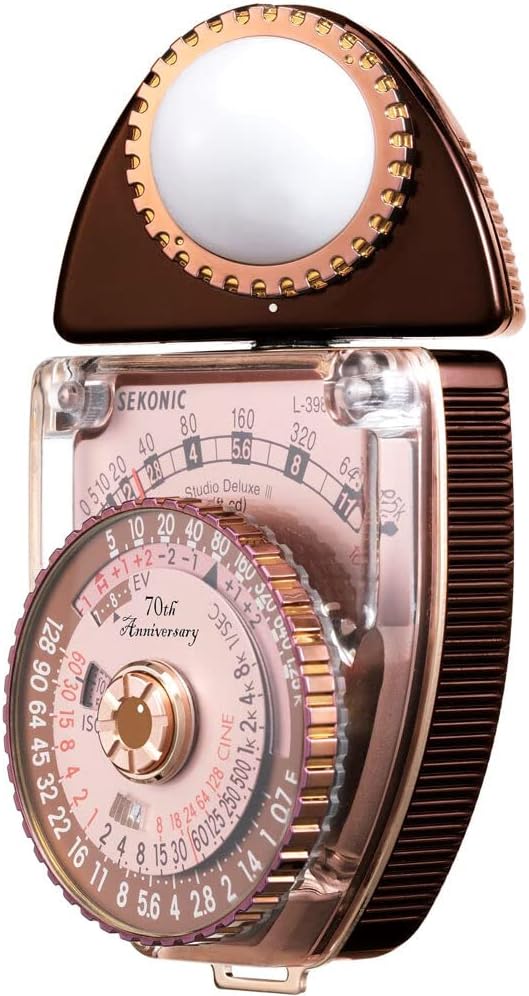
Sekonic Studio Deluxe III 70th Anniversary
5.0Editor score
Instant full range readings
Collector's anniversary edition
Professional grade accuracy
Discover the top 10 analog and digital light meters for photography and cinematography. Compare features, ratings, and specs to find the perfect exposure tool.
Choosing the right light meter is crucial for photographers and filmmakers who demand precise exposure control. Whether you prefer the timeless reliability of analog dials or the quick precision of digital displays, having the correct tool ensures your images are perfectly lit every time.
This comprehensive guide reviews ten top-rated light meters available in the market today. We examined their specifications, user ratings, and practical features to help you understand which device fits your specific workflow, budget, and professional requirements without any guesswork.
Each selection below highlights key strengths and potential trade-offs to inform your decision. While prices may fluctuate over time, the core functionality and reliability of these models remain consistent standards for capturing accurate light readings in any environment.
5.0Editor score

4.6Editor score

4.6Editor score
The following table provides a side-by-side comparison of all ten products reviewed in this guide. Use this quick reference to compare key specifications and features at a glance before making your final purchase decision.

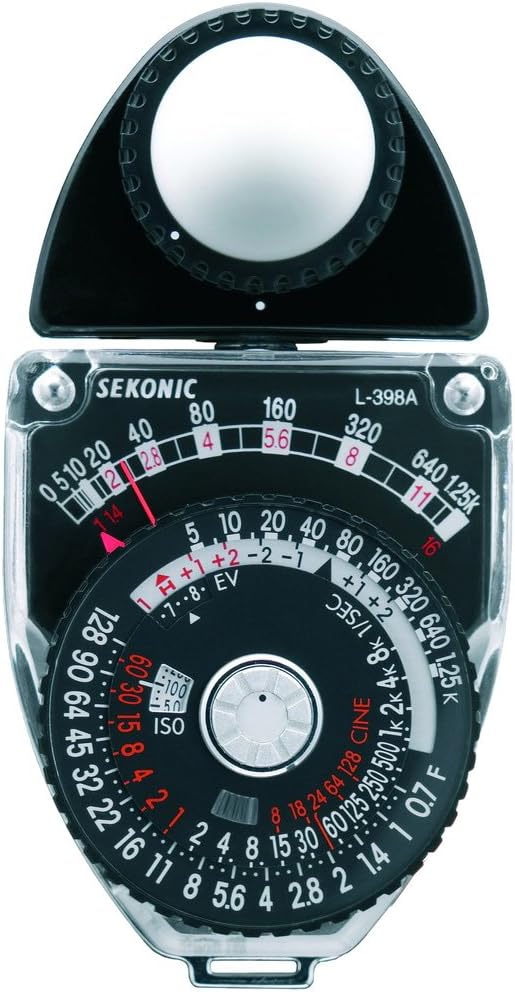


The Sekonic L-398A Studio Deluxe III stands out as the top choice for professionals seeking reliability without dependency on batteries. With a high user rating, this analog meter delivers consistent incident and reflected light readings essential for studio and field work.
We may earn a commission when you buy through this link, at no additional cost to you.
Its standout feature is the integrated amorphous photocell which generates power directly from ambient light. This ensures you never have to worry about dead batteries during critical shoots. The full dial readout allows for instant aperture and shutter speed combinations without navigating digital menus.
While the price is higher than digital alternatives, the build quality and long-term reliability justify the investment. The swivel head design allows precise positioning of the incident dome while maintaining a clear view of the display, improving workflow significantly.
This meter is ideal for cinematographers and photographers who value simplicity and durability. If you need a trustworthy tool that works in any lighting condition without power concerns, this is the definitive choice for professional workflows.
The amorphous photocell technology eliminates battery anxiety, ensuring your meter is always ready when you need it most in any environment.
The full dial readout provides immediate visual feedback for exposure settings, streamlining the process of adjusting lights and camera parameters.
We may earn a commission when you buy through this link, at no additional cost to you.
This handheld illuminance meter offers a wide range of measurements up to 200,000 Lux, making it versatile for various environmental conditions. It provides a simple way to measure light intensity and ambient temperature simultaneously.
We may earn a commission when you buy through this link, at no additional cost to you.
Its key strength lies in the digital color LCD screen which provides clear readings even in bright light. The high accuracy and wide range make it suitable for factory, office, or home use where precise lux data is needed.
While it lacks the specific aperture settings found in photography meters, its utility extends to set design and general lighting inspections. The lightweight design ensures it is easy to carry around for long periods of work.
Ideal for facility managers or lighting designers who need quick lux and temperature readings. If your primary focus is environmental monitoring rather than camera exposure settings, this is a practical and affordable tool.
Capable of measuring from 0 to 200,000 Lux, this meter handles everything from dim indoor lighting to bright outdoor sunlight with ease.
Simultaneously track light intensity and ambient temperature to get a comprehensive view of your environment for better planning and adjustments.
We may earn a commission when you buy through this link, at no additional cost to you.
This variant of the Sekonic L-398A is a favorite among cinematographers for its ability to measure incident and reflected light readings accurately. The inclusion of a case and strap makes it a ready-to-use professional tool.
We may earn a commission when you buy through this link, at no additional cost to you.
The 180-degree Lumisphere allows for general readings of three-dimensional objects while the Lumidisc enables selective area readings. This flexibility is crucial for complex lighting setups where precise light falloff matters.
The swivel head design allows you to hold the button and check light levels while walking around the set without losing your place. This convenience saves time during shoots where speed is essential.
Recommended for professionals who already trust the L-398A ecosystem or need a durable analog meter. The included accessories ensure you have everything needed to start taking precise readings immediately after unboxing.
Includes both Lumisphere and Lumidisc to measure general ambient light or specific areas with high precision depending on your shot requirements.
Comes with a protective case and strap ensuring your investment is safe during transport and ready for immediate use in the field.
We may earn a commission when you buy through this link, at no additional cost to you.
The MT-92H Light Meter delivers high-precision light measurement at an affordable price point. With a split sensor design, it allows for simultaneous measurement and monitoring with flexible positioning of the probe.
We may earn a commission when you buy through this link, at no additional cost to you.
Its innovative split-sensor design enables you to position the sensor in the subject area while reading the display from a different angle. This is particularly useful for checking light levels in difficult to reach areas.
The high-visibility backlit display ensures you can read measurements clearly in total darkness or direct sunlight without squinting. The refresh rate captures subtle changes in light levels effectively.
Best for hobbyists or studio assistants who need accurate readings without the high cost of premium analog meters. If you need a versatile tool for both light and temperature in a compact package, this is a strong contender.
Separate probe maintains measurement integrity while allowing flexible positioning, making it easier to measure light in complex setups.
Features a glare-resistant screen with switchable backlight ensuring readability in any lighting condition or ambient environment.
We may earn a commission when you buy through this link, at no additional cost to you.
This illuminance meter is designed for fast response and accuracy, making it perfect for monitoring light in growing environments. It delivers accurate data multiple times per second ensuring you capture peak light values.
We may earn a commission when you buy through this link, at no additional cost to you.
The PEAK data recording feature allows you to lock in the highest light pulse value with a single press. This is essential for measuring brief high-intensity sources or tracking changes over time.
Effortless toggle between FC and LUX units means you can adapt to your specific needs without complex menus. The low battery alert ensures you are never caught off guard by a dying battery.
Ideal for gardeners or greenhouse managers who need quick checks on plant lighting conditions. If you need a reliable tool for monitoring light intensity for biology or general use, this is a practical choice.
Instantly lock in the highest light pulse value with a single button press capturing transient spikes that would otherwise be missed.
Seamlessly toggle between FC and LUX units to match your regional standards or specific application requirements effortlessly.
We may earn a commission when you buy through this link, at no additional cost to you.
The Extech LT300 is designed for professional inspections where remote readings are necessary. It captures reliable Lux and foot-candle readings up to 40,000 lux with precision and ease.
We may earn a commission when you buy through this link, at no additional cost to you.
Its large backlit LCD display makes it easy to view readings in dim areas which is common in many professional environments. The cosine and color-corrected sensor provides accurate measurements in all lighting conditions.
Min/Max and relative modes allow you to log and compare readings to ensure consistency across different areas. The lightweight yet durable design makes it easy to carry on long inspection routes.
Recommended for facility safety inspectors or industrial lighting specialists who need reliable remote capabilities. If you need a robust tool for compliance and safety checks in varied environments, this is a trusted option.
Includes a remote sensor allowing you to measure light in hard-to-reach areas while viewing the display from a safe distance.
Min/Max, data hold, and zero adjustment functions let you log, compare, and stabilize readings with ease for confident decisions.
We may earn a commission when you buy through this link, at no additional cost to you.
The Gossen Luna Pro SBC is a versatile ambient lightmeter and flashmeter that offers precise digital readout in EV. This makes it easy to transfer settings to a setting ring for quick adjustments.
We may earn a commission when you buy through this link, at no additional cost to you.
Its digital readout in EV is easily transferred to a setting ring where all shutter speed and f-stop combinations can be read at a glance. This hybrid approach bridges the gap between digital precision and analog convenience.
The inclusion of a clock with alarm, timer, and temperature readout adds utility for studio environments. However, the price point is higher than standard meters which may deter casual users.
Ideal for professionals who specifically need a flashmeter with precise digital EV readings. If you require a robust tool that can handle both ambient and flash lighting scenarios accurately, this is a strong choice.
Digital readout in EV is easily transferred to a setting ring where all shutter speed and f-stop combinations are readable instantly.
Includes clock, timer, and temperature features providing extra utility for professionals managing long sessions in controlled environments.
We may earn a commission when you buy through this link, at no additional cost to you.
The Fluke 941 Light Meter is a dedicated illuminance meter tester built for industrial applications. It offers high accuracy and reliability for environments where safety and compliance are paramount.
We may earn a commission when you buy through this link, at no additional cost to you.
Fluke products are renowned for their rugged construction and precision which makes this meter ideal for workplace safety inspections. It ensures that lighting levels meet regulatory standards for efficient and safe operations.
The tester function allows for quick checks on illumination levels ensuring that all areas meet the required lux or foot-candle standards. This simplicity reduces the risk of error in critical safety scenarios.
Best for industrial safety officers or facility managers who require certified reliable equipment. If your primary goal is regulatory compliance and industrial lighting standards this is the most reliable tool available.
Built to withstand harsh industrial environments while maintaining precise accuracy for safety compliance and operational efficiency.
Ensures lighting levels meet regulatory standards for efficient and safe operations preventing risks associated with inadequate illumination.
We may earn a commission when you buy through this link, at no additional cost to you.
The Sekonic Studio Deluxe III 70th Anniversary Edition is a premium analog light meter designed for collectors and high-end professionals. It retains the classic features of the L-398A with a special anniversary finish.
We may earn a commission when you buy through this link, at no additional cost to you.
Its standout quality is the instant reading of the full range of aperture and shutter combinations which simplifies exposure decisions. The build quality is refined to reflect its premium status and legacy.
The perfect rating from users indicates high satisfaction with its performance and durability. While it commands a higher price it is a symbol of craftsmanship and reliability for those who value quality.
Ideal for professionals who appreciate the history of photography and want a tool that stands out. If budget is less a constraint than quality and legacy this limited edition offers the best analog experience available.
Celebrates 70 years of quality with a premium build that combines classic analog performance with refined aesthetic details.
Provides instant reading of the full range of aperture and shutter combinations simplifying exposure decisions significantly.
We may earn a commission when you buy through this link, at no additional cost to you.
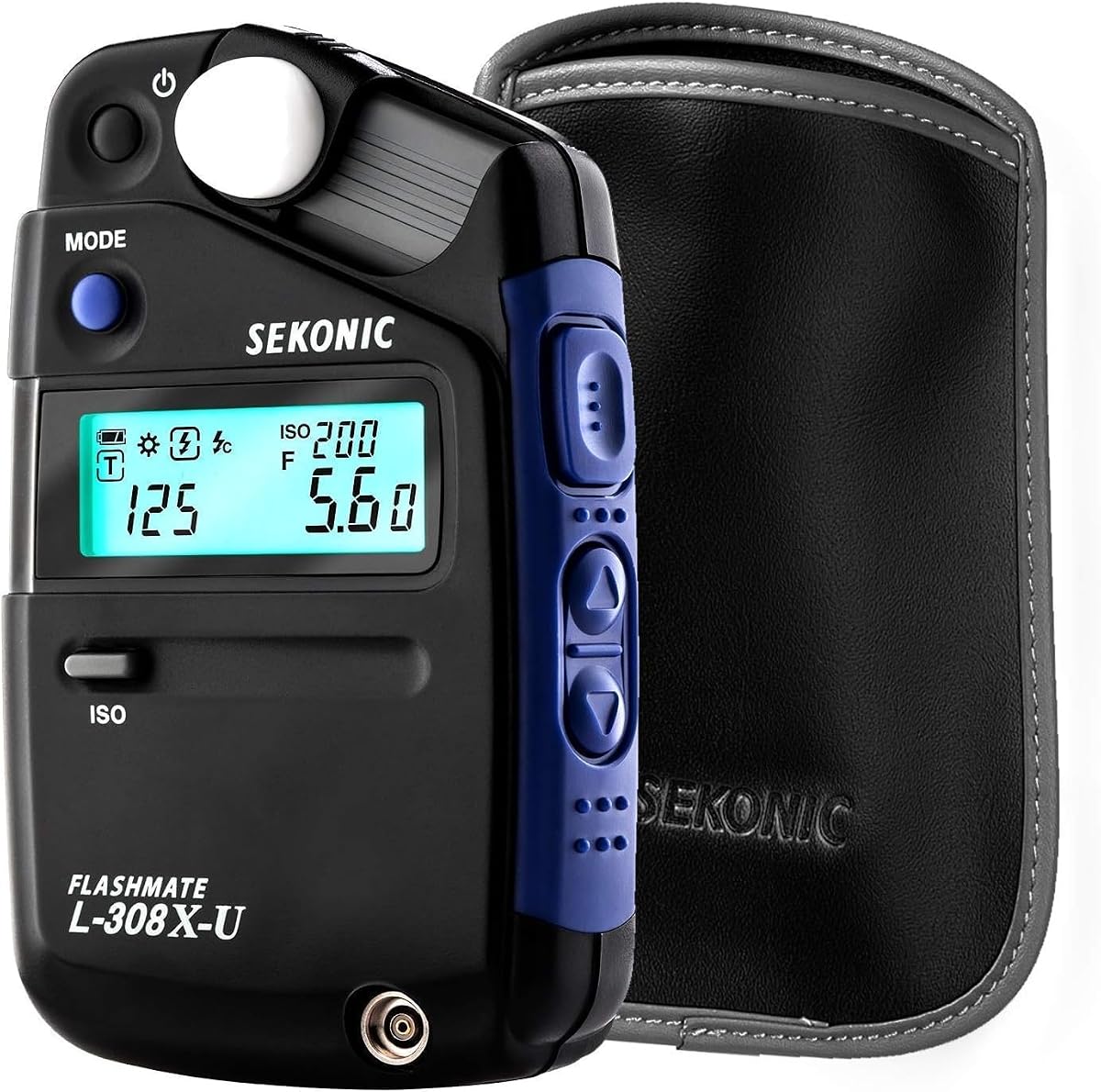
The Sekonic L-308X-U Flashmate is a compact digital exposure meter that fits in your pocket without sacrificing professional features. It supports Photo, Cine, and HD Cine modes for versatile use across different media.
We may earn a commission when you buy through this link, at no additional cost to you.
Its accuracy down to a tenth-of-a-stop allows for precise exposure control which is critical for high-end video and photography. The auto backlight ensures visibility in various lighting conditions without manual adjustment.
The HD Cine mode is specifically designed for DSLR and mirrorless videographers needing frame rates and shutter angles. This specialized feature makes it stand out from generic light meters.
Best for shooters who need a pocket-sized meter for on-the-go measurements. If you need a digital meter that handles both flash and ambient with high precision in a small package this is the top choice.
Compact digital design allows you to carry professional metering tools anywhere without adding bulk to your camera bag.
Perfect for DSLR and mirrorless videographers who need to take exposure readings and control light using shutter speeds and frame rates.
We may earn a commission when you buy through this link, at no additional cost to you.
Selecting the right light meter depends on your workflow, budget, and specific measurement needs. Understanding these key factors will help you make an informed decision.
Analog meters offer simplicity and reliability without batteries but digital meters provide precise numerical data. Choose analog if you value quick visual cues and battery-free operation.
Digital meters are ideal if you need exact numerical data and specific modes for cinema or photography.
Ensure the meter supports both incident and reflected light modes to handle different lighting scenarios. Incident meters measure light falling on the subject while reflected measures light bouncing off.
Look for interchangeable sensors like dome and disc to adapt to specific measurement needs easily.
Battery-free models like the Sekonic L-398A use photocells which remove the risk of power failure. This is essential for long shoots or remote locations where charging is not possible.
If using a digital meter ensure it has a clear low battery indicator to avoid surprises during critical work.
Analog dials provide instant aperture and shutter speed combinations while digital displays show precise numbers. Choose a display that is readable in your working environment whether bright or dark.
Backlit screens are useful for low-light conditions but may require batteries.
Professional meters must withstand the rigors of field work so look for durable construction. Rugged materials ensure the tool survives drops and bumps without losing calibration.
Check if the meter includes a protective case to safeguard your investment during transport.
Some meters offer temperature readouts or alarm clocks for added utility in studio environments. These extras can streamline your workflow but may not be necessary for all users.
Prioritize features that directly support your specific workflow such as frame rates for videographers.
Many kits include straps, cases, and lumidiscs which add value to your purchase. Verify what is included to avoid buying extra accessories separately.
Accessories like straps make the meter easier to carry around during long shoots.
Choose trusted brands known for precision and reliability like Sekonic or Fluke. Established brands often provide better long-term support and calibration services.
User ratings and professional reviews can offer insights into real-world performance.
To get accurate readings point the meter towards the camera from the subject's position for incident light. Ensure the sensor is unobstructed and level to avoid shadowing or incorrect angles.
For reflected measurements point the meter at the subject from the camera position to measure the light bouncing back. Use this when incident light is not accessible or to check specific highlights.
Keep the sensor clean and free from dust by wiping it gently with a soft cloth. Store the meter in a protective case to prevent scratches and damage during transport.
Built-in meters measure reflected light which can be fooled by high contrast scenes. An external meter measures incident light for more accurate exposure settings especially in controlled environments.
Incident meters measure the light falling onto the subject while reflected meters measure light bouncing off. Incident is generally more reliable for consistent exposure regardless of subject tone.
Analog meters often use battery-free sensors making them more reliable in extreme conditions. Digital meters offer more features and precision but depend on battery power.
Yes many analog meters provide clear aperture and shutter readouts useful for video. However digital meters offer specific modes for frame rates and shutter angles needed for cinematography.
Regular calibration ensures accuracy but frequency depends on usage. Professional standards suggest annual checks or if you suspect readings are off after a drop.
Lux meters measure illuminance for general lighting while photography meters measure exposure for cameras. While they measure light, photography meters are calibrated for film or digital sensor response.
The top picks reviewed provide a range of options from reliable battery-free analog tools to precise digital solutions. Each model brings unique strengths depending on whether you prioritize simplicity or advanced features.
Prioritize the features that match your workflow such as flash capability or battery-free operation. A well-chosen meter will serve as a trusted tool for years of consistent exposure.
Prices may vary over time so check current deals before purchasing. Ensure you compare the specific specs and accessories included to get the best value for your needs.