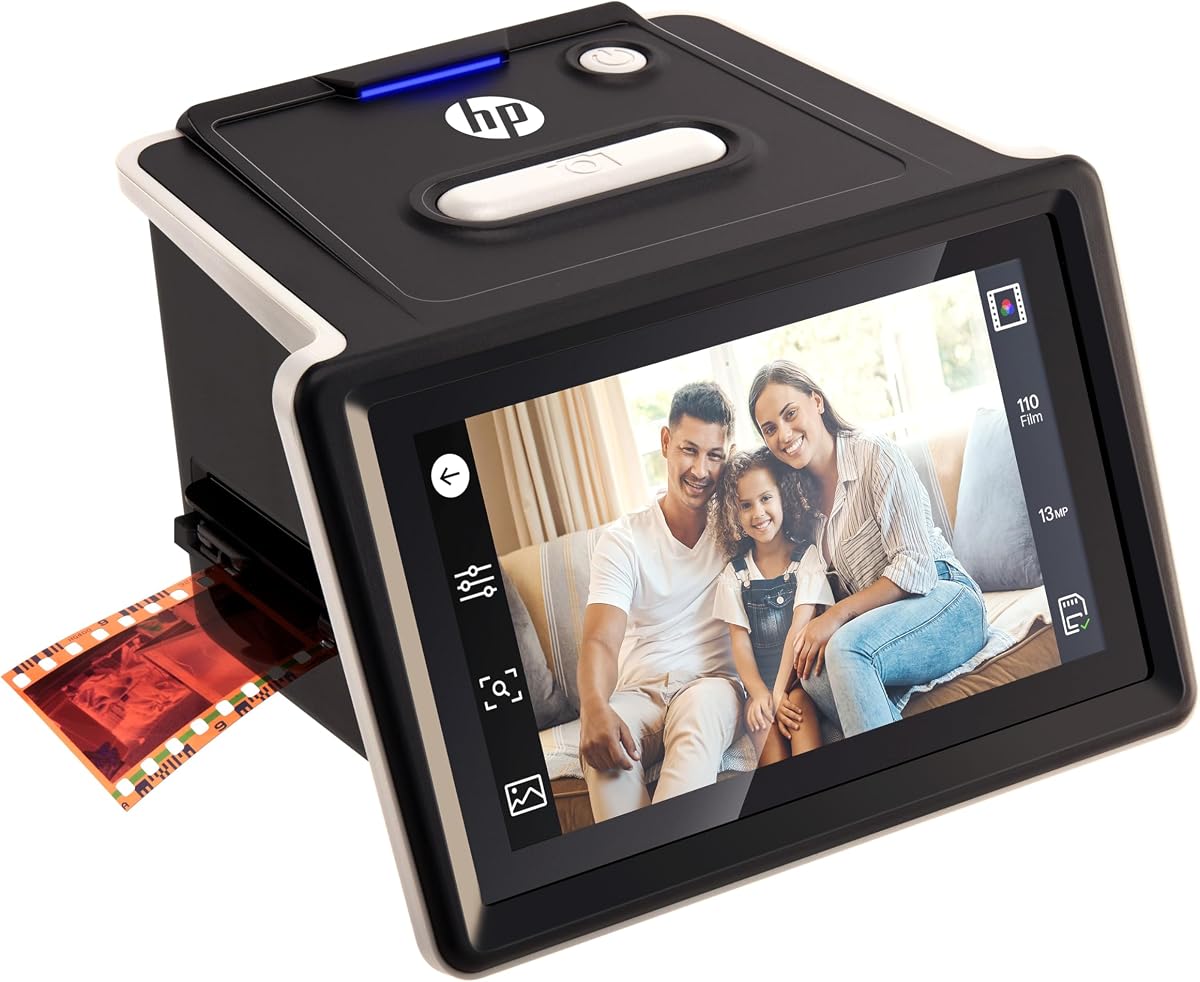
HP Film & Slide Scanner HPFS500
4.3Editor score
5-Inch Touchscreen Display
USB-C Powered Versatility
22MP Interpolation Output
Preserving film memories requires the right tools to convert analog negatives into digital files. A quality Black and White Negative Scanner ensures clarity and detail for your photos.
We analyzed leading models based on resolution, ease of use, and compatibility with various film formats. This list covers standalone devices and versatile options for every user.
Each pick highlights key strengths and ideal use cases to help you choose wisely. Note that product availability and pricing may change over time, so check current listings.
4.3Editor score

4.2Editor score
4.3Editor score
As an Amazon Associate we earn from qualifying purchases.
This side-by-side comparison highlights key specifications for all top models to help you find the perfect fit for your digitization needs.


The BEONEGLOBAL ClearScan MINI offers a strong balance of resolution and portability for home users. With a 4.2 star rating, it delivers high-quality scans using a 16MP CMOS sensor.
We may earn a commission when you buy through this link, at no additional cost to you.
Its ergonomic design places buttons below the screen for intuitive use. You can adjust brightness and colors directly on the device, saving time on post-processing.
The compact form factor makes it easy to store or take on trips. However, the small 2.31-inch screen might feel limited for detailed editing work.
This scanner is ideal for those who want quick, reliable scans without needing a computer. It simplifies the digitization process significantly for casual photographers.
The 16MP sensor ensures your negatives are captured with fine detail and clarity.
Save directly to an SD card, removing the need for a constant PC connection.
We may earn a commission when you buy through this link, at no additional cost to you.
The KODAK Slide N Scan Max stands out for its efficient workflow designed to minimize manual effort. Users appreciate the smooth-moving tray that feeds film without constant repositioning.
We may earn a commission when you buy through this link, at no additional cost to you.
It supports a wide range of formats including 135mm, 110mm, and 126mm for versatile archiving. The 13MP CMOS sensor with interpolation captures detailed images effectively.
While it lacks complex manual controls, the one-touch editing simplifies resizing and converting. The direct SD saving feature enhances its portability for on-the-go use.
Choose this model if you prioritize a seamless scanning process for large batches of film. It balances ease of use with solid image quality for home archives.
Accommodates various film types effortlessly, making it great for mixed collections.
Resize and adjust images without navigating complex menus for quick results.
We may earn a commission when you buy through this link, at no additional cost to you.
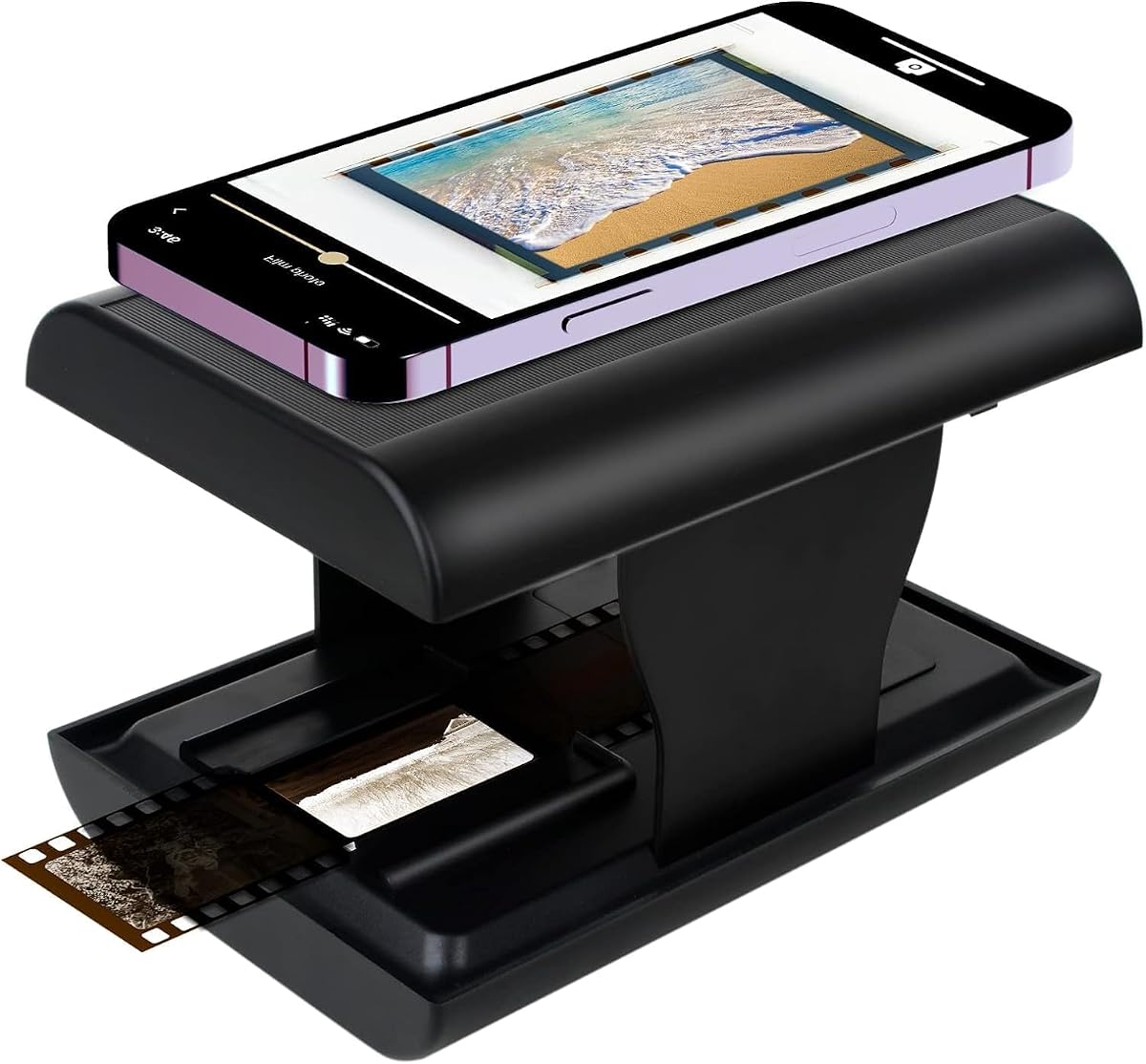
For those on a tight budget, the TCNEWCL scanner offers a unique smartphone-based approach to digitization. It is foldable and saves space, fitting easily into small storage areas.
We may earn a commission when you buy through this link, at no additional cost to you.
You insert the slide into the shell and use your phone's camera to capture the image. The built-in LED backlight ensures proper illumination during the capture process.
This method avoids expensive dedicated hardware but relies heavily on your phone's camera resolution. It is a great gift or fun project for families looking to archive old photos.
If cost is your main concern, this unit provides an accessible entry point. It is perfect for casual users who already own a decent smartphone camera.
The foldable structure makes it easy to store when not in use.
Use free software like Snapseed to filter and adjust your captured images.
We may earn a commission when you buy through this link, at no additional cost to you.
The Magnasonic FS71 brings convenience with a large 5-inch display and HDMI connectivity for instant viewing. Users love seeing their photos directly on a TV without extra steps.
We may earn a commission when you buy through this link, at no additional cost to you.
It supports multiple film types including Super 8, 110, 126, and 135 for comprehensive home scanning. The 24MP resolution ensures detailed JPEG files for digital archiving.
Scanning takes less than five seconds per image thanks to fast-loading trays. However, the need for a separate SD card adds to the initial setup cost.
This unit is excellent for viewing scanned memories on a big screen immediately. It simplifies the process for those who prefer avoiding computer software entirely.
Connect via HDMI to view your scanned photos on any TV instantly.
Scan your entire collection quickly with the fast-loading film trays.
We may earn a commission when you buy through this link, at no additional cost to you.
Designed for preserving family history, this scanner includes enhancement technology to improve brightness and detail in old faded slides. The simple button interface makes it comfortable for parents and grandparents.
We may earn a commission when you buy through this link, at no additional cost to you.
It comes as a complete kit with film and slide holders, a cleaning brush, and necessary cables. You can start digitizing immediately without needing to buy extra accessories.
The advanced enhancement helps bring old memories back to life with better clarity. However, some users might find the lower rating indicates inconsistent performance.
This model is best for those prioritizing ease of use and immediate results. It is a solid choice for non-technical users looking to restore vintage photos.
Automatically improves natural color and detail in your old negatives.
Includes all necessary holders and cables to start scanning right away.
We may earn a commission when you buy through this link, at no additional cost to you.
The HP scanner features an intuitive 5-inch all-angle LCD touch screen for easy previewing and editing. Its gallery mode turns the device into a vibrant picture frame for your favorite moments.
We may earn a commission when you buy through this link, at no additional cost to you.
Equipped with a 13MP CMOS sensor and 22MP interpolation, it delivers exceptional image clarity for various formats. The USB-C power source adds modern versatility to its design.
Users appreciate the quick-load tray for seamless scanning of negative strips and positive slides. While it requires a separate SD card, the workflow remains simple and efficient.
This unit is perfect for modern users who prefer touch controls over buttons. It offers a premium experience with professional-quality results and convenient features.
Navigate and edit images easily with the all-angle LCD touch screen.
Powered through USB Type-C for versatile connection options and ease of use.
We may earn a commission when you buy through this link, at no additional cost to you.
Choosing the right scanner involves evaluating resolution, ease of use, and format compatibility to meet your needs.
Resolution determines the clarity of your digitized images. Higher MP counts capture more detail from your negatives.
Aim for at least 13MP to ensure prints look sharp and clear.
Check if the scanner supports 35mm, 126, 110, or Super 8 film. Versatile models save you from buying multiple devices.
Ensure the scanner fits your specific film collection for smooth scanning.
Look for features like built-in previews and simple buttons. Advanced editing tools on the device save time on software.
A straightforward workflow makes the process enjoyable for everyone.
Larger screens help you review images before saving. Some models offer HDMI output for viewing on a TV.
Consider how important instant review is to your workflow.
USB-powered models offer portability while others need external adapters. Check if your setup supports your power needs easily.
Versatile power options provide more flexibility for where you scan.
Support for SD cards allows saving images without a computer. Check if the scanner includes the card or if you need to buy one.
Direct storage simplifies your digitization process significantly.
Insert your film into the designated tray ensuring the orientation matches the guide. This prevents scratches and ensures accurate alignment.
Adjust the settings like brightness or contrast on the device if supported. Preview the image before saving to confirm quality.
Store your scanner in a dry, cool place when not in use. Clean the lens gently with a soft cloth to maintain clarity.
A resolution of 13MP or higher is generally recommended for quality scans. This ensures enough detail for standard prints and digital use.
Most modern scanners save directly to SD cards without needing a computer. Check specific models for this feature before buying.
Yes, most units handle both color and black-and-white negatives easily. They provide tools to adjust colors for each type.
Use a soft brush or microfiber cloth to remove dust gently. Avoid using liquids that might damage the negative surface.
Most scanners save in JPEG format for easy sharing and viewing. Some may offer TIFF for higher quality editing.
Not all models support Super 8, so check the specifications carefully. Look for models explicitly listing Super 8 in their supported formats.
We highlighted top models like the BEONEGLOBAL ClearScan and HP HPFS500 for their distinct strengths. Each offers unique benefits for different user needs.
Prioritize resolution and format compatibility to match your collection. Ease of use and display options are also key factors.
Remember to check current prices and availability before purchasing. Your right scanner helps preserve your memories effectively.