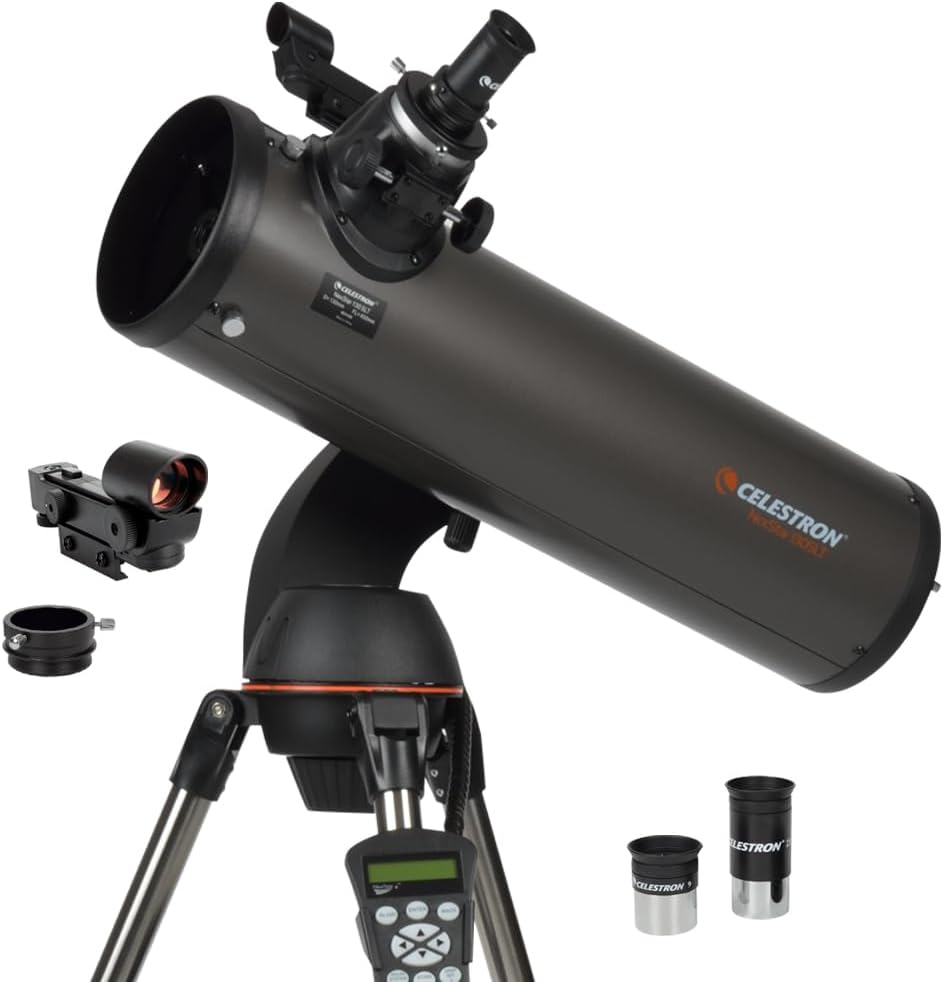
Celestron NexStar 130SLT
4.4Editor score
130mm Newtonian reflector
Compact and portable form
Free Starry Night software
Exploring the night sky has never been more accessible with modern computerized telescopes. These instruments automate the locating process, allowing adults to focus on observation rather than alignment.
We compared ten leading models based on optical quality, mount stability, ease of use, and overall value. Our analysis covers various aperture sizes and mount types to suit different experience levels.
Each pick highlights specific strengths like portability or imaging capability. Please note that availability and pricing may change, so check current listings before purchasing.
4.4Editor score

4.3Editor score

4.4Editor score
As an Amazon Associate we earn from qualifying purchases.
The following table provides a side-by-side comparison of all ten selected telescopes. Review the key specifications to identify which model aligns best with your observational goals and budget constraints.




The Celestron NexStar 8SE is a top-rated computerized telescope offering powerful optics for adults seeking a comprehensive stargazing experience. Its 4.3-star rating reflects strong user satisfaction with performance and reliability.
We may earn a commission when you buy through this link, at no additional cost to you.
This model features an 8-inch Schmidt-Cassegrain optical tube that gathers ample light to reveal fine lunar details and distant galaxies. The fully automated GoTo mount with a hand control allows users to select targets from a database of over 40,000 objects.
While the mount is stable, the telescope requires assembly which might take some time initially. The weight can also be a factor for those needing to transport it frequently to dark sky sites.
It is ideal for adults ready to step up from manual scopes and explore the night sky with precision. We recommend it for those who value optical performance and ease of use.
The iconic orange tube pairs legendary optics with a computerized GoTo system for precision observing.
SkyAlign technology calculates your position in minutes, allowing fast setup without prior knowledge of star names.
We may earn a commission when you buy through this link, at no additional cost to you.
The Celestron NexStar 130SLT is a highly rated computerized telescope that balances performance and portability. With a 4.4-star rating, it stands out as an accessible option for beginners and families.
We may earn a commission when you buy through this link, at no additional cost to you.
Featuring a 130mm Newtonian reflector design, it gathers enough light to view Saturn's rings and Jupiter's cloud bands. The compact form factor makes it ideal for weekend camping trips or dark sky excursions.
Users may find the shorter focal length limits extreme magnification compared to larger telescopes. The tripod is functional but may require a steady hand for high-power viewing.
This model is perfect for adults who want a portable computerized experience without a steep investment. It is a strong choice for casual observers and families.
Its compact design allows for easy transport and assembly anywhere, making it perfect for travel.
Includes free Starry Night software for sky simulation and planning future observing sessions.
We may earn a commission when you buy through this link, at no additional cost to you.
The Odyssey PRO by UNISTELLAR is a top-rated smart telescope designed for advanced digital imaging and visual observation. Its 4.4-star rating highlights its innovative features and user-friendly interface.
We may earn a commission when you buy through this link, at no additional cost to you.
This system includes integrated digital camera and app control with automatic alignment in under two minutes. It offers unique eyepiece technology for immersive visual experience alongside digital capabilities.
The high price point reflects the advanced electronics and digital imaging capabilities embedded in the system. Dependence on battery power means users must ensure charged batteries for extended sessions.
Ideal for tech-savvy adults interested in citizen science and data export, it bridges the gap between visual and digital astronomy. We recommend it for those seeking cutting-edge convenience.
Power on and connect to the app for automatic alignment and motorized tracking without polar alignment.
Export RAW and FITS files for advanced processing and contribute to real scientific discoveries.
We may earn a commission when you buy through this link, at no additional cost to you.
The Celestron NexStar 5SE offers a compact and portable alternative with powerful Schmidt-Cassegrain optics. It maintains a 4.4-star rating for its balance of performance and ease of use.
We may earn a commission when you buy through this link, at no additional cost to you.
This model features an 5-inch aperture that gathers enough light to reveal deep-sky objects and planetary details. The integrated wedge allows for entry-level astrophotography by reducing field rotation during imaging.
While compact, the smaller aperture limits light gathering compared to larger models like the 8SE. The wedge alignment requires a bit of manual effort for astrophotography use.
It is best suited for adults who need a balance between portability and performance. Ideal for those ready to step up from manual scopes to computerized observing.
The integrated wedge lets you polar align the mount, improving tracking during imaging sessions.
Aligns the mount in minutes by centering any three bright stars or planets.
We may earn a commission when you buy through this link, at no additional cost to you.
The Celestron 114LCM is a computerized Newtonian telescope designed for ease of use. It holds a 4.2-star rating among users looking for a straightforward introduction to stargazing.
We may earn a commission when you buy through this link, at no additional cost to you.
It comes with all glass optics and automatic location capabilities for over 4,000 celestial objects. The included full-height tripod and two eyepieces ensure a complete setup right out of the box.
The optics are basic compared to more advanced models, which may limit deep-sky performance in light-polluted areas. The tripod stability is adequate for beginners but might need care for precise viewing.
This is an excellent choice for adults seeking an all-in-one solution without extra purchases. It is recommended for those who want a reliable starting point.
Comes with everything you need including high-quality eyepieces and a finderscope for immediate use.
The Sky Tour button generates a list of the best objects currently available to view.
We may earn a commission when you buy through this link, at no additional cost to you.
The Celestron NexStar 127SLT features Maksutov-Cassegrain optics that deliver sharp views. It holds a 4.2-star rating for its portability and performance on planetary objects.
We may earn a commission when you buy through this link, at no additional cost to you.
With a 127mm aperture, it can view Saturn's rings and Jupiter's cloud bands in brilliant detail. The compact and lightweight design makes it easy to transport to your favorite campsite.
Maksutov optics can take longer to cool down, potentially delaying viewing sessions. The optical design is better suited for bright objects than faint deep-sky targets.
It is ideal for adults who value sharp views and portability. Recommended for those who primarily observe the Moon and planets.
Maksutov-Cassegrain design gathers enough light to see our Solar System in brilliant detail.
Ready to observe in minutes by centering any three bright objects in the eyepiece.
We may earn a commission when you buy through this link, at no additional cost to you.
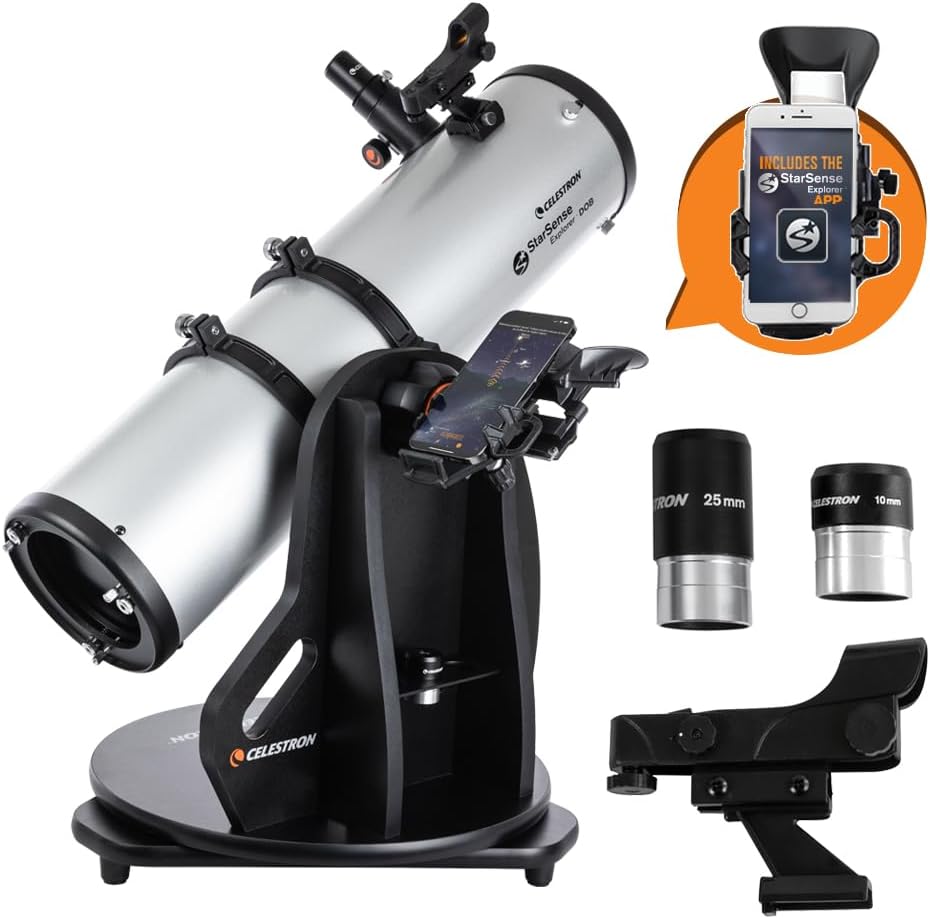
The Celestron StarSense Explorer turns your smartphone into a celestial navigation system. It has a 4.3-star rating for its innovative app-enabled approach to stargazing.
We may earn a commission when you buy through this link, at no additional cost to you.
Just dock your phone and launch the app to follow on-screen arrows to locate stars and planets. The 150mm Newtonian reflector delivers sharp views of deep-sky favorites.
It lacks a motorized GoTo mount, relying on manual tracking once the target is found. Users must have a compatible smartphone dock and battery for the app to function.
Perfect for adults who want tech integration without complex mount systems. Recommended for those who enjoy using their smartphone for navigation.
Turn your phone into a celestial navigation system by analyzing star patterns overhead.
The app generates a curated list of top objects based on time and location.
We may earn a commission when you buy through this link, at no additional cost to you.
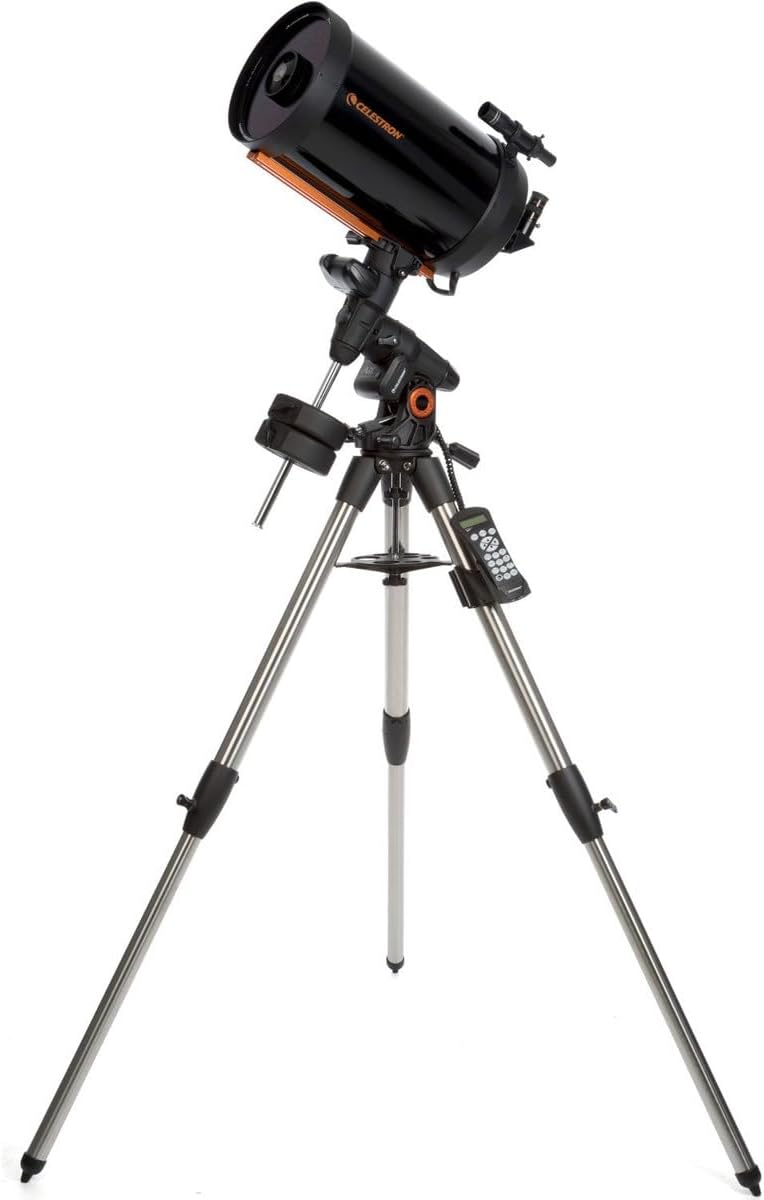
The Celestron Advanced VX 8 offers a robust German Equatorial mount for precise tracking. It holds a 4.2-star rating for its optical quality and stability.
We may earn a commission when you buy through this link, at no additional cost to you.
Featuring an 8-inch Schmidt-Cassegrain telescope with high resolution and contrast, it provides stunning clarity. The sturdy tripod minimizes vibrations for clear images.
The equatorial mount adds complexity and weight, requiring more setup time than alt-azimuth mounts. It is less portable for casual observers but excellent for dedicated sessions.
Ideal for adults seeking superior optics and enhanced stability. Recommended for those interested in long-exposure imaging.
StarBright XLT coatings offer high resolution and contrast for detailed views.
The tripod provides a stable platform minimizing vibrations for clear images.
We may earn a commission when you buy through this link, at no additional cost to you.
The Celestron Advanced VX 9.25 offers a large aperture for exceptional views and brightness. It holds a 4.4-star rating for its clarity and impressive detail.
We may earn a commission when you buy through this link, at no additional cost to you.
The 9.25-inch aperture gathers ample light to reveal stunning details of celestial objects. The mount ensures smooth and accurate tracking during observation.
The telescope is very heavy and requires significant space for setup. It is not portable for casual users and needs a dedicated home base.
Best for adults seeking massive aperture power and high magnification. Recommended for those with a dedicated observatory or space.
Gathers ample light revealing stunning details of celestial objects with clarity.
Explore planets and galaxies in remarkable detail with useful magnification capabilities.
We may earn a commission when you buy through this link, at no additional cost to you.
The Celestron Advanced VX 6 is a robust computerized telescope with a German Equatorial mount. It holds a 4.4-star rating for its reliable performance.
We may earn a commission when you buy through this link, at no additional cost to you.
Featuring a 6-inch aperture with StarBright XLT optical coatings, it offers high resolution and contrast. The mount provides accurate pointing and tracking for effortless observing.
Setup requires polar alignment which can be complex for beginners. The telescope is heavy and requires a sturdy setup for best results.
Ideal for adults interested in precise tracking and imaging. Recommended for those willing to learn equatorial mounts.
StarBright XLT coatings offer high resolution and contrast for detailed views.
NexStar+ controller with a 40000+ object database ensures accurate pointing.
We may earn a commission when you buy through this link, at no additional cost to you.
Choosing the right computerized telescope involves weighing several factors to match your observational interests and experience level.
Aperture determines how much light the telescope gathers. Larger apertures reveal fainter deep-sky objects like galaxies and nebulae.
Look for an aperture that balances your viewing desires with portability.
GoTo mounts automate the process of finding celestial objects. Alt-azimuth mounts are simpler while Equatorial mounts are better for tracking.
Choose based on whether you value ease of use or tracking precision.
Schmidt-Cassegrain and Maksutov designs offer versatile performance for planets and deep-sky. Reflectors are cost-effective for large apertures.
Select a design that suits your primary observing targets.
Consider the weight and size of the telescope if you plan to travel to dark sites. Compact models like SLTs are easier to transport.
Prioritize portability if you have limited storage or transport options.
Computerized scopes should offer alignment features like SkyAlign to reduce setup time. Some require polar alignment for equatorial mounts.
Check for features that simplify the initial alignment process.
Higher prices often bring more advanced features like app control or imaging capabilities. Entry-level models provide great value for casual use.
Determine your budget before comparing feature sets.
Check if the telescope comes with necessary eyepieces and tripods. Some models bundle software or smartphone apps.
Ensure the package includes everything you need to start.
Reliable brands offer warranties and technical support to assist with issues. US-based support can be crucial for complex mounts.
Choose a brand known for responsive customer service.
Start by leveling the tripod and powering on the mount. Follow the on-screen prompts to align the telescope with the night sky.
Use the hand control or smartphone app to select objects. Once aligned, the mount will slew to the target automatically.
Store your telescope in a dry place to prevent moisture damage. Clean optics only with recommended solutions to avoid scratches.
A computerized telescope uses a built-in database to locate celestial objects automatically. It typically includes a hand control or app that tells the mount where to point.
No, modern computerized scopes like SkyAlign allow you to align using any three bright stars. The system calculates your position so you don't need prior knowledge.
Yes, they are excellent for beginners as they simplify the learning curve of finding objects. You can focus on enjoying the view rather than manual searching.
GoTo telescopes automatically move to and track targets while manual telescopes require you to push and point them. GoTo saves time and helps find faint objects.
Alignment involves leveling the mount and aligning it with known stars. Computerized models simplify this by asking you to center stars in the eyepiece.
Many newer models allow smartphone control via apps. They enhance the experience by adding star maps and navigation tools to the system.
We explored ten leading computerized telescopes ranging from portable SLTs to advanced EQ mounts. The Celestron NexStar 8SE and 130SLT stand out for their balance of performance and ease of use.
Prioritize aperture and mount stability based on your viewing goals. If you plan to travel often, portability is a critical factor to consider before buying.
Prices and availability are subject to change so always check current listings. We hope this guide helps you find the perfect companion for your stargazing adventures.