
HiFi DAC Pro Hat with ES9038Q2M Chip
4.5Editor score
Flagship ESS ES9038Q2M Converter
129dB Dynamic Range and DSD512
Balanced XLR and 3.5mm Outputs
Explore the top 10 DAC for Raspberry Pi. Compare specs, ratings, and features to find the perfect audio upgrade for your Pi setup.
Transform your Raspberry Pi into a high-fidelity music server with a dedicated Digital-to-Analog Converter. These expansion boards replace the weak onboard audio, delivering crystal clear sound for audiophiles and hobbyists alike.
We have evaluated ten top-rated DAC HATs based on audio quality, build, and software compatibility. Our analysis covers everything from budget-friendly options to professional-grade chips that support high-resolution audio formats.
Each pick highlights key features, pros, cons, and ideal use cases to help you decide. Please note that prices and availability change frequently, so check the latest listings before purchasing your next audio upgrade.
4.5Editor score
4.5Editor score

4.8Editor score
This side-by-side comparison highlights the core specifications of all ten selected DAC boards to help you quickly identify the best match for your specific Raspberry Pi model and audio needs.


The HiFi DAC HAT stands out as the top choice for most users due to its excellent balance of audio quality and ease of use. It achieves a 4.5-star rating from verified buyers who praise its seamless integration with various Pi models and robust audio performance.
We may earn a commission when you buy through this link, at no additional cost to you.
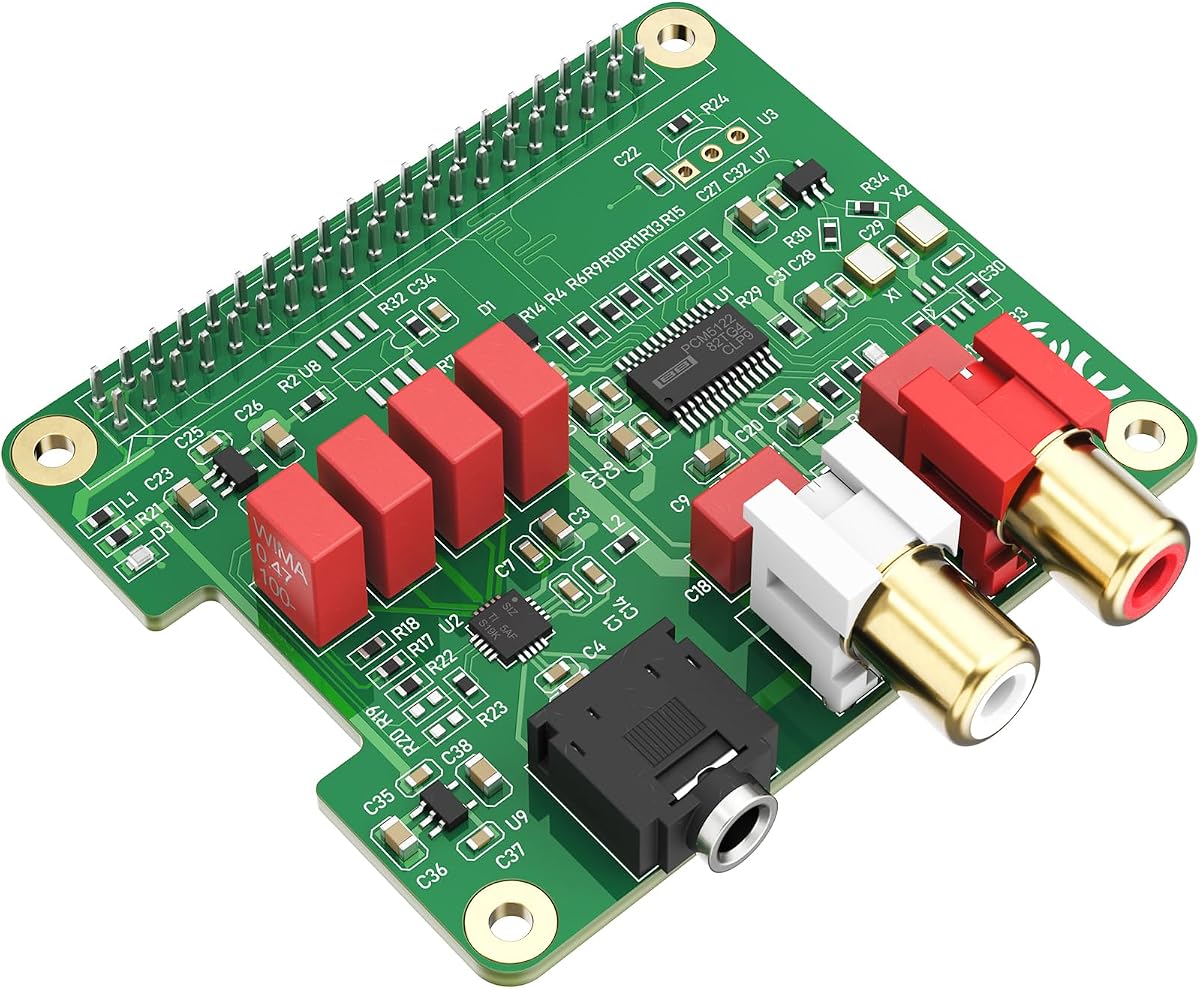
This board leverages the TI PCM5122 DAC alongside dual ultra-low jitter oscillators to ensure precise timing and a 112dB signal-to-noise ratio. The dual clock system significantly reduces digital noise compared to relying on the Pi's internal clock, resulting in cleaner audio reproduction.
While it offers a premium experience, users should note that installing it in an enclosure requires modifying the case to expose the GPIO header. Additionally, it does not support USB power, so your Pi must be powered separately to ensure stable operation.
If you want studio-quality audio without breaking the bank, this DAC is the perfect fit. It is highly recommended for streamers building custom music players with Volumio, Moode, or LibreELEC who value low jitter and flexible output options.
The inclusion of two independent oscillators ensures accurate sample rates, reducing timing errors that cause audible distortion in standard digital-to-analog converters.
Tested with major music server OS options like Volumio and Moode, making it plug-and-play for most users regardless of their preferred distribution.
We may earn a commission when you buy through this link, at no additional cost to you.
The DAC Mini Hat is specifically engineered to fit compact boards like the Raspberry Pi Zero without overhanging, making it ideal for portable projects. It retains high compatibility with all 40-pin models and offers solid audio quality at a budget-friendly price.
We may earn a commission when you buy through this link, at no additional cost to you.
Equipped with the PCM5122 DAC and TPA6133 headphone amplifier, this board delivers a 2.1Vrms output capable of driving most headphones cleanly. It supports popular music player systems and standard operating systems like Debian and Ubuntu.
While it does not match the dynamic range of flagship chips like the ES9038Q2M, its noise floor is low enough for casual listening and home setups. Users seeking a portable solution for Pi Zero builds will appreciate its tailored footprint.
This is an excellent choice for DIY enthusiasts building small media centers or portable speakers. It balances performance and size well, offering a reliable upgrade over onboard audio for entry-level audiophiles.
Designed specifically to avoid overhang on Pi Zero boards, allowing for better enclosure compatibility and a more professional look in tight spaces.
The dedicated TPA6133 headphone amp provides enough power to drive high-impedance headphones, eliminating the need for external amplification.
We may earn a commission when you buy through this link, at no additional cost to you.
The HiFi DAC Pro Hat is the ultimate choice for serious audiophiles who demand studio-grade fidelity. Featuring the flagship ESS ES9038Q2M converter, it achieves a massive 129dB dynamic range and supports DSD512, making it future-proof for high-resolution streaming.
We may earn a commission when you buy through this link, at no additional cost to you.
Its three Texas Instruments op-amps deliver a robust 2.1Vrms output with balanced XLR connections, ideal for driving high-end speakers. The dual oscillators ensure precise timing, eliminating jitter that can muddy the audio detail in complex musical passages.
The main trade-off is the higher cost compared to entry-level options, but for those seeking reference-quality playback, the extra investment is justified. Proper grounding is essential to unlock its full potential and avoid introducing hum into the signal chain.
Choose this board if you are building a permanent hi-fi system with your Pi. It transforms the device into a true digital music server capable of handling the most demanding audio files with precision and clarity.
Support for DSD512 allows playback of the highest resolution files available, preserving the nuances of the original recording for true audiophile listening.
Balanced outputs reject electromagnetic interference, providing a cleaner signal to amplifiers compared to single-ended RCA connections.
We may earn a commission when you buy through this link, at no additional cost to you.
The Digi One Hat specializes in digital audio output, making it the perfect companion for users who already own high-quality external DACs. It isolates the Pi's digital signals and power completely to prevent ground loops and electrical noise from affecting the audio.
We may earn a commission when you buy through this link, at no additional cost to you.
By using galvanic isolation and dual external crystal oscillators, this board ensures a clean and stable S/PDIF signal. It works seamlessly with all major music player systems and outputs bit-perfect audio via optical or coaxial connectors.
Since it provides digital output only, you must pair it with an external DAC to hear sound. However, this design gives users the flexibility to use better standalone converters without worrying about the Pi's electrical interference.
Buy this if you want to upgrade your existing home theater system or DAC with a flexible Pi media center. It is the safest and cleanest way to route audio signals from a Raspberry Pi to external audio equipment.
Separating digital signals from the Pi's power ground eliminates ground loops, which are a common source of annoying hum in audio systems.
Operating in I2S master mode ensures accurate clocking across different frequencies, reducing timing errors that degrade audio quality.
We may earn a commission when you buy through this link, at no additional cost to you.
The HiFi DAC Audio Sound Card Module is a budget-friendly option that does not compromise on core performance. Using the PCM5122 chip, it supports 384KHz sampling and offers a 120dB SNR, making it a strong entry point for DIY audio projects.
We may earn a commission when you buy through this link, at no additional cost to you.
Its design includes useful LED indicators to show power and working status, helping users troubleshoot quickly. The board supports popular audio systems and provides standard output interfaces for external amplifiers and equipment.
While the build quality is more basic compared to premium boards, it delivers excellent value for the price. Users should expect simpler documentation and fewer fancy features, but the fundamental audio decoding is solid and reliable.
This is the best option for hobbyists or first-time buyers who want to test DAC performance without a large investment. It works well with Raspberry Pi B+, 2, and 3 models for building simple music players.
Red and green LEDs provide immediate feedback on power and decoding status, simplifying debugging for new users.
The industry-standard I2S interface ensures compatibility with most Raspberry Pi models and audio software distributions.
We may earn a commission when you buy through this link, at no additional cost to you.
RASPIAUDIO offers a reliable and stylish audio solution with its V3 Hat, designed for both performance and visual appeal. The board supports a wide range of Pi models and uses an EEPROM chip to enable plug-and-play functionality without driver installation.
We may earn a commission when you buy through this link, at no additional cost to you.
With a 32-bit 384kHz DAC and 112dB SNR, it delivers exceptional performance that surpasses USB alternatives. The colored and aesthetic PCB adds a professional touch to any build, making it ideal for visible desktop projects.
While it lacks advanced DSP features, it focuses on delivering clean stereo audio through standard outputs. The broad compatibility ensures it works seamlessly with modern operating systems like Ubuntu and Debian.
Choose this if you want a visually pleasing upgrade that offers solid audio performance without complexity. It is perfect for users who value design and simplicity in their Raspberry Pi setups.
Built-in EEPROM ensures the board is automatically recognized by the OS, removing the need for complex driver installations.
Works with almost all Raspberry Pi models, ensuring your project is future-proof against hardware changes.
We may earn a commission when you buy through this link, at no additional cost to you.
Argon's BLSTR DAC is a specialized solution designed specifically for the Raspberry Pi 5, focusing on eliminating noise issues. It includes a ground loop isolator to prevent hum, ensuring that audio output remains clean and clear during playback.
We may earn a commission when you buy through this link, at no additional cost to you.
Powered by the Texas Instruments PCM5122 codec, this board offers high-quality audio decoding. The setup is straightforward, providing easy audio out through a 3.5mm port with a plug-and-play design that requires no extra configuration.
While it lacks RCA outputs, the integrated isolator makes it a standout choice for environments with noisy electrical interference. The perfect 5-star rating reflects its effectiveness in delivering premium performance for hobbyists and professionals.
If you are using a Pi 5 and face grounding issues, this DAC offers a simple fix. It is a strong companion for users prioritizing noise reduction and compatibility with the latest hardware.
The ground loop isolator blocks unwanted noise and hum, ensuring a clean listening experience even with poor electrical grounding.
Designed specifically for the Pi 5, this board ensures full compatibility with its new power delivery and GPIO pin configuration.
We may earn a commission when you buy through this link, at no additional cost to you.
The HiFiBerry DAC+ DSP is more than just a DAC; it includes a powerful digital signal processor for advanced audio tuning. It supports sample rates up to 192kHz and allows for custom DSP parameters like room equalization to be changed on the fly.
We may earn a commission when you buy through this link, at no additional cost to you.
It includes an onboard EEPROM that allows the board to boot and run even without the Raspberry Pi, making it versatile for standalone audio applications. However, note that it requires a specific enclosure design to fit properly.
The DSP features are ideal for audiophiles who need to correct speaker or room acoustics. Despite the higher cost, the flexibility and quality make it a premium choice for professional or semi-professional setups.
Choose this if you need active EQ and audio processing features alongside DAC functionality. It is unique in its ability to function independently, offering significant flexibility for custom audio systems.
Use the DSP to apply custom EQ filters that correct for speaker or room acoustic issues, delivering a balanced sound.
The onboard EEPROM enables the board to function as a standalone DAC, reducing the need for a Pi in some use cases.
We may earn a commission when you buy through this link, at no additional cost to you.
The HiFiBerry Digi+ Standard offers a reliable digital audio output solution for older Pi models like the 2 Model B and B+. It supports up to 192kHz/24bit resolution and ensures bit-perfect output, preserving the original audio data stream.
We may earn a commission when you buy through this link, at no additional cost to you.
With both optical Toslink and coaxial connectors, this board provides flexible connectivity options for external DACs and AV receivers. Its dedicated S/PDIF interface chip is designed to handle high-speed data transfer without signal degradation.
While it is tailored for older hardware, its performance remains relevant for users looking to build a dedicated digital streamer. The board is known for its reliability and ease of integration into existing audio setups.
Buy this if you have an older Pi and want to use it as a streaming device for a modern external DAC. It offers proven performance and the connectivity needed for high-resolution digital audio transfer.
The S/PDIF interface ensures that audio data is transmitted exactly as stored, with no modification or degradation.
Both optical and coaxial outputs ensure compatibility with a wide range of modern receivers and DACs.
We may earn a commission when you buy through this link, at no additional cost to you.
The HiLetgo PCM5102 module is a minimalist and budget-friendly way to upgrade audio on a Pi. Using the PCM5102A DAC, it provides lossless digital-to-analog conversion and comes with a stereo jack already soldered for easy use.
We may earn a commission when you buy through this link, at no additional cost to you.
It connects via the I2S interface, which is available on most Raspberry Pi models. While it is designed for general audio projects, its digital input ensures the sound is significantly better than the onboard analog audio.
This board requires manual wiring to the GPIO pins, making it suitable for those comfortable with soldering or wiring. It does not have a built-in amplifier, so external amplification may be needed for some speakers.
Choose this if you need a simple and cheap DAC for a voice assistant or basic music player. It is an excellent starting point for learning about I2S audio and Raspberry Pi hardware integration.
The I2S interface allows for direct digital audio transfer, preserving quality and avoiding the noise of analog interfaces.
The stereo jack comes pre-soldered to the module, reducing assembly time for simple audio projects.
We may earn a commission when you buy through this link, at no additional cost to you.
Selecting the right DAC involves considering your specific Pi model, audio requirements, and budget. This guide breaks down the key factors to help you make an informed decision.
The DAC chip is the heart of the board, determining audio fidelity and resolution support. Flagship chips like the ESS ES9038Q2M offer higher dynamic range and lower distortion compared to standard options like the PCM5122.
Look for boards with high SNR and THD+N ratings for cleaner sound. A good chip ensures your audio is crisp and detailed, especially for high-resolution files.
Most DAC HATs provide both RCA and 3.5mm headphone outputs. However, premium models may include balanced XLR outputs for professional audio setups or digital outputs for external DACs.
Choose outputs that match your speakers or headphones. RCA is standard for home audio, while balanced outputs are better for noise rejection in professional environments.
Timing errors or jitter can degrade audio quality. High-end boards often include dual ultra-low jitter oscillators to replace the Raspberry Pi's internal clock.
If jitter is a concern for your use case, prioritize a board with external clocking. This ensures accurate sample rates and clearer audio reproduction.
A good DAC should work seamlessly with popular music player software like Volumio, Moode, or LibreELEC. Check that drivers are available for your chosen operating system.
EEPROM-enabled boards offer plug-and-play convenience without driver installation. Ensure your selected software is listed as supported before buying.
Consider the physical dimensions of the board, especially if using a compact Pi Zero. Some boards are designed to fit smaller models without overhanging.
Ensure the board fits your enclosure. Some HATs may require case modifications, while others are designed to stack neatly without extra height.
Some DACs include built-in headphone amplifiers, while others provide only line-level outputs. If you plan to use high-impedance headphones, look for a board with a dedicated amp.
A built-in amp adds convenience and power. If your board lacks one, you may need an external amplifier to drive sensitive headphones effectively.
If you have a high-quality standalone DAC, a digital HAT with S/PDIF outputs may be better. These provide bit-perfect signals without internal analog conversion.
Digital boards isolate noise better but require an external DAC. Choose this path if you want maximum flexibility and already own an amplifier.
DAC boards range from under $20 to over $100. Entry-level boards offer great value, while premium options justify higher costs with better components and features.
Determine your budget based on your needs. A $30 board is often sufficient for casual listening, while audiophiles may prefer premium options.
First, ensure your Raspberry Pi is powered down before attaching the DAC HAT to the GPIO header. Align the pins carefully and press down firmly to avoid bending any connections.
Install your preferred audio software like Volumio or Moode, then verify the DAC is recognized in the settings. Enable any necessary clocking options to optimize jitter performance.
Use high-quality cables for RCA or headphone outputs to maintain signal integrity. Regularly check connections for loose fits and clean your equipment periodically to ensure long-lasting audio quality.
Most modern DAC HATs do not require soldering; they use the standard 40-pin GPIO header for direct connection. However, some specialized digital boards or older modules may require manual wiring to GPIO pins.
Yes, many DAC HATs are compatible with the Pi Zero, but you should check for physical fit. Some boards are specifically designed for compact models to avoid overhang issues.
I2S is an analog interface used by DACs to convert digital audio directly to analog sound. S/PDIF is a digital interface that sends audio data to an external DAC for conversion.
Ground loops or poor shielding can cause hum. Using a board with galvanic isolation or adding a ground loop isolator can resolve these noise issues effectively.
Most DACs are supported by major platforms like Volumio, Moode, and LibreELEC. Always check the manufacturer's documentation to confirm compatibility with your chosen software.
Yes, DACs significantly improve audio quality over the Pi's onboard audio. They provide higher resolution, lower noise, and better dynamic range for streaming and local playback.
Whether you choose the HiFi DAC HAT for its balance or the Pro Hat for premium quality, a DAC transforms your Pi into a powerful music server. Each of our top 10 picks offers unique strengths tailored to different needs and budgets.
Prioritize factors like chip quality, output types, and compatibility with your existing setup. Investing in the right DAC ensures you get the most out of your high-resolution audio files and streaming services.
Remember that prices and models change frequently, so check the latest listings before making your final decision. Your ideal DAC is just a few clicks away for a superior audio experience.