
Seagate IronWolf 12TB Internal Hard Drive
4.5Editor score
12TB massive capacity
NAS optimized performance
Rescue Data Recovery included
Direct attached storage devices for PC provide reliable ways to expand your system capacity without network complexity. Whether you need raw capacity for media or fast access for creative work, choosing the right drive matters.
We analyzed ten highly rated products from trusted brands like Seagate, WD, and Samsung. Our comparison focuses on performance, reliability, form factor, and compatibility across Windows, Mac, and Linux environments.
Each pick highlights key strengths and trade-offs to help you decide based on your workload. Note that availability and pricing change frequently, so verify current details before purchasing your next storage solution.
4.5Editor score

4.8Editor score

4.2Editor score
As an Amazon Associate we earn from qualifying purchases.
This side-by-side comparison highlights key specifications and features across all ten products. Use this table to quickly identify capacity, interface types, and form factors that match your PC setup.



The Samsung SSD 870 EVO stands out as a top performer among SATA based internal drives. With a strong user rating, it delivers professional grade speed and reliability suitable for demanding desktops and workstations.
We may earn a commission when you buy through this link, at no additional cost to you.
Its performance maximizes the SATA interface limits with sequential speeds reaching up to 560MB/s. This makes boot times and application loads significantly faster compared to traditional mechanical hard drives.
While the price is higher than budget options, the drive is backed by a five year limited warranty and robust software for health monitoring. The main limitation is the capacity cap relative to larger HDDs.
You should buy this if you need a reliable internal drive for Windows or Linux systems where speed and longevity matter. It is an excellent choice for upgrades focused on responsiveness.
This drive fully utilizes the bandwidth available on modern SATA III ports to deliver near maximum theoretical read and write throughput for storage class.
Built with in house DRAM and NAND components, the 870 EVO is tested for major host systems and applications to ensure stability during heavy workloads.
We may earn a commission when you buy through this link, at no additional cost to you.
The Seagate IronWolf 12TB offers immense internal storage designed specifically for RAID and multi user environments. Its high rating reflects consistent performance for users managing large data sets in business or personal settings.
We may earn a commission when you buy through this link, at no additional cost to you.
With a 12TB capacity and 256MB cache, this drive handles heavy workloads efficiently. It is built to reduce wear and tear, ensuring low noise and vibration when installed in an enclosure.
Users should note this is an internal drive requiring a standard 3.5 inch bay. While the price is substantial, the included data recovery services add significant value for critical file protection.
Choose this model if you are building a NAS or need a primary drive for extensive media libraries. It excels where capacity and reliability outweigh pure speed requirements.
IronWolf drives are purpose built for NAS enclosures, offering increased file sharing performance and reduced downtime for systems that run continuously.
Integrated monitoring allows you to track drive health easily, helping to prevent failures before they impact your stored data or system availability.
We may earn a commission when you buy through this link, at no additional cost to you.
The TERRAMASTER D4-320 provides a cost effective solution for expanding PC storage via Direct Attached Storage technology. Its rating shows strong user satisfaction for home and small office data management needs.
We may earn a commission when you buy through this link, at no additional cost to you.
This enclosure supports up to four drives and uses USB 3.2 Gen2 for fast transfer speeds. It is plug-and-play with no drivers needed, making it easy to set up on Windows or Linux.
Although it lacks hardware RAID, the tool-free trays allow quick drive changes without powering down. The main trade-off is relying on software for redundancy rather than the enclosure itself.
Buy this if you want to aggregate multiple drives into a single high capacity unit without buying a full NAS. It is ideal for users who prioritize flexibility and value.
Users can install individual drives up to 30TB each, allowing total capacity to scale to 120TB for extensive archives or backup storage.
A temperature controlled fan and sound absorbing panels keep noise levels low, creating a quiet environment even during active data transfers.
We may earn a commission when you buy through this link, at no additional cost to you.
The QNAP TR-004 brings hardware RAID capabilities to direct attached storage, offering protection against drive failure without a network connection. Its rating indicates solid reliability for users seeking data security in an external box.
We may earn a commission when you buy through this link, at no additional cost to you.
Supporting RAID 0, 1, 5, and JBOD, it allows you to configure drives for speed or redundancy. The USB Type-C port ensures fast data rates on modern PCs and laptops.
It works well as an extension to existing QNAP NAS units or as a standalone backup target. The primary limitation is that it does not support complex NAS applications or mixing storage pools.
This device is best for those who want RAID protection on a budget. It offers a robust way to secure files locally while remaining simple to manage via USB.
Hardware RAID supports multiple configurations to protect data across drives, ensuring that your files remain safe even if one disk fails unexpectedly.
Use it to expand capacity on your QNAP NAS system easily, or leverage it for external backups with standard USB connectivity.
We may earn a commission when you buy through this link, at no additional cost to you.
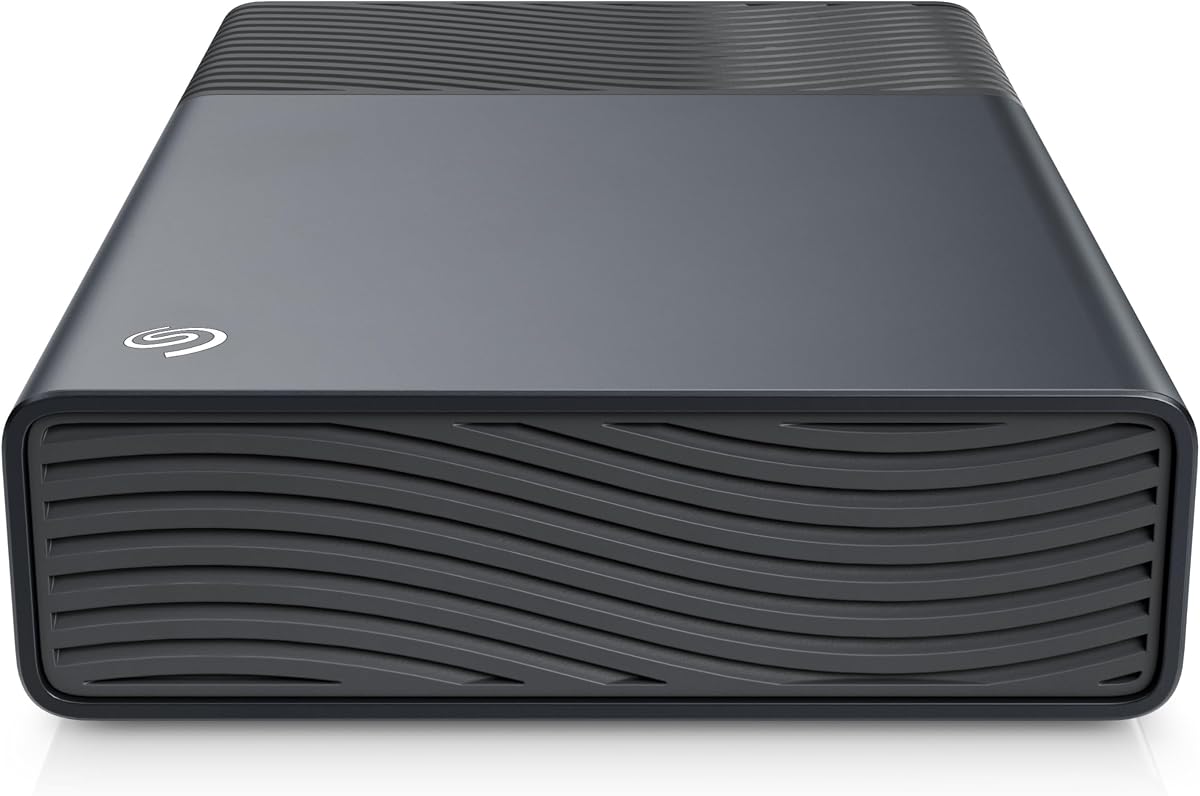
The Seagate One Touch 16TB delivers massive storage in a desktop form factor that is easy to use. Users appreciate its high rating for providing reliable backup and file storage without technical complexity.
We may earn a commission when you buy through this link, at no additional cost to you.
It is bus powered via USB-C, which means you do not need a wall outlet to run it. This convenience makes it ideal for quick data transfers and large file management tasks.
While it is limited to external use and slower than internal NVMe or SATA SSDs, the capacity is a major advantage for media libraries. The included recovery services also add peace of mind.
Consider this drive if you need to store huge archives of photos or videos. It is a practical choice for users who want a simple, high capacity external drive.
Work freely with its bus-powered design, as a single USB-C port handles both power and data without extra adapters or cables.
Safeguard your assignments and sensitive files with trusted performance, backed by rescue data recovery services for critical file protection.
We may earn a commission when you buy through this link, at no additional cost to you.
Western Digital WD Blue drives are a staple for everyday computing. The 12TB model brings generous capacity to desktop builds while maintaining a rating that reflects consistent reliability for daily tasks.
We may earn a commission when you buy through this link, at no additional cost to you.
With a 512 MB cache and 7200 RPM spindle speed, it offers smooth operation for general workloads. It supports high capacity needs without the complexity of specialized NAS hardware.
While not optimized for heavy server loads, it is perfect for storing games, media, and documents. The included Acronis True Image software makes migrating to this drive straightforward.
This drive is a smart choice for a secondary internal storage solution. It balances capacity and price well for users who need more space in their PC.
Built for everyday computing, this drive ensures your data stays accessible and secure while offering the space needed for growing file collections.
Free cloning software helps you transfer your existing data to the new drive quickly, ensuring a smooth transition without data loss.
We may earn a commission when you buy through this link, at no additional cost to you.
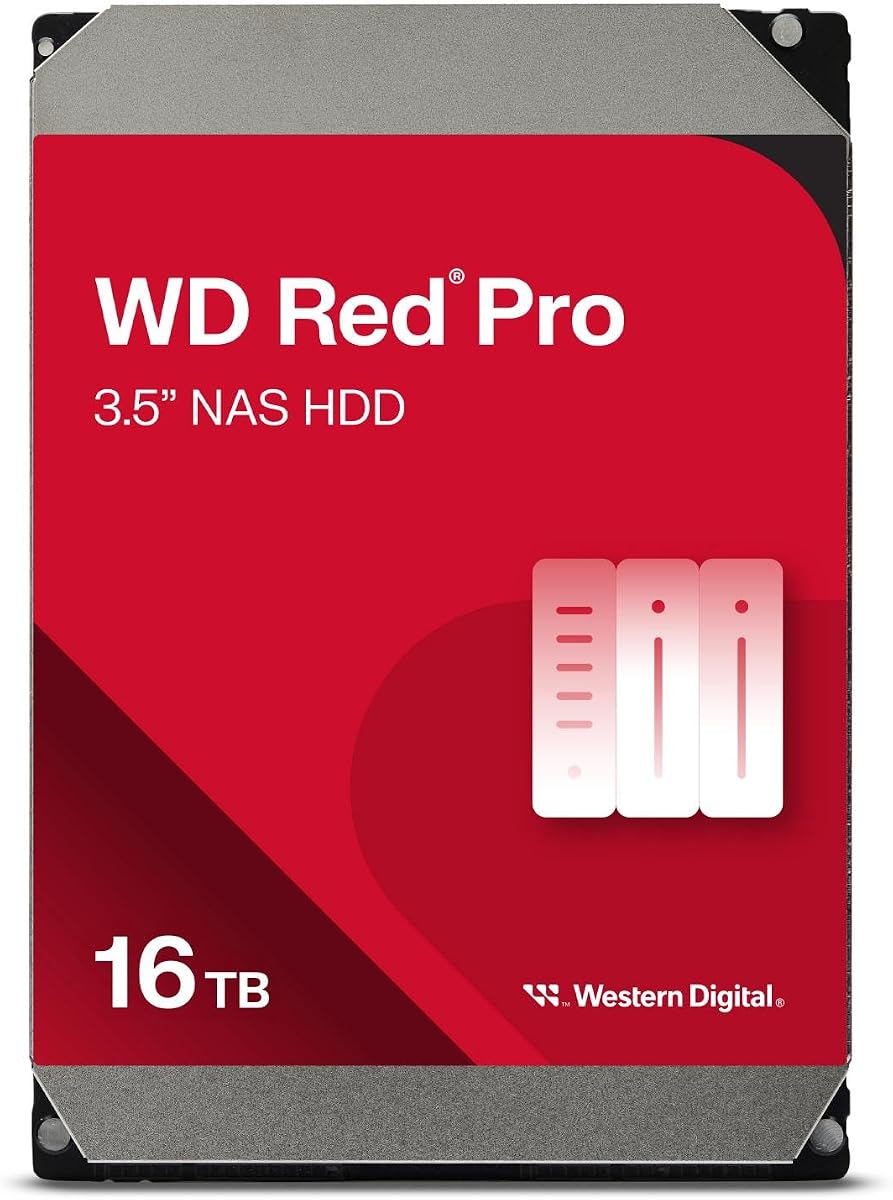
The WD Red Pro series is engineered for NAS systems requiring high performance and reliability. Although ratings are mixed, the specs show it is designed to handle demanding 24×7 environments with heavy data transfer needs.
We may earn a commission when you buy through this link, at no additional cost to you.
With CMR technology and a 550TB per year workload rate, it avoids the performance pitfalls of shingled drives. This ensures consistent write speeds in multi user scenarios.
Its price is higher than standard desktop drives, reflecting its specialized nature. It is best suited for users who need maximum capacity in a robust NAS configuration.
Choose this drive if you are building a high performance NAS or need a large internal drive for professional workloads. It prioritizes endurance over general desktop use.
Conventional Magnetic Recording technology avoids the performance hits of shingled writing, ensuring stable performance in high intensity RAID systems.
Rated for intensive workloads, this drive handles large data transfers better than standard desktop hard drives, making it suitable for NAS environments.
We may earn a commission when you buy through this link, at no additional cost to you.
The TERRAMASTER D8 Hybrid allows you to mix HDDs and NVMe SSDs in one enclosure for a versatile DAS setup. Its rating reflects a newer product that users find innovative but sometimes complex to configure.
We may earn a commission when you buy through this link, at no additional cost to you.
With support for up to 152TB total, you can store cold data on HDDs and hot data on fast SSDs. This hybrid approach helps optimize both cost and performance for your PC.
The tool-free trays and intelligent cooling make management easier than traditional enclosures. However, the dual interface type requires careful planning to maximize the benefits.
This model suits users who want a customized storage solution. It offers a powerful way to leverage both massive capacity and high speed in a single unit.
Tailor your storage by placing frequently accessed files on NVMe SSDs for speed and large archives on HDDs for cost efficiency.
Features like power-on recovery ensure the device restarts safely after an outage, protecting data integrity and enabling unattended operation.
We may earn a commission when you buy through this link, at no additional cost to you.
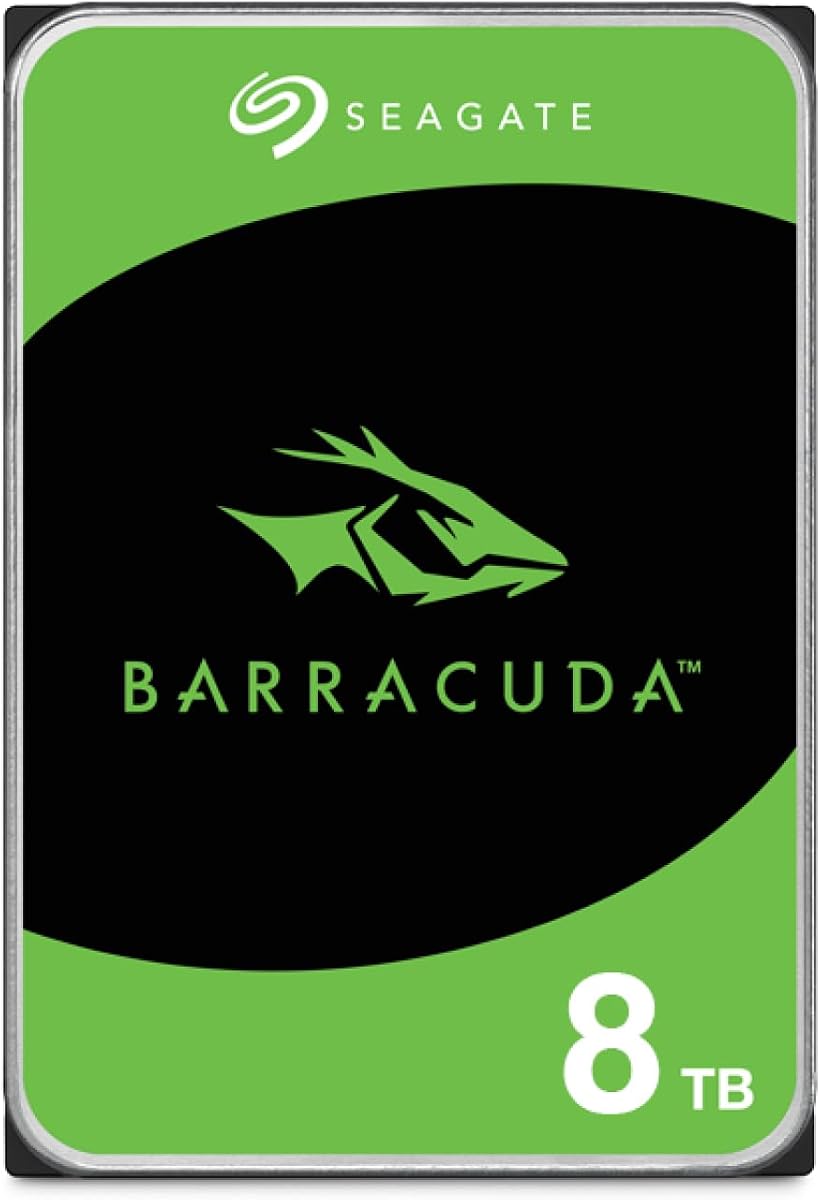
The Seagate BarraCuda 8TB is a reliable internal hard drive for building desktop PCs. Its high rating shows that users trust it for everything from gaming to media storage.
We may earn a commission when you buy through this link, at no additional cost to you.
With a sustained transfer rate of 190MB/s, it handles large files efficiently. It is a go-to solution for PCs that need large local capacity without complex external setups.
While it is slower than SSDs for small files, it is a practical choice for bulk storage. The packaging is minimal to reduce waste, but it may require extra cables.
Buy this if you want a dependable drive for your main system or secondary storage. It offers a balanced mix of speed, capacity, and affordability for most users.
This drive supports nearly every PC application including music, video, and photo editing, making it a versatile component for your setup.
Rely on internal hard drive technology backed by two decades of innovation, ensuring consistent performance and confidence in your storage choice.
We may earn a commission when you buy through this link, at no additional cost to you.
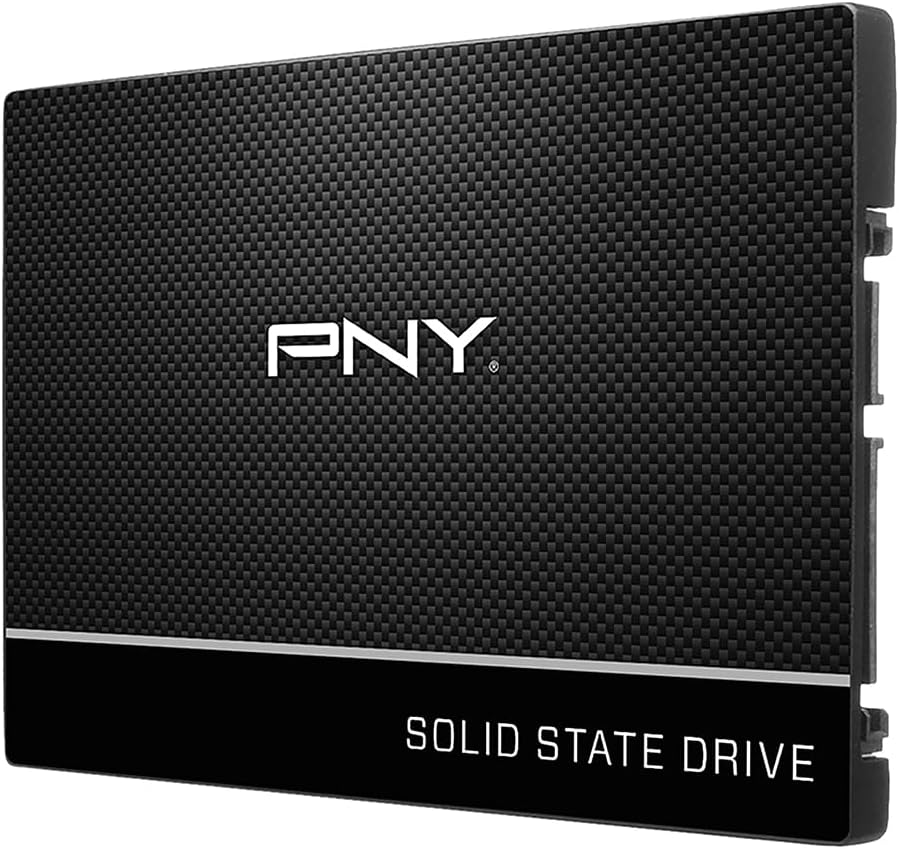
The PNY CS900 provides a budget friendly way to upgrade to solid state storage. Users report a high rating for the noticeable difference it makes in boot times and application loading speeds.
We may earn a commission when you buy through this link, at no additional cost to you.
With read speeds up to 550MB/s, it offers superior performance compared to mechanical hard drives. It works well in both desktops and laptops due to its standard 2.5 inch form factor.
It is ideal for installing an operating system or frequently used applications. The main trade-off is limited capacity compared to larger drives, which may suit secondary drives best.
If you need a quick upgrade without breaking the bank, this SSD is a solid choice. It improves responsiveness significantly for standard computing tasks.
Feel the difference with super-fast OS boot times and application loads that beat traditional hard drives by a wide margin.
Experience ultra-low power consumption that helps extend battery life in laptops while delivering consistent performance on desktops.
We may earn a commission when you buy through this link, at no additional cost to you.
Selecting the right direct attached storage depends on your capacity needs, budget, and access speed requirements. This guide breaks down the key factors to consider.
Capacity should match your data volume. Internal 3.5 inch drives offer the best price per TB, while 2.5 inch drives or external units save space and power. Decide if you need an internal bay or a desktop external box.
Choose larger capacities for media libraries and smaller ones for boot drives. Always verify your PC case or enclosure supports the drive size.
SATA III provides reliable speeds up to 6 Gb/s for internal drives. USB-C and USB 3.2 Gen2 allow external DAS units to reach high transfer rates. Ensure your PC has matching ports for optimal performance.
Internal drives connect via SATA data and power cables. External units plug in via USB. Consider Thunderbolt support for future-proofing if available on your system.
SSDs use flash memory for faster boot times and lower power consumption. HDDs use spinning platters for high capacity at a lower cost. Hybrid setups allow both in DAS enclosures to balance speed and space.
Use SSDs for your operating system and HDDs for bulk storage. This combination maximizes performance and cost efficiency for your storage environment.
If you need data protection, look for enclosures that support hardware RAID. This ensures files remain safe if a drive fails. Not all external DAS units include this feature, so check specifications carefully.
Software RAID on a PC is another option. Hardware RAID in an enclosure simplifies setup but adds cost. Decide on your redundancy level based on data importance.
Brands with high reliability ratings and strong warranties reduce risk. Look for drives designed for specific workloads like NAS or general desktop use. Longer warranties often indicate better build quality.
Check for included data recovery services. These can save time and money if a drive fails under warranty. Prioritize proven reliability over price alone.
High capacity internal drives generate heat and require good airflow. External enclosures should have fans or passive cooling. Some units are bus-powered, removing the need for separate power supplies.
Ensure your power supply can handle internal drives. For external units, consider the wattage requirements to avoid connectivity issues or under-powering.
Most drives work with Windows, macOS, and Linux out of the box. Some advanced features may require specific drivers or software. Verify compatibility before purchasing to avoid setup headaches.
Check if the drive is pre-formatted for a specific system. You may need to reformat for cross-platform use. Ensure drivers are available for your OS version.
Plan for future needs by choosing enclosures or PCs with spare bays. Upgradable solutions allow you to add more drives as your data grows. Some DAS units support hot-swappable bays for easy replacement.
Consider modular setups where you can increase storage incrementally. This flexibility ensures your storage system adapts to your changing requirements.
Always disconnect external drives safely using the eject function before unplugging. This prevents data corruption and ensures file operations complete successfully.
Keep internal drives and enclosures in a dust free environment with adequate airflow. Clean fans and vents regularly to prevent overheating and extend device lifespan.
Use backup software to schedule regular data copies. Do not rely on a single drive for important files. Implement multiple copies to protect against unexpected failures.
DAS stands for Direct Attached Storage and connects directly to a PC via USB or SATA. NAS is Network Attached Storage and connects via Ethernet. DAS is simpler and cheaper; NAS allows multi user access over a network.
Most DAS devices are plug-and-play and do not need drivers. However, RAID or advanced features may require specific software. Always check the product specs for driver requirements before buying.
Some hybrid DAS enclosures allow mixing HDDs and SSDs. This lets you store frequent data on SSDs and archives on HDDs. Not all enclosures support this; check product details for compatibility.
Most modern motherboards support SATA 6 Gb/s. Check your manual or system specs to confirm. You will need a SATA data and power cable to connect internal drives properly.
USB-C is a connector type and USB 3.2 Gen2 is the speed protocol. USB-C often supports faster standards like 10Gbps. Check your enclosure to ensure it uses the fast protocol for speed.
RAID 1 mirrors data for safety and RAID 5 balances speed and protection. RAID 0 is faster but risky. For backups, mirrored or redundant setups are generally safer than striping without parity.
Internal SATA drives usually cannot be hot swapped without special controller support. External enclosures with hot swap features allow drive replacement without power off. Verify features before purchasing.
We reviewed ten top rated direct attached storage devices for PC, from internal drives to hybrid enclosures. Whether you choose the Samsung SSD 870 EVO for speed or the Seagate IronWolf 12TB for capacity, each option serves different needs.
Prioritize speed for operating systems and capacity for archives. External DAS units offer flexibility without network complexity. Always consider compatibility, reliability, and your budget when making a final decision.
Prices and availability change often so check current listings before purchasing. Verify your PC supports the interface and ensure you have adequate power for your chosen setup to maintain system stability.