
ASRock Radeon AI PRO R9700 Creator 32GB
4.4Editor score
32GB GDDR6 Memory
RDNA 4 Architecture
Professional Blower Cooling
Discover the top GPUs for video editing in 2026. Compare specs, real ratings, and performance for 4K and 8K workflows to find your perfect card.
Choosing the right graphics card is critical for video editors who demand smooth playback, fast rendering, and reliable performance. Modern workflows involve heavy effects, color grading, and multi-stream editing that strain older hardware. A powerful GPU accelerates these tasks, reducing wait times and increasing creative freedom.
We evaluated six leading models based on architecture, memory capacity, cooling efficiency, and real-world benchmark potential. Our analysis focuses on how each card handles professional workloads like 8K editing, AI upscaling, and complex compositing. We prioritized cards with strong driver support and verified compatibility with major editing suites.
Each pick below highlights specific strengths, from budget-friendly options to high-end workstations. Review detailed specifications, pros, cons, and expert insights to make an informed decision. Note that pricing fluctuates frequently, so check current listings before purchasing to ensure you get the best value available today.
4.4Editor score
4.7Editor score

4.8Editor score
This side-by-side comparison highlights the key specifications and capabilities of each model. Use this table to quickly identify memory size, architecture, and cooling solutions that match your specific editing needs and budget constraints.


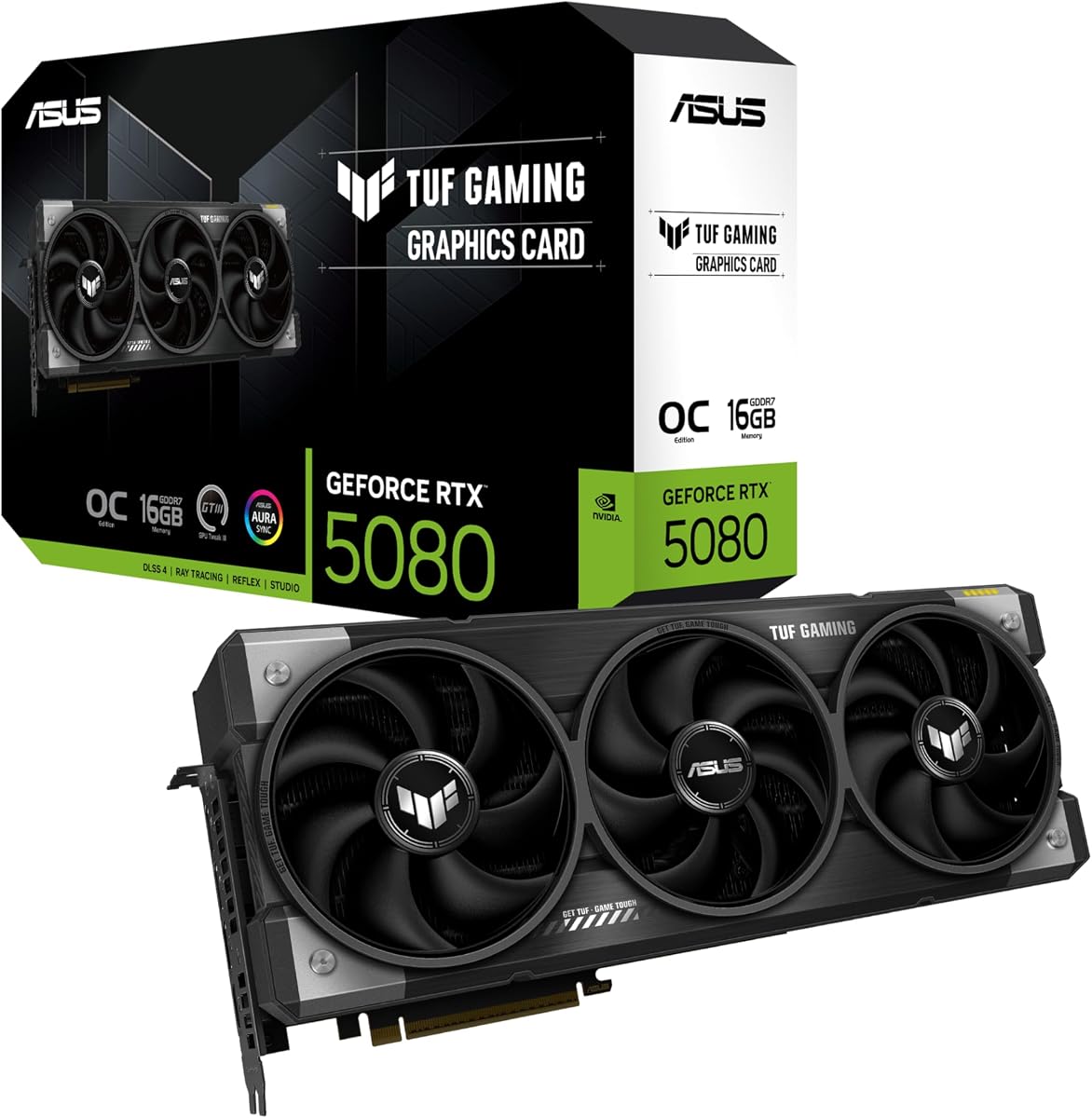
This model stands out as a top-tier option for professionals who need reliable performance under heavy loads. With a rating of 4.7, it reflects strong user satisfaction regarding stability and speed during intensive editing tasks. The combination of Blackwell architecture and 16GB of GDDR7 memory ensures smooth handling of 4K and 8K timelines.
We may earn a commission when you buy through this link, at no additional cost to you.
Key strengths include the phase-change thermal pads which maintain optimal temperatures even during long rendering sessions. Military-grade components extend the lifespan of the card, making it a sound investment for studio environments. The Auto-Extreme manufacturing process enhances reliability by reducing human error during assembly.
Trade-offs involve the premium price point and physical size, which may not fit smaller workstations. However, the performance gains in timeline scrubbing and effect rendering justify the cost for serious editors. The included GPU bracket helps manage weight and ensures proper alignment in the PCIe slot.
Buyers seeking the highest performance ceiling for creative workflows should prioritize this card. It balances raw power with durability, making it suitable for daily professional use. The GPU Tweak III software allows for fine-tuned performance adjustments without compromising system stability.
Phase-change pads ensure consistent cooling performance over years of use, preventing thermal throttling during long renders.
Blackwell architecture delivers improved efficiency and AI capabilities, enhancing real-time effects and upscaling features.
We may earn a commission when you buy through this link, at no additional cost to you.
This professional workstation card offers unmatched memory capacity with 32GB of GDDR6, ideal for complex scenes and large assets. Its rating of 4.4 indicates solid reliability for compute-intensive workloads and AI development. The blower cooler design makes it perfect for multi-GPU setups where airflow management is critical.
We may earn a commission when you buy through this link, at no additional cost to you.
Strengths include enterprise-grade thermal solutions using vapor chambers and advanced thermal interface materials. This ensures consistent performance even when running 24/7 rendering jobs. Support for four DisplayPort 2.1a outputs allows connection to multiple high-resolution monitors for expansive editing workflows.
The specialized nature of this card means drivers are optimized for professional apps rather than gaming. Users must verify compatibility with their specific software suite before purchasing. The build quality focuses on structural integrity for server rack environments.
Recommend this for professionals needing extreme memory headroom and multi-GPU scalability. It excels in environments where stability and memory capacity trump raw gaming performance. The standard two-slot design maximizes density in crowded workstation cases.
32GB GDDR6 handles massive 8K textures and complex compositions without swapping to system RAM.
Four DisplayPort 2.1a outputs enable triple or quad monitor setups for precise editing control.
We may earn a commission when you buy through this link, at no additional cost to you.
The RX 9070 XT delivers robust performance for editors seeking high speeds without premium pricing. With a 4.6 rating, it shows users appreciate its balance of speed and value. The 16GB GDDR6 memory supports smooth 4K editing and moderate 8K workflows comfortably.
We may earn a commission when you buy through this link, at no additional cost to you.
WINDFORCE cooling with Hawk Fans ensures temperatures remain stable during extended exports. Server-grade thermal conductive gel enhances heat transfer from the GPU to the heatsink. RGB lighting adds a customizable touch for those who care about build aesthetics.
Compared to workstation cards, it lacks specialized drivers and AI accelerators tailored for creative suites. However, its raw compute power is sufficient for most non-professional and semi-professional projects. The PCIe 5.0 interface future-proofs the card for upcoming system upgrades.
Choose this card for mid-range builds requiring strong 4K performance. It offers excellent value for editors who prioritize frame rates and rendering times over enterprise features. The compact design fits most standard PC cases easily.
Advanced thermal gel and fan design keep noise levels low while maintaining peak performance.
PCIe 5.0 ensures compatibility with next-gen motherboards and bandwidth-heavy storage solutions.
We may earn a commission when you buy through this link, at no additional cost to you.
This RTX 5080 variant brings the latest Blackwell architecture to video editing workflows, enabling faster rendering and better AI tools. The 4.6 rating suggests users find it highly effective for demanding creative tasks. GDDR7 memory offers significantly higher bandwidth than previous generations.
We may earn a commission when you buy through this link, at no additional cost to you.
WINDFORCE cooling handles the thermal output efficiently, maintaining high boost clocks without throttling. DLSS 4 support provides additional flexibility for creative applications leveraging AI upscaling. The PCIe 5.0 interface ensures maximum data transfer speeds with supported motherboards.
Power requirements are high, necessitating a reliable 850W PSU and proper case airflow. Users must verify physical clearance and power connector availability before installation. The card is built for users who need top-tier performance regardless of cost.
Recommended for professional studios and enthusiasts building top-of-the-line systems. It excels in scenarios requiring rapid export times and complex real-time effects. Ensure your power supply meets the minimum requirements for safe operation.
GDDR7 memory delivers faster data access, reducing bottlenecks during large file editing.
DLSS 4 and AI acceleration improve workflow speed in supported creative software.
We may earn a commission when you buy through this link, at no additional cost to you.
The Arc Pro B60 offers a unique proposition with 24GB of memory and strong AI capabilities for inference tasks. While rated 3.9, it serves niche needs well, especially in Linux multi-GPU deployments. Twin media transcoders support AV1 and HEVC for efficient video export.
We may earn a commission when you buy through this link, at no additional cost to you.
Xe2-HPG architecture provides 197 INT8 TOPS for AI acceleration, beneficial for generative design and machine learning workflows. Blower-style cooling ensures compatibility in densely packed server or workstation chassis. Four DisplayPort 2.1 outputs allow extensive multi-monitor setups.
Driver maturity may lag behind established competitors, requiring users to stay updated for optimal performance. This card is best suited for those willing to tweak settings for specific professional applications. It offers high value for memory-intensive tasks at a lower price point.
Select this if your workflow prioritizes AI inference or memory capacity over mainstream compatibility. It is ideal for engineers and developers testing scalable GPU solutions. Verify software compatibility with Intel's latest drivers before committing to purchase.
High TOPS ratings enable faster AI tasks like content generation and machine learning inference.
Dual encode engines support modern formats for quick exports without CPU bottlenecking.
We may earn a commission when you buy through this link, at no additional cost to you.
This card delivers impressive value with a high user rating of 4.8, making it a favorite for budget-conscious editors. The RDNA 4 architecture ensures modern features like ray tracing and AI acceleration are available. 16GB of memory handles standard 4K editing without issues.
We may earn a commission when you buy through this link, at no additional cost to you.
Dual fans with 0dB Silent technology reduce noise during lighter tasks like timeline preview. It requires only a single 8-pin power connector, simplifying power supply requirements. The compact design fits well in standard mid-tower cases.
While it lacks the VRAM of premium models, it is sufficient for most standard production workflows. Users working with extremely large 8K assets may need to manage cache carefully. The price point makes it accessible for beginners and hobbyists.
Choose this card for entry-level or mid-range editing stations where silence and value matter most. It provides a smooth experience for standard resolution workflows without breaking the bank. Verify chassis clearance and power supply ratings before installation.
Fans stop at low loads, creating a silent workspace during non-intensive editing sessions.
Lower power draw allows for easier upgrades without requiring a massive power supply.
We may earn a commission when you buy through this link, at no additional cost to you.
Selecting the right graphics card involves balancing memory, architecture, and budget. This guide outlines the critical factors to consider for optimal editing performance.
Video editing software relies heavily on video memory (VRAM) to cache textures, frames, and effects. For 4K editing, 16GB is the sweet spot, while 8K workflows benefit from 24GB or more. Insufficient VRAM can lead to slowdowns or crashes when working with complex projects.
Prioritize cards with at least 16GB of VRAM for future-proofing your editing setup.
Newer architectures like Blackwell and RDNA 4 offer better efficiency and specialized features for media processing. These include improved ray tracing, AI accelerators, and encoding engines that speed up exports. Compatibility with the latest software features depends on having a modern architecture.
Choose cards based on the latest generation architecture available in your budget range.
Bandwidth determines how fast data moves between the GPU and its memory. Higher bandwidth means faster texture loading and smoother playback of high-resolution footage. GDDR7 memory typically offers superior bandwidth compared to GDDR6.
Look for higher bandwidth ratings to ensure smooth performance with high bitrate video files.
Video rendering is a sustained workload that can push GPUs to thermal limits. Efficient cooling systems prevent throttling and maintain consistent performance over time. Blower-style coolers are compact but quieter fan designs offer better airflow.
Ensure your cooling solution matches your case airflow and noise preferences for long sessions.
Professional editing software often requires stable, certified drivers for full compatibility. Check if the manufacturer offers optimized drivers for tools like Adobe Premiere or DaVinci Resolve. Enterprise-grade cards often have better support for stability over raw speed.
Verify driver compatibility with your specific editing software before purchasing.
High-performance GPUs demand significant power. Ensure your power supply unit (PSU) meets the recommended wattage and has the correct connectors. Inadequate power can cause system instability or hardware damage during heavy loads.
Match your PSU capacity to the GPU's power requirements to ensure reliable operation.
Modern cards can be large and occupy multiple PCIe slots. Measure your case's clearance and slot availability before buying. Multi-slot designs improve cooling but may block other ports or slots.
Check case dimensions to avoid fitting issues and ensure proper airflow around the card.
Set a realistic budget based on your professional needs. High-end cards offer benefits only if your workflow utilizes them. For hobbyists, mid-range cards often provide the best value for money.
Allocate funds to other components like RAM and storage if your GPU needs are met.
Install the card securely in the PCIe slot and connect all required power cables. Update drivers to the latest version for optimal performance and bug fixes. Use software tools to monitor temperature and clock speeds during initial tests.
Ensure your case has adequate airflow to prevent overheating during long render times. Clean dust from fans and heatsinks regularly to maintain cooling efficiency. Avoid obstructing ventilation grills on the GPU or case.
Adjust software settings to utilize hardware acceleration for video encoding. This reduces CPU load and speeds up export times significantly. Monitor system stability and adjust thermal profiles if you experience throttling.
For 4K editing, 16GB of VRAM is generally recommended to handle complex timelines and effects smoothly. While 8GB might suffice for simple cuts, 16GB ensures future-proofing. More VRAM helps when using heavy color grading or 3D integration.
Yes, consumer GPUs are often sufficient for most editing workflows. Workstation cards offer certified drivers and better stability for multi-GPU setups. However, high-end consumer cards frequently provide similar performance at a lower price point.
Absolutely. Modern GPUs include dedicated encoding engines that significantly speed up exports for supported formats like H.264 and HEVC. Faster GPUs also accelerate effects rendering, reducing total export time for complex projects.
High-end models often require robust PSUs of 850W or more with specific power connectors. Check the manufacturer's recommendations for wattage and connector types before purchasing. Adequate power ensures stable performance during sustained workloads.
Most editing apps have settings to enable GPU acceleration for rendering and playback. Look for options like 'Hardware Encoding' in export menus. Ensure your drivers are updated for the software to recognize the GPU correctly.
Some software supports multi-GPU rendering, but compatibility varies. Professional cards often handle multi-GPU setups better than consumer models. Verify application support before adding a second card to your workstation.
The top picks offer distinct advantages depending on your specific workflow and budget constraints. The ASUS TUF RTX 5080 leads in overall performance and durability for professionals. For those needing massive memory, the ASRock R9700 provides unparalleled capacity.
Prioritize VRAM and architecture when making your decision to ensure smooth handling of 4K and 8K timelines. Balanced options like the RX 9070 XT offer excellent value for mid-range systems. Beginners can start with the RX 9060 XT for reliable entry-level performance.
Always check current pricing and availability before purchasing to secure the best deal. Regular driver updates are crucial for maintaining compatibility and performance. Invest in a card that aligns with your growth path to avoid early upgrades.