
SKILSAW Medusaw Worm Drive
4.6Editor score
15 Amp worm drive gear
Integrated rolling foot plate
Wet dust management system
Compare the top 6 wet brick saws for masonry contractors. Explore ratings, specs, and expert reviews to find the perfect tool for your job site needs.
Selecting the right wet brick saw is crucial for masonry contractors who demand precision and efficiency on every job site. These specialized tools minimize dust and extend blade life while delivering clean cuts through tough materials like concrete and stone.
We evaluated six leading models based on motor power, cutting depth, water management systems, and overall durability. Our comparison focuses on real-world performance metrics that matter most to professionals handling daily masonry tasks.
Each pick highlights unique strengths tailored to different project scales and budgets. While pricing varies, the value lies in reliability and safety features. Please check current listings for the latest availability and deal updates.
4.6Editor score

4.3Editor score

4.3Editor score
This side-by-side comparison highlights key specifications across all six models to help you quickly identify the best fit for your specific masonry requirements and operational environment.


The VEVOR Electric Concrete Saw stands out as a top performer for masonry contractors seeking reliable performance without breaking the bank. With a robust 3200W motor and a 6-inch cutting depth, it handles reinforced concrete and bricks with ease.
We may earn a commission when you buy through this link, at no additional cost to you.
Its integrated wet-cutting attachment provides direct water spraying, significantly reducing dust and preventing lung damage during operations. The wheeled base doubles as a positioning device, making precise grooves easier to achieve with less physical strain.
While it excels in power and safety features like the GFCI design and slow start function, it is not suitable for sticky materials like asphalt. The weight might be a consideration for frequent relocation across large job sites.
This saw is ideal for contractors who need a balance of power and affordability. The peace of mind offered by overload protection and a double switch makes it a trustworthy addition to any professional toolkit.
The double switch and slow start design prevent accidental activation, ensuring safer operation during busy work hours.
Direct water spraying eliminates the need for one-handed watering, improving operational security and cutting efficiency.
We may earn a commission when you buy through this link, at no additional cost to you.
The Makita XCC01Z offers unmatched mobility for contractors working in areas without easy power access. Its 18V LXT Lithium-Ion system ensures consistent power delivery, while the brushless motor runs cooler and more efficiently for extended life.
We may earn a commission when you buy through this link, at no additional cost to you.
Features like Automatic Speed Change technology optimize performance during operation, and the integrated water delivery system helps meet OSHA compliance for dust control. The electric brake allows for faster repositioning, maximizing productivity on tight schedules.
However, this unit is sold as a tool only, meaning batteries and chargers must be purchased separately. The 5-inch blade limits cutting depth compared to larger models, which may restrict use on thicker masonry materials.
Ideal for light to medium masonry tasks, this saw excels where portability is king. Its ability to make bevel cuts up to 45 degrees adds versatility for detailed finishing work.
The integrated water system feeds water continuously, supporting compliance with OSHA Table 1 for masonry cutting applications.
Adjustable depth and bevel cuts allow for precise angles, making it suitable for complex architectural masonry details.
We may earn a commission when you buy through this link, at no additional cost to you.
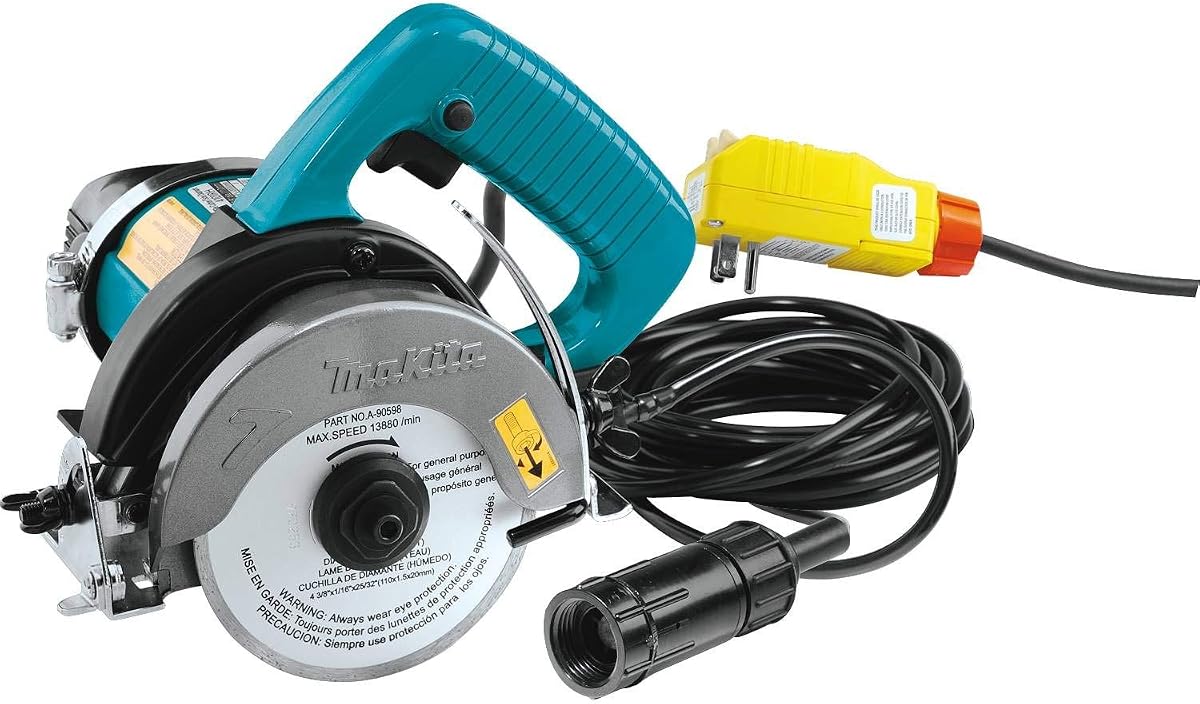
The Makita 4101RH is a classic choice for contractors who prioritize precision and safety. Its powerful 7.9 AMP motor handles demanding applications, while the special cover prevents water from entering the motor housing for better durability.
We may earn a commission when you buy through this link, at no additional cost to you.
Included accessories like 15 feet of tubing, a water pressure regulator, and a water valve ensure you are ready to work out of the box. The GFCI plug adds a critical layer of protection against electrical hazards on wet job sites.
While it offers solid performance, the cut depth is limited to 1-5/8 inches at 90 degrees, which may not suffice for thick structural work. It is best suited for detailed masonry tasks rather than heavy demolition.
This saw is perfect for professionals who value Makita's build quality and need a reliable tool for smaller projects. The water management system is robust, ensuring clean cuts and reduced dust exposure.
The special cover is engineered to prevent water ingress, protecting the motor and extending the tool's operational lifespan.
Comes with all necessary water supply components, saving time on setup and ensuring immediate readiness for cutting tasks.
We may earn a commission when you buy through this link, at no additional cost to you.
The DEWALT Wet Tile Saw is engineered for portability, weighing only 6.6 pounds. This makes it incredibly easy to carry to different locations on a job site, ideal for contractors needing a backup or detail-oriented tool.
We may earn a commission when you buy through this link, at no additional cost to you.
Despite its size, the 10.8 Amp motor delivers significant power with a max speed of 13,000 RPM, allowing for efficient cuts through granite and porcelain. The premium diamond blade supports wet or dry cutting up to 1 3/8 inches deep.
The lock-on button reduces user fatigue during production cuts, and the dust-sealed switch protects the unit from contamination. However, its small blade size limits it to lighter masonry work rather than deep structural cuts.
This unit is perfect for finish work or small-scale renovations where mobility is more important than raw cutting power. The adjustable depth-of-cut allows users to adapt to various material thicknesses effectively.
Rubber overmold grips provide increased comfort during extended use, reducing hand strain during repetitive cutting tasks.
With 13,000 RPM, it completes cuts quickly, minimizing time spent on smaller tile and brick projects.
We may earn a commission when you buy through this link, at no additional cost to you.
Upgrading to a high-performance blade can transform the capabilities of your existing saw. The DEWALT Diamond Blade for Block and Brick is designed for both dry and wet cutting, offering exceptional durability and precision.
We may earn a commission when you buy through this link, at no additional cost to you.
Its continuous rim design ensures smooth cuts through block and brick materials, reducing chipping and improving finish quality. At 7 inches, it matches larger saws and provides a solid upgrade path for users needing more cutting power.
While it is not a standalone saw, this blade is a critical component for maintaining efficiency. Easy to use and manufactured for high performance, it complements any masonry setup that requires reliable cutting results.
Consider this blade if your current one shows signs of wear or if you need a specific profile for detailed brick work. It ensures your saw runs at peak efficiency, extending the life of your equipment.
The continuous rim provides a smoother cut edge, which is essential for visible masonry work where finish quality matters.
Suitable for both wet and dry cutting, allowing flexibility depending on the availability of water on site.
We may earn a commission when you buy through this link, at no additional cost to you.
The SKILSAW Medusaw delivers professional-grade power with its 15-Amp worm drive geared concrete saw system. It is built for the toughest jobs, offering a complete cutting solution with an integrated rolling foot plate for smooth movement.
We may earn a commission when you buy through this link, at no additional cost to you.
Features like the cut-ready adjustable plunge lock and retractable front pointer guide the saw precisely along the cut line. The wet/dry dust management system controls dust effectively, ensuring cleaner cuts and better visibility during operation.
Rust-resistant brackets and fasteners protect against corrosion, extending the tool's lifespan even in harsh environments. While it comes at a higher price, the robust construction and safety features justify the investment for serious contractors.
This is the ideal choice for those needing a powerful, reliable saw that can handle heavy-duty concrete cutting. The GFCI protection reduces shock risk, adding another layer of safety for the user.
The wet/dry dust management system ensures cleaner cuts and reduces airborne particles, maintaining a safer work environment.
Retractable front pointer and plunge lock allow for precise starts and stops, improving accuracy in complex cuts.
We may earn a commission when you buy through this link, at no additional cost to you.
Choosing the right wet brick saw involves assessing power, cutting capacity, and safety features. This guide breaks down the key factors to help you make an informed decision for your masonry projects.
Motor power determines how efficiently the saw can cut through dense materials like reinforced concrete. Look for saws with at least 10 to 15 amps for heavy-duty applications, or brushless technology for cordless efficiency. Higher wattage ensures consistent performance without stalling during deep cuts.
Prioritize models with ample power to handle your typical workload without overheating. This ensures longevity and smooth operation on demanding job sites.
Cutting depth is crucial for handling different material thicknesses. Most masonry saws offer depths ranging from 1.5 to 6 inches. Ensure the blade size matches your project needs, as larger blades allow for deeper cuts in fewer passes.
Select a saw with a cutting capacity that exceeds your average material thickness to avoid multiple passes. This saves time and reduces wear on the blade.
Effective water delivery is essential for dust control and blade cooling. Systems with integrated pumps and adjustable flow rates provide better control over the wetting process. Look for features like direct water spraying to minimize manual handling.
A robust water management system ensures compliance with safety standards and prolongs blade life. Always check for included tubing and regulators before purchasing.
Portability varies between corded and cordless models. Corded saws offer continuous power but require extension cords and access to outlets. Cordless options provide freedom of movement but depend on battery life and weight.
If you work on sites with limited power access, consider a cordless model. For stationary work, a wheeled base can make transportation easier and more efficient.
Safety is paramount when handling power tools. Look for features like GFCI protection, double switches, and slow start functions to prevent accidents. Dust management systems also protect respiratory health by reducing airborne particles.
Always prioritize saws with built-in safety mechanisms. This protects both the user and the equipment from unexpected incidents.
Construction materials and design affect how well a saw withstands daily use. Metal housings and rust-resistant fasteners extend the tool's life. Brands with established reputations often provide better warranties and support.
Invest in a durable model that can handle the rigors of professional use. Check for reinforced components that reduce vibration and fatigue.
Long work hours require comfortable handles and intuitive controls. Rubber overmold grips and balanced designs reduce hand strain. Features like lock-on buttons help maintain cutting speed without constant pressure.
Choose a saw with ergonomic features to improve productivity and reduce fatigue. Comfortable tools lead to better focus and precision.
Budget considerations should balance against performance needs. While expensive models offer premium features, basic units may suffice for lighter tasks. Consider the total cost including blades and accessories when evaluating value.
Focus on long-term value rather than just upfront cost. A reliable saw saves money by reducing downtime and replacement needs.
Always wear appropriate safety gear including goggles, masks, and gloves before operating the saw. Ensure the blade is properly installed and tightened according to the manufacturer's instructions to prevent accidents during use.
Set up the water supply system correctly to ensure consistent flow. Adjust the water flow rate to match the material being cut, ensuring enough moisture to cool the blade without flooding the work area excessively.
After use, clean the saw thoroughly to remove dust and debris. Dry all components and store the tool in a dry place. Regularly inspect the blade and replace it when worn to maintain cutting efficiency and safety.
Wet brick saws use water to cool the blade and suppress dust, which extends blade life and protects respiratory health. This results in cleaner cuts and safer working conditions, especially for prolonged jobs.
Cutting depths vary by model, ranging from 1.5 inches to over 6 inches. Check the specifications of your chosen saw to ensure it meets your material thickness requirements.
Some saws support both wet and dry cutting, but dry cutting generates more heat and dust. Always verify the manufacturer's guidelines before switching modes to avoid damaging the blade or motor.
Modern cordless models with brushless motors can deliver significant power for light to medium tasks. However, corded saws remain superior for heavy-duty continuous cutting where battery life may be a limitation.
Replacement frequency depends on usage intensity and material hardness. A blade showing signs of dullness or reduced efficiency should be replaced immediately to maintain safety and cut quality.
Prioritize GFCI protection, double switches, and robust dust management systems. These features minimize electrical shock risks and reduce exposure to harmful dust particles during operation.
A wheeled base simplifies movement across job sites, especially for heavier units. It reduces physical strain and helps position the saw accurately for precise cuts without additional lifting.
We have reviewed six top wet brick saws that cater to various contractor needs. The VEVOR Electric Concrete Saw stands out as the best overall choice for its balance of power and affordability.
When selecting a saw, prioritize features that align with your daily tasks, such as motor power and cutting depth. Safety and ergonomic comfort are equally vital for maintaining productivity and health on the job.
Prices and availability fluctuate regularly, so always verify current listings before purchasing. Investing in the right tool ensures efficiency and precision for all your masonry projects.