
Renogy 200W N-Type
4.5Editor score
Compact Design for Class B Vans
25% Cell Efficiency
Low Temperature Coefficient
Discover the top 10 RV solar panels of 2026. Compare efficiency, durability, and real user ratings to power your off-grid adventures reliably.
Finding the right RV solar panels is essential for maintaining power on the road. High-quality panels convert sunlight into electricity efficiently, ensuring your appliances and devices stay charged. Whether you are a full-time RVer or a weekend camper, selecting the best system matters.
We compared ten top-rated RV solar panels based on efficiency, durability, and user feedback. Our analysis looks at monocrystalline cells, bifacial technology, and waterproof ratings. We also considered ease of installation and compatibility with common battery systems.
Each pick in this list shows specific strengths for different travel styles and budgets. You will find detailed reviews highlighting key features and real-world performance. Keep in mind that product prices and availability can change frequently on retailer sites.
4.5Editor score

4.8Editor score

4.5Editor score
This side-by-side comparison highlights the key specifications and features of each panel to help you choose the right system for your RV.




The Callsun 200W N-Type solar panel ranks as our top choice for RV solar systems due to its exceptional efficiency and advanced design. With a 4.8 rating from users, it delivers reliable power generation even in challenging conditions. Its bifacial technology allows it to capture light from both sides, maximizing energy output.
We may earn a commission when you buy through this link, at no additional cost to you.
This panel features advanced N-type monocrystalline cells with 16BB busbar technology, ensuring up to 25.6% conversion efficiency. The TwinCell Anti-Shading Design divides the panel into two sections, allowing one part to continue generating power if the other is shaded. This is crucial for RVs that move through trees or camp near structures.
While the price is higher than some competitors, the performance justifies the investment. The low temperature coefficient of -0.30%/K means it maintains better output in hot climates. The only trade-off is that you must ensure the back side gets some light to benefit fully from the bifacial design.
If you prioritize maximum power generation and long-term reliability, this is the panel to choose. It is ideal for full-time RVers who need consistent energy for high-wattage appliances. Pair two units for 400W systems to match modern portable power station requirements.
The transparent backsheet captures reflected light from RV roofs or ground surfaces, adding significant energy without extra space.
Tempered glass and corrosion-resistant frames ensure the panel withstands hail, wind, and decades of outdoor exposure.
We may earn a commission when you buy through this link, at no additional cost to you.
The Renogy 200W N-Type solar panel offers excellent value for RV owners on a budget. It holds a 4.5 rating and maintains a compact footprint that fits Class B vans easily. This model is smaller and lighter than previous versions, making installation simpler for DIYers.
We may earn a commission when you buy through this link, at no additional cost to you.
With 25% cell efficiency using 16BB technology, it converts sunlight effectively even in moderate conditions. It is compatible with 12V and 24V systems including Lithium and AGM batteries. The low degradation rate ensures it lasts many years without significant power loss.
The main trade-off is that it lacks the bifacial technology found in higher-end models. However, for most campers with straightforward roof layouts, this is not a major issue. The price point makes it accessible for those setting up their first solar system.
We recommend this for weekend warriors or first-time RVers who want reliable power without overspending. It pairs well with most charge controllers and can be expanded later if needed. The brand reputation adds peace of mind for long-term use.
At 7.5% smaller and 11.7% lighter, this panel fits tight roof spaces better than standard 200W options.
Works with Lithium, AGM, and deep-cycle batteries ensuring flexible system configurations for different budgets.
We may earn a commission when you buy through this link, at no additional cost to you.
The EPOCH 860W Bifacial set delivers premium performance for large RVs needing substantial power. Each 430W panel features Class A+ cells with PERC technology, achieving 25% efficiency. The bifacial design captures light from both sides, boosting total harvest.
We may earn a commission when you buy through this link, at no additional cost to you.
These panels are built for durability with high tolerance for hail and snow loads up to 5400 Pa. The IP68 junction box ensures complete waterproof protection against harsh weather. Installation is straightforward with pre-drilled holes and compatible connectors.
While the wattage is high, you must have adequate roof space to mount two large panels. The weight is also greater than single 200W options, so checking RV roof load capacity is necessary. However, for full-timers needing constant power, it is worth the investment.
This system is ideal for large motorhomes or off-grid cabins where power independence is critical. It supports fast charging for large battery banks. The 25-year linear power output warranty guarantees long-term value.
16BB cell design with PERC and half-cut cells reduces resistance and improves overall module efficiency significantly.
Tolerates wind loads of 2400 Pa and snow loads of 5400 Pa ensuring survival in extreme climates.
We may earn a commission when you buy through this link, at no additional cost to you.
This variant of the Renogy 200W panel offers similar specs to the previous model but with specific optimizations for different battery systems. It maintains the 25% efficiency and compact dimensions that make it popular for smaller RVs. The N-Type cells reduce microcrack risks significantly.
We may earn a commission when you buy through this link, at no additional cost to you.
Operating at 24V helps minimize current loss and maximize system efficiency. It is versatile enough to work with both 12V and 24V setups. The low temperature coefficient ensures it performs well in hot summer conditions.
Users appreciate its consistent performance and reliable construction. It is a solid choice for those who need a second panel to expand their existing system. The warranty coverage matches industry standards for longevity.
Choose this if you need a reliable add-on to a larger setup. It is compatible with most inverters and charge controllers. The price remains competitive compared to other high-efficiency options on the market.
Designed to work with Lithium and deep-cycle batteries offering flexibility for various off-grid energy needs.
Low temperature coefficient helps maintain output even when roof temperatures soar during summer days.
We may earn a commission when you buy through this link, at no additional cost to you.
The ECO-WORTHY 200W Kit is a complete bundle that includes everything needed to start generating power immediately. It features high-performance monocrystalline cells and a 30A PWM charge controller. The kit is perfect for those who do not want to source separate parts.
We may earn a commission when you buy through this link, at no additional cost to you.
It delivers an average daily output of 800Wh under four hours of full sunshine. The cables are pre-drilled and plug-and-play allowing for quick installation. Mounting brackets and connectors are all included in the box.
The main downside is the use of a PWM controller instead of MPPT which is less efficient in low light. However for budget-conscious beginners this is an acceptable trade-off for convenience. The aluminum alloy frame is durable and corrosion-resistant.
This kit is ideal for first-time DIY installers or small campers. It simplifies the setup process significantly. If you plan to upgrade later you can replace the controller with an MPPT unit easily.
Pre-drilled back and included cables allow you to install the system in under two hours without extra tools.
Delivers 800Wh per day under ideal conditions ensuring enough power for lights and small appliances.
We may earn a commission when you buy through this link, at no additional cost to you.
This portable panel is designed for flexibility and ease of transport. It weighs only 13.89 lbs and folds down to backpack size. The 25% efficiency matches fixed panels ensuring you do not sacrifice power for convenience.
We may earn a commission when you buy through this link, at no additional cost to you.
The magnetic handle design makes it easy to deploy and store quickly. It features USB-C and USB-A ports for charging devices directly. This is perfect for tailgating or hiking trips where you need temporary power.
It does not mount permanently to your RV roof so you must bring it out each time you camp. This limits it to supplemental power rather than main system charging. However for versatility it is hard to beat.
Buy this if you need a portable supplement for power stations. It is ideal for road trips where you park outside the RV for activities. The kickstands allow you to angle it for optimal sun capture.
Weighs 13.89 lbs and folds to 23.7 x 22.9 x 1.9 inches making it easy to pack in any vehicle.
Includes 45W USB-C PD and USB-A ports for charging phones and tablets without extra cables.
We may earn a commission when you buy through this link, at no additional cost to you.
This small 20W panel is designed specifically to maintain batteries during storage or idle periods. It prevents deep discharge which extends battery life. The included 8A controller manages charging intelligently to avoid overcharging.
We may earn a commission when you buy through this link, at no additional cost to you.
You can use it on trailers, boats, or RVs sitting unused. The mounting bracket is adjustable so you can orient the panel towards the sun. It is weather-resistant and works well in various conditions.
While it cannot power appliances it is a smart addition for long trips. The cost is very low compared to the value of preserving battery health. It works with most common 12V battery types.
Add this to your inventory if you leave your vehicle parked for weeks. It ensures your engine or house batteries are ready when you return. It is an essential tool for preventing battery failure.
Prevents overcharging and deep discharge ensuring your battery lasts longer during seasonal storage.
Three-stage charging design ensures safe and efficient battery maintenance without user intervention.
We may earn a commission when you buy through this link, at no additional cost to you.
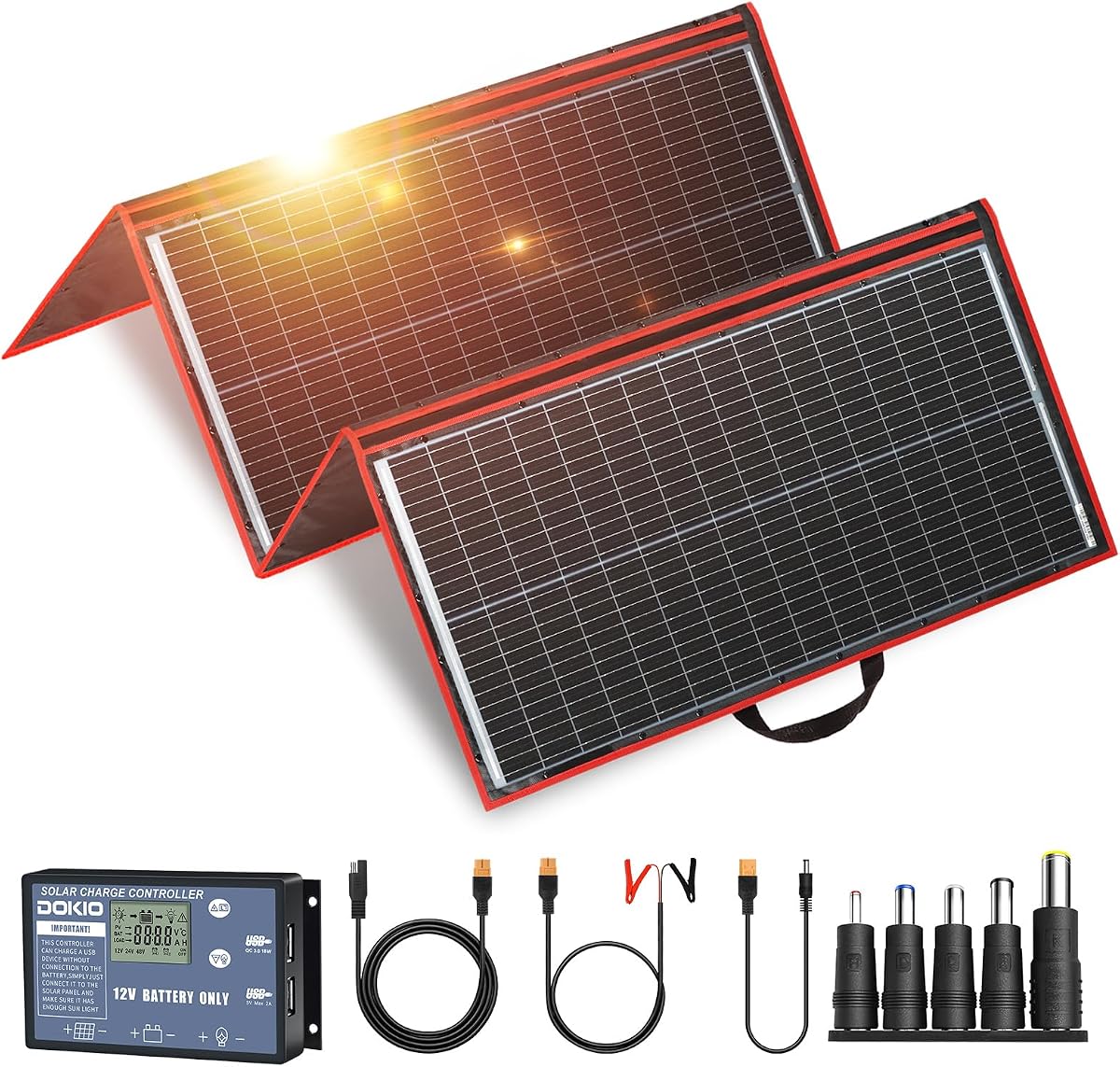
The DOKIO 300W Portable offers high power in a foldable format. It weighs 15.2 lbs but delivers 300W of energy which is great for larger portable power stations. The design allows you to position the panel in the sun while keeping the controller shaded.
We may earn a commission when you buy through this link, at no additional cost to you.
It includes a standalone PWM controller for safety and efficiency. The long cable allows flexible placement. You get multiple adapters to fit various inputs making it versatile for different devices.
The fabric case requires care to avoid prolonged exposure to rain. This is a minor issue compared to the portability it offers. Users find it reliable for camping and emergency backup needs.
Buy this if you need portable power for camping gear or larger stations. It is robust and offers good value for the wattage. The adapter set ensures it works with many brands.
Includes 10ft cable allowing you to place panel in full sun while keeping controller in shade.
Multiple connectors included for compatibility with various power station and battery input types.
We may earn a commission when you buy through this link, at no additional cost to you.
This starter kit is perfect for entry-level RVers who want a proven system. It includes a 100W panel and a 30A PWM controller. The high rating shows user satisfaction with its performance and reliability.
We may earn a commission when you buy through this link, at no additional cost to you.
It supports expansion up to 400W allowing you to add panels as needs grow. The controller is Bluetooth compatible for remote monitoring via an app. This adds convenience for checking status without moving.
While 100W is not enough for large appliances it is great for small loads like lights or fans. The build quality is solid and fits standard RV roofs easily. It is a safe choice for beginners.
Choose this for your first solar setup. You can build on it later. The kit is simple to install and works with most battery types. Renogy support ensures you have help if needed.
System can be expanded to 400W allowing you to upgrade as your power needs increase over time.
Bluetooth port allows connection to app for real-time tracking of solar performance and battery levels.
We may earn a commission when you buy through this link, at no additional cost to you.
This 200W panel offers high efficiency at a competitive price. It uses N-Type 18BB cells to achieve 25.6% efficiency. The bifacial design can generate up to 15% more energy under reflective conditions.
We may earn a commission when you buy through this link, at no additional cost to you.
It features an IP68 waterproof junction box for long-term protection. The dimensions are ideal for Class B vans where space is limited. Pre-drilled holes make installation straightforward for most RV roofs.
To get the most out of it you need reflective surfaces underneath the panel. If mounted flat on a dark roof the gain might be minimal. However it is still efficient as a standard panel.
Consider this if you want bifacial benefits without a premium price. It is well-suited for vans with light-colored or reflective surfaces. The compact footprint allows flexible placement options.
At 52.76 x 26.38 inches it maximizes power while fitting easily into tight roof spaces on Class B vans.
Exclusive IP68 waterproofing and potting technology prevent water ingress and extend overall lifespan.
We may earn a commission when you buy through this link, at no additional cost to you.
Selecting the right solar panels requires understanding several technical factors. This guide breaks down what to look for to ensure you get the best value.
Efficiency measures how much sunlight a panel converts into usable electricity. Higher efficiency means more power from less surface area. Look for panels with 22% to 26% efficiency for optimal performance.
Choose the highest efficiency you can afford to maximize power output.
Monocrystalline panels use single-crystal silicon cells which offer better efficiency and durability. They also perform better in low light and heat. Polycrystalline are cheaper but less efficient and bulkier.
Always select monocrystalline panels for RV applications to save space and weight.
Calculate your daily power usage by listing all devices and their run times. A 200W panel generates about 800Wh per day in full sun. Ensure your total wattage covers your daily needs plus a buffer.
Add 20% extra capacity to account for cloudy days and efficiency losses.
Bifacial panels capture light from both sides increasing total output. This works best on reflective roofs or elevated mounts. However they cost more and need careful placement to be effective.
Use bifacial panels if your roof has reflective coatings or high light bounce.
Measure your available roof space accurately before buying. Fixed panels need secure mounting brackets and sealant. Flexible panels are lighter but less durable over time.
Ensure the panel weight does not exceed your roof's load capacity.
Look for IP67 or IP68 ratings on junction boxes and connectors. Tempered glass and aluminum frames protect against hail and wind. Higher wind load ratings ensure stability in storms.
Verify the panel can withstand local weather conditions like snow or high wind.
Most high-quality panels offer 25-year performance warranties. Check the manufacturer's reputation for customer support and claims. Longer warranties indicate confidence in product longevity.
Keep your receipt and register the product to validate warranty claims.
Your panel must match your charge controller voltage and type. MPPT controllers are more efficient than PWM. Ensure the system operates at 12V or 24V to match your battery bank.
Choose an MPPT controller for larger systems to maximize energy harvest.
Install panels on the highest flat part of your roof away from AC units and vents. Use mounting brackets with rubber feet to prevent scratches and ensure even pressure. Seal all holes with quality RV roof sealant to prevent leaks.
Clean the panels regularly with water and a soft cloth to remove dust and bird droppings. Avoid harsh chemicals that might scratch the surface. Check cables and connectors for wear or loose connections every few months.
Store portable panels in a dry place when not in use to protect the fabric case. For fixed panels, monitor your battery levels regularly to ensure the system is working. If power drops, inspect for shading or dirt accumulation.
This depends on your daily energy usage. Most campers use between 100 to 400Wh per day. A 200W panel typically generates 600 to 800Wh under good sunlight. If you use more appliances, consider a 400W system.
An inverter is necessary if you want to run AC appliances like laptops or coffee makers. Solar panels produce DC power which charges batteries. You need an inverter to convert that DC to AC power for your standard devices.
Yes, but most RVs rely on alternators or shore power for this. Some systems allow charging while driving but it depends on your setup. Solar is best used when parked to top up batteries over time.
MPPT controllers convert excess voltage into current making them up to 30% more efficient. PWM controllers are cheaper but less efficient. For larger systems MPPT is recommended to maximize your investment.
Most panels last 25 years or more with minimal degradation. N-type cells degrade slower than traditional ones. Proper maintenance and avoiding physical damage can extend their lifespan significantly.
Yes, but efficiency drops significantly. Expect about 10% to 25% output on overcast days. You need a larger system or backup power source to handle cloudy days.
The Callsun 200W N-Type stands out as the top choice for efficiency and reliability. For budget needs the Renogy 200W N-Type offers excellent value without sacrificing too much performance. If you need high wattage the EPOCH 860W set provides premium power.
Consider your specific needs like roof space and budget before buying. Always ensure compatibility with your existing electrical system. A well-designed solar setup will keep your adventures powered for years to come.
Prices and availability change so check current listings before purchasing. Verify warranty details and shipping times. With the right choice, your RV will stay independent and comfortable off-grid.