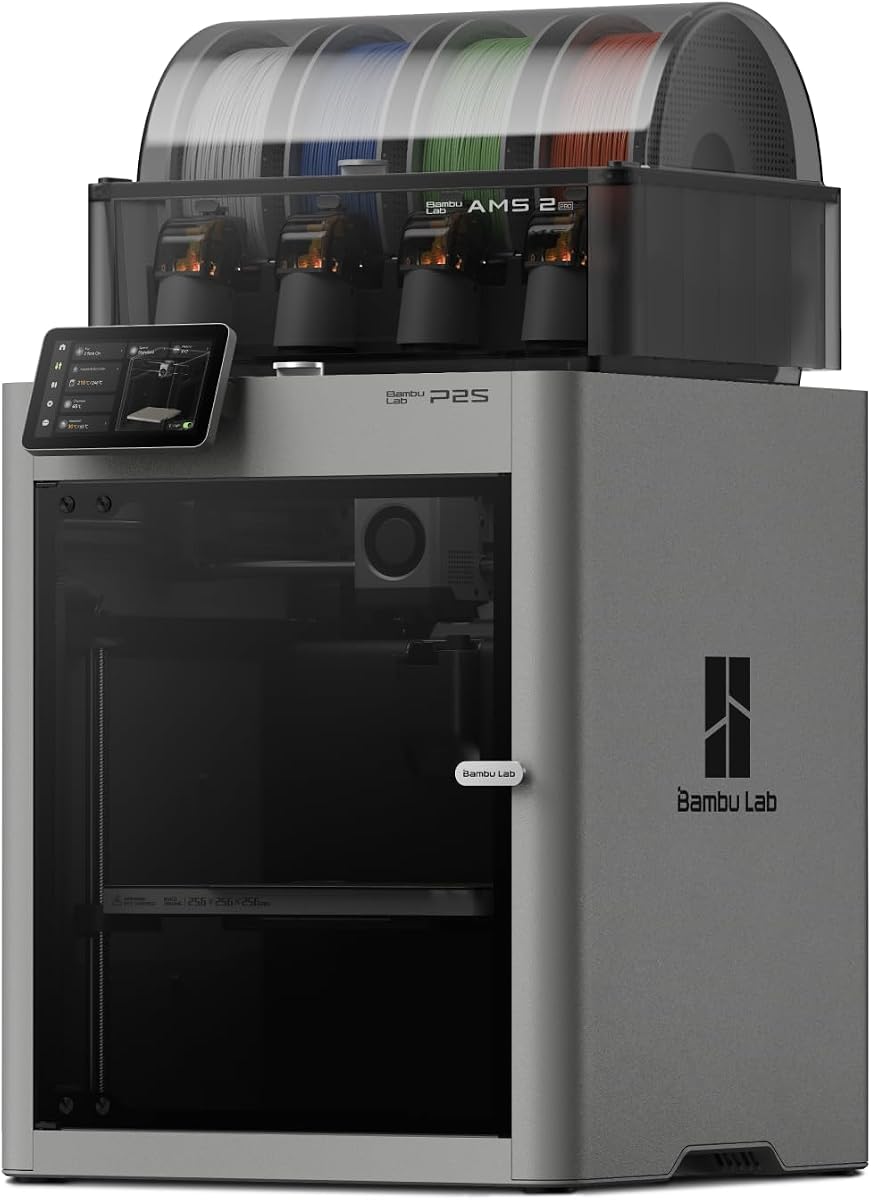
Bambu Lab P2S Combo
4.7Editor score
High-speed precision printing
Ready to print quickly
Effortless multi-color printing
Compare the top 3D printers for engineering prototypes. We review speed, material support, and reliability across 10 expert-rated models.
Engineering teams need reliable tools to turn concepts into physical reality quickly. A strong 3D printer for engineering prototypes offers speed, precision, and material versatility for functional testing and design validation.
We analyzed ten highly rated models based on build volume, chamber heating, and multi-material capabilities. Our comparison highlights professional features that matter most for rapid iteration and durable part production.
Each pick below showcases unique strengths from large-format output to cost-effective multi-color systems. Prices and availability change frequently, so check current listings before making your final selection for your workshop.
4.7Editor score

3.5Editor score

4.7Editor score
This side-by-side comparison breaks down key specifications for all ten contenders. We focus on build dimensions, speed, material support, and specialized features like chamber heating or tool changers.




The Original Prusa XL stands out for engineering teams needing large-format prototypes. Its dual toolhead system allows seamless material switching for functional parts. While the rating reflects some assembly needs, its industrial build quality is impressive.
We may earn a commission when you buy through this link, at no additional cost to you.
Key strengths include the segmented heated bed and intelligent tool switching. These features reduce material waste and improve first-layer adhesion on large prints. The ecosystem integrates well with PrusaSlicer for streamlined workflows.
Users may find assembly slightly complex since some parts ship separately. However, the quick transport assembly process ensures the printer is up and running fast. These trade-offs are acceptable for the production capacity gained.
This model is best for advanced makers and studios requiring reliable industrial-grade performance. It supports complex multi-material projects that smaller machines cannot handle efficiently. For scaling production, it delivers consistent results.
The dual tool system allows complex prints without manual filament swaps or purging interruptions.
Built for engineering teams, the build volume supports large industrial parts in one go.
We may earn a commission when you buy through this link, at no additional cost to you.
The Bambu Lab P2S Combo excels in speed and ease of use for prototyping. It reaches speeds up to 600 mm/s while maintaining accuracy. The AMS 2 Pro system enables effortless multi-color prints for better part differentiation.
We may earn a commission when you buy through this link, at no additional cost to you.
Key strengths include active flowrate compensation and AI failure detection. These ensure smooth layers and consistent results even on complex geometries. The adaptive airflow keeps overhangs crisp or maintains heat for engineering materials.
Users should note that multi-color printing requires the combo version specifically. Also, filament drying happens at up to 65C but needs setup. These are minor trade-offs given the rapid iteration speeds provided.
This printer is ideal for beginners seeking professional-grade performance with minimal fuss. It works seamlessly with Bambu Studio for a unified workflow from design to finished print. Expect reliable, fast results daily.
Print up to 600 mm/s with active flowrate compensation for sharp corners and smooth layers.
The AMS 2 Pro enables seamless multi-color printing with built-in filament drying.
We may earn a commission when you buy through this link, at no additional cost to you.
The Bambu Lab A1 offers high-speed precision for those new to 3D printing. It features full-auto calibration so you skip manual setups. Active flow rate compensation ensures consistent smooth prints every time.
We may earn a commission when you buy through this link, at no additional cost to you.
Key strengths include blazing-fast acceleration and active motor noise canceling. The 1-Clip quick swap nozzle simplifies maintenance. This design makes professional-grade FDM printing accessible and reliable for everyone.
Multi-color printing requires the AMS lite accessory which must be bought separately. The build volume is also smaller compared to larger industrial options. However, these trade-offs keep the machine affordable for home use.
Choose this if you need a beginner-friendly printer with pro results. The touchscreen interface is user-friendly, and remote control lets you monitor progress easily. It is perfect for small prototypes.
The A1 takes care of all calibration processes automatically for every print.
Active motor noise canceling ensures a quiet environment while working.
We may earn a commission when you buy through this link, at no additional cost to you.
The QIDI Max4 Combo delivers ultra-large build volume ideal for complex molds and industrial parts. Its 65C heated chamber and self-developed Polar Cooler ensure ideal conditions for high-temperature materials. The closed-loop motors ensure smooth precise printing.
We may earn a commission when you buy through this link, at no additional cost to you.
Key strengths include the 40mm³/s high-flow hotend and AI camera monitoring. These support industrial-grade abrasive materials like carbon fiber-reinforced nylon. The large touch screen offers an optimized interface for professionals and enthusiasts alike.
Note that the Polar Cooler must be purchased separately for this series. Also, multi-color printing requires connecting the QIDI BOX. These costs add up but are justified by the robust printing capabilities provided.
This printer suits professionals needing to print large parts without splitting. The expandable design allows multi-color workflows later. It balances large build volume with industrial-grade performance reliably.
Print large industrial parts in one go without splitting using the 390mm volume.
High-flow hotend and heated chamber handle ABS-CF, PC, and PPS-CF.
We may earn a commission when you buy through this link, at no additional cost to you.
The Snapmaker U1 features a 4-toolhead system with 5-second tool change for rapid iterations. It minimizes wasted material during filament changes enabling up to 5X faster multi-color printing. This robust locking mechanism has been validated over a million swaps.
We may earn a commission when you buy through this link, at no additional cost to you.
Key strengths include true multi-material printing mixing rigid and flexible materials. Smart calibration ensures smooth dimensionally accurate prints. The Open-source slicing software simplifies steps from setup to finished print.
Initial setup and software configuration can be complex for some users. Also the build volume is limited compared to larger industrial machines. However, the speed and efficiency gains outweigh these constraints for most prototyping.
Choose this for workshops needing multi-material parts without manual purging. The remote app control and filament management make it convenient. It delivers higher productivity for small businesses and creators.
Automatic tool changer reduces tool change time from around 2 minutes to 5 seconds.
Swaps toolheads instead of purging filaments reducing waste by up to 5X.
We may earn a commission when you buy through this link, at no additional cost to you.
The FLASHFORGE Creator 5 Pro features 4 independent toolheads and a near-zero waste system. Switching nozzles without flushing filament eliminates massive purge waste. The fully enclosed frame has an active heated chamber up to 65C to prevent warping.
We may earn a commission when you buy through this link, at no additional cost to you.
Key strengths include the CoreXY motion structure with precision linear rails. Delivers rapid speeds up to 600mm/s without sacrificing accuracy. The dual HEPA 13 and activated carbon system traps ultrafine particles for safety.
High-speed multi-color printing drastically slashes operational overhead. However, managing four toolheads requires experience. The workflow is complex and might overwhelm beginners seeking simple output.
This model suits industrial engineering seeking design versatility. It produces robust parts with ABS PC and PA. For safe odorless production it maintains a thermally stable environment.
Nozzles switch without flushing filament saving material costs.
Dual HEPA filtration ensures a clean odorless workspace.
We may earn a commission when you buy through this link, at no additional cost to you.
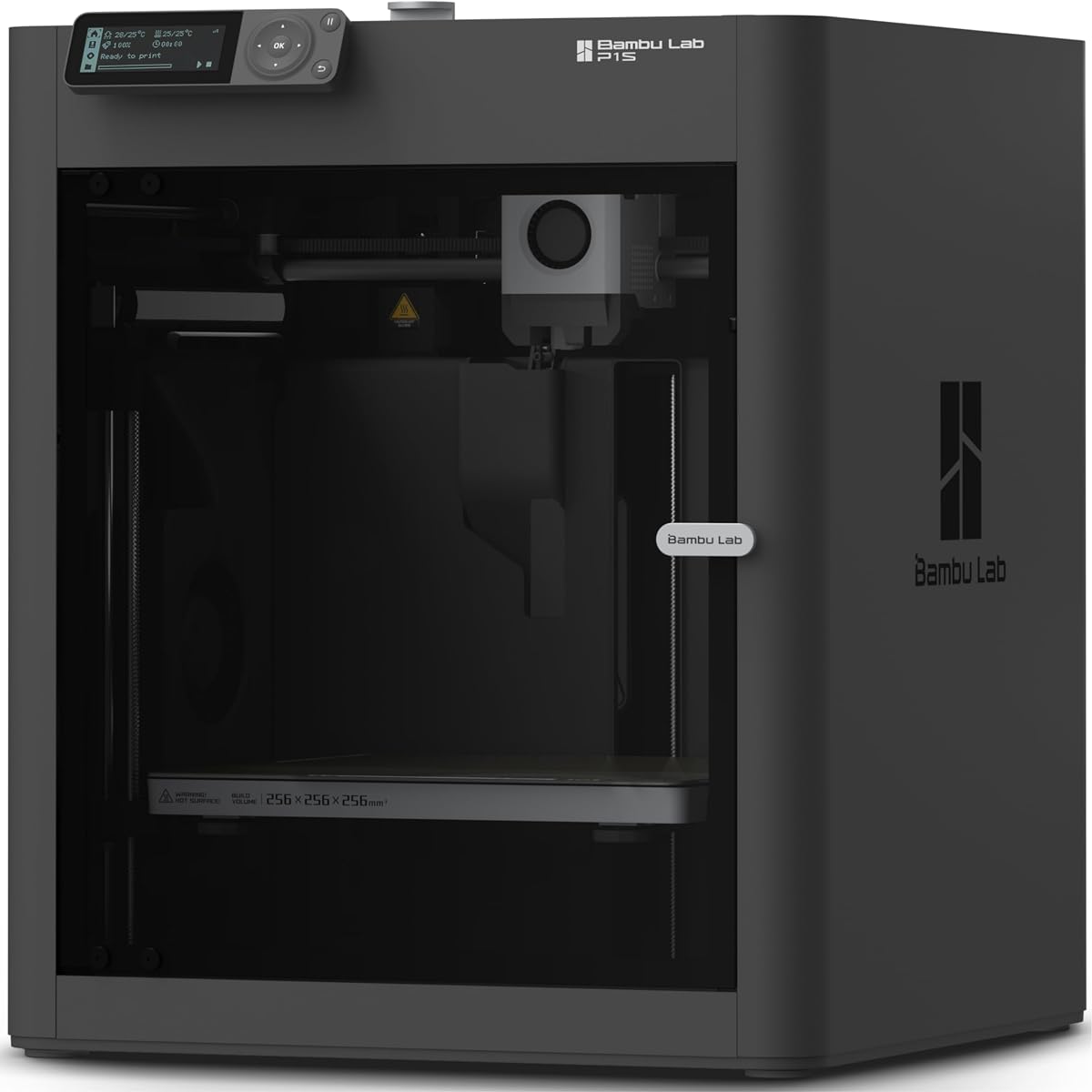
The Bambu Lab P1S is a ready-to-use FDM 3D printer for reliable prototyping. It supports up to 16 colors with the AMS module. The fully enclosed body improves print performance for advanced filaments like ABS and ASA.
We may earn a commission when you buy through this link, at no additional cost to you.
Key strengths include high-speed printing up to 500mm/s. Auto bed leveling makes 3D printing such an easy thing for all skill levels. It supports ideal filaments like PLA PETG and TPU.
Users must connect a separate AMS module for multi-color printing. Also, carbon fiber reinforced polymers are not recommended. These limitations keep costs down while maintaining a robust performance for most parts.
Choose this for reliable industrial parts with versatile material support. It balances speed and enclosed stability. For high-throughput projects it delivers professional results quickly.
Don't wait around for masterpieces with speeds up to 500mm/s.
Spend more time printing and less time setting up in 15 minutes.
We may earn a commission when you buy through this link, at no additional cost to you.
The FLASHFORGE Adventurer 5M Pro features an all-metal CoreXY frame for rapid iteration. It reaches speeds up to 600mm/s with integrated vibration compensation. The 280C extruder reliably prints engineering materials like ABS and PETG-CF.
We may earn a commission when you buy through this link, at no additional cost to you.
Key strengths include the 1 Click Auto Printing System and 3-second quick-swap nozzle. These eliminate manual calibration hassles. The dual filtration system ensures a clean printing environment under 50dB for office use.
The build size is smaller than larger industrial options. Also, maintenance might require occasional nozzle replacements. These factors are acceptable given the robust performance and high-speed operation provided.
This printer suits home or office prototyping needing engineering-grade results. It handles high-temperature materials well. For reliable and quiet operation it is a solid choice.
Tool-free quick-release nozzle mechanism for effortless 3-second replacements.
Built with a dual filtration system and fully enclosed chamber.
We may earn a commission when you buy through this link, at no additional cost to you.
The Anycubic Kobra 3 Max Combo supports multi color printing with a huge 420x420x500mm build volume. It achieves professional-grade precision at blazing 600mm/s speeds powered by G-sensor vibration compensation. This is ideal for large prototypes.
We may earn a commission when you buy through this link, at no additional cost to you.
Key strengths include filament runout sensors and offline printing mode. Never waste prints as the machine pauses automatically when filament ends. The built-in resume function handles power outages for 24/7 reliability.
The dual-sided PEI spring steel plate ensures effortless print removal. However, the large footprint may need dedicated space. These trade-offs are worth it for printing life-size components in one go.
This machine suits small businesses needing massive print capacity. It handles furniture components or multiple parts simultaneously. For rapid iteration it delivers reliable results.
Print life-size prototypes or multiple parts simultaneously on this large volume.
Filament runout sensor and power outage resume keep prints running.
We may earn a commission when you buy through this link, at no additional cost to you.
The FLASHFORGE Creator 5 Pro Industrial features an active chamber heating system up to 65C. It breaks free from environmental limitations for consistent interlayer adhesion. The adaptive air circulation system and HEPA13 filtration capture volatile particles effectively.
We may earn a commission when you buy through this link, at no additional cost to you.
Key strengths include four independent extruders for true multi-color printing. This eliminates color mixing and transition delays. The all-metal frame and CoreXY architecture ensure vibration-free precision at 600mm/s.
Users must monitor sensor suites for filament run-out. The build volume is moderate at 256mm. These constraints are offset by the reliable year-round engineering-grade printing quality provided.
This model suits office or educational environments needing safety. It delivers professional results regardless of season. For multi-color projects without color mixing it is a top choice.
Active chamber heating maintains stable temperature up to 65C for consistent results.
Independent extruders switch colors instantly without cross-contamination.
We may earn a commission when you buy through this link, at no additional cost to you.
Selecting the right 3D printer involves balancing speed, volume, and material support. Consider these key factors to match your engineering workflow.
The build volume dictates the maximum size of parts you can print in one piece. For large prototypes or assemblies, choose models like the QIDI Max4 or Anycubic Kobra 3 Max. Smaller models work for detailed components but may require splitting.
Prioritize a volume that fits your largest expected prototype without slicing.
Engineering materials like ABS, ASA, and PC need a heated chamber to prevent warping. Look for active chambers reaching 65C or more. This ensures interlayer adhesion and consistent results across different seasons.
A 65C active chamber is essential for high-performance industrial-grade materials.
Fast printing speeds like 600mm/s reduce lead times for testing. High acceleration ensures the print head stops quickly for accurate corners. Vibration compensation algorithms help maintain surface quality at high speeds.
Look for speeds above 500mm/s with vibration compensation for rapid iteration.
Some projects require combining materials like rigid and flexible filaments. Dual or quad toolhead systems allow switching without purging waste. Separate extruders ensure color purity for multi-color prototypes.
Choose independent extruders if you need multi-color or mixed-material prints regularly.
Full-auto calibration and quick-swap nozzles save setup time. AI failure detection and monitoring prevent wasted prints. These features reduce manual intervention for busy engineering teams.
Look for auto bed leveling and quick-swap tools to streamline your daily workflow.
Printing with engineering materials releases particles and odors. HEPA13 air filtration systems capture ultrafine particles ensuring a safe workspace. This is vital for home offices or shared labs.
Select models with dual filtration systems for cleaner and safer printing environments.
Before printing, ensure the bed is clean and level using auto-leveling features. Load compatible engineering-grade filaments into the dry storage to prevent moisture absorption.
Monitor your prints using the built-in cameras or mobile apps. Pause immediately if AI detects abnormalities like spaghetti-like failures to save material and time.
Maintain your printer by swapping nozzles regularly with quick-release tools. Clean the filtration system periodically to ensure air quality and consistent print performance.
For functional testing, materials like ABS, ASA, and PC provide durability and heat resistance. Carbon fiber-reinforced filaments add stiffness for load-bearing parts. Always use a heated chamber to prevent warping with these materials.
Use printers with independent extruders or an AMS system like on the Bambu Lab P2S. These allow seamless switching between colors or materials. Ensure you use the combo version to access these features directly.
Choose a build volume at least 20% larger than your largest expected prototype. Large-format models like 390mm+ dimensions allow printing full assemblies. This avoids needing to split parts for printing.
Chamber heating is vital for engineering materials to prevent warping and ensure adhesion. Without it, prints may fail on complex geometries. Aim for 60C or higher for reliable industrial results.
Most modern printers have AI failure detection to pause when issues arise. Filament runout sensors and power loss recovery help ensure safety. Always monitor via camera when possible for complete peace of mind.
Use independent toolhead systems to avoid purging during color changes. Intelligent tool switching minimizes purge waste while maintaining high-quality transitions. This saves costs during prototyping cycles.
Replace nozzles using quick-release tools to maintain print quality. Check calibration regularly to ensure dimensional accuracy. Clean filters to ensure air quality for a safe workspace.
These ten models offer a range of solutions from entry-level to industrial-grade prototyping. Whether you need speed volume or multi-material support there is a pick for your needs.
Prioritize features like chamber heating and speed to match your specific engineering materials. Reliability and safety should guide your choice alongside performance metrics.
Prices and availability change frequently so check current listings before purchasing. Ensure your final selection fits your workshop size and budget.