
RC3563 Analyzer
4.9Editor score
Kalman Filter Algorithm
Lightweight Design
High Precision Measurement
Compare the top 10 Battery Internal Resistance Testers. Read expert reviews, check real ratings, and find the best model for your automotive or DIY needs.
Finding the right Battery Internal Resistance Tester ensures you can accurately assess battery health across various applications. These devices measure internal resistance and voltage simultaneously, providing critical insights into battery performance and longevity.
We compared ten leading models based on measurement accuracy, display quality, connectivity options, and user feedback. Each product was evaluated for its ability to handle different battery types while maintaining precision and ease of use.
Each pick highlights key strengths and ideal use cases to help you choose confidently. Note that product availability and specific features may change over time, so verify details before purchasing to ensure it meets your requirements.
4.9Editor score

4.5Editor score
4.4Editor score
This side-by-side comparison highlights key specifications for each model, helping you quickly identify which device aligns best with your specific testing requirements and budget constraints.




The ZOYI ZT-XR1 earns our Editor's Choice for its versatile 2-in-1 design combining a professional multimeter with a dedicated battery tester. Its 25000-count True RMS display ensures high precision across voltage and resistance measurements.
We may earn a commission when you buy through this link, at no additional cost to you.
It utilizes dedicated aviation plug ports for 4-wire Kelvin sensing to eliminate lead resistance errors during testing. The adjustable brightness TFT screen allows clear viewing in any lighting condition during field repairs or lab work.
While it costs more than basic testers, the dual functionality saves space and budget compared to buying separate devices. The rechargeable battery provides solid runtime, though calibration steps may take extra time for new users.
This unit is ideal for electricians and technicians who need comprehensive tools for both electronics repair and battery health diagnostics. It reliably identifies aging batteries through precise internal resistance values.
The 4-wire Kelvin method ensures minimal interference from test leads, delivering reliable results for critical automotive and industrial battery assessments.
Beyond battery testing, you can measure capacitance, frequency, and temperature, making this a complete solution for general electronics diagnostics.
We may earn a commission when you buy through this link, at no additional cost to you.
The RC3563 Analyzer achieves our Best Premium designation with its intelligent control and Kalman filter algorithm for highly efficient and precise readings. It simultaneously measures internal resistance and voltage using a 4-wire test clamp.
We may earn a commission when you buy through this link, at no additional cost to you.
Its lightweight build makes it perfect for lab or field use where portability is key. The built-in 1000mAh battery supports convenient charging via standard Android phone chargers for quick power-ups on the go.
While it lacks advanced PC data logging compared to other models, its focus on accuracy and speed suits production or scientific testing needs. Users appreciate its energy-efficient design which extends operational hours between charges.
Select this model if you prioritize measurement accuracy and low weight for handling various battery types including lead and lithium. It stands out for efficiency in repetitive testing environments like labs or research.
The Kalman filter mathematical algorithm reduces noise and improves measurement stability, offering higher confidence in test results for sensitive applications.
Charging via standard USB allows flexible power sourcing without needing proprietary adapters, simplifying workflow in workshops or remote locations.
We may earn a commission when you buy through this link, at no additional cost to you.
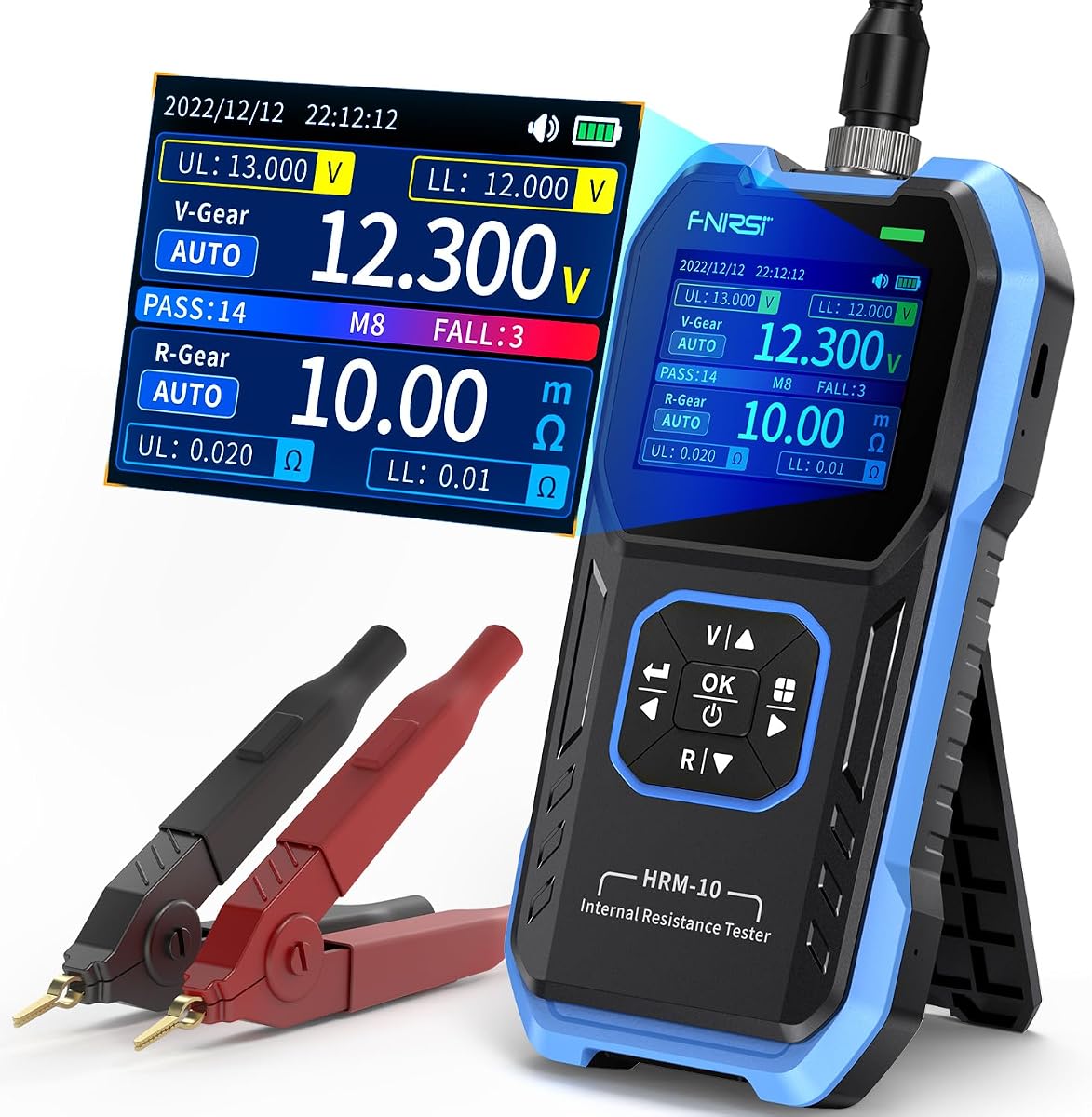
The FNIRSI HRM-10 is our Best Budget pick, offering automatic internal resistance and voltage testing with a vivid TFT HD display for clear results. It uses a customized Kelvin four-wire connection to minimize resistance errors.
We may earn a commission when you buy through this link, at no additional cost to you.
Its capability to export historical data tables to a PC via Excel simplifies analysis and record keeping for batch testing. The display layout is designed to enhance user experience compared to older monochrome units.
Although built with standard materials, it covers common testing needs effectively at a lower cost point. The limited advanced features mean it might not suit industrial scale analysis but works well for general maintenance.
Choose this if you need reliable voltage and resistance checks for household or automotive batteries without spending heavily. Its export function helps track battery degradation over time conveniently.
The advanced color HD layout presents measurement values clearly, making it easier to read results quickly even in varied lighting settings.
Exporting test records to Excel enables straightforward long-term monitoring and sharing results with clients or colleagues for collaborative analysis.
We may earn a commission when you buy through this link, at no additional cost to you.
The WESTOBIG Battery Tester offers versatile testing for universal battery types with upgraded Kelvin four-terminal sensing for accurate resistance values under 0.1 ohm. It automatically saves all test records for convenient review and analysis.
We may earn a commission when you buy through this link, at no additional cost to you.
With its auto mode and data preset function, you can check batteries against standards quickly to identify problematic units efficiently. The colorful display uses advanced HD technology to show results clearly and vividly.
Although setup may involve a learning curve for new users, its broad compatibility with AA, AAA, and car batteries makes it useful for diverse needs. The preset feature simplifies routine checks by eliminating manual calculations.
This model suits those who test mixed battery types and want quick pass/fail results against set standards. It balances accuracy with user-friendly display features for general automotive and home use.
The four-terminal sensing removes lead resistance interference, allowing detection of very low resistance values that indicate battery health issues.
Preset data sets help streamline your testing process by automatically comparing results against accepted norms without extra input steps.
We may earn a commission when you buy through this link, at no additional cost to you.
The Dlyfull Battery Tester supports 11 types of batteries and detects capacity percentage, voltage, and internal resistance with a large LCD screen for clear feedback. It uses test leads to avoid inserting batteries into fixed bays.
We may earn a commission when you buy through this link, at no additional cost to you.
Its portable design and rotary dial selection make it simple to test various battery sizes quickly without complicated steps. The unit includes pre-installed batteries and offers an 18-month warranty for added peace of mind.
While it lacks data storage features found in more advanced models, its ease of use appeals to casual users who need quick diagnostics. The build quality ensures durability for regular checks on toys or tools.
This tester is best for household or workshop use where speed and simplicity matter most. Its ability to detect internal resistance helps prevent unexpected device failures due to weak power sources.
Supporting everything from small button cells to large 9V batteries, this tester covers the full spectrum of common household and automotive power sources.
Rotary dial selection and external test leads remove the need for battery slots, reducing wear and tear and simplifying the testing workflow.
We may earn a commission when you buy through this link, at no additional cost to you.
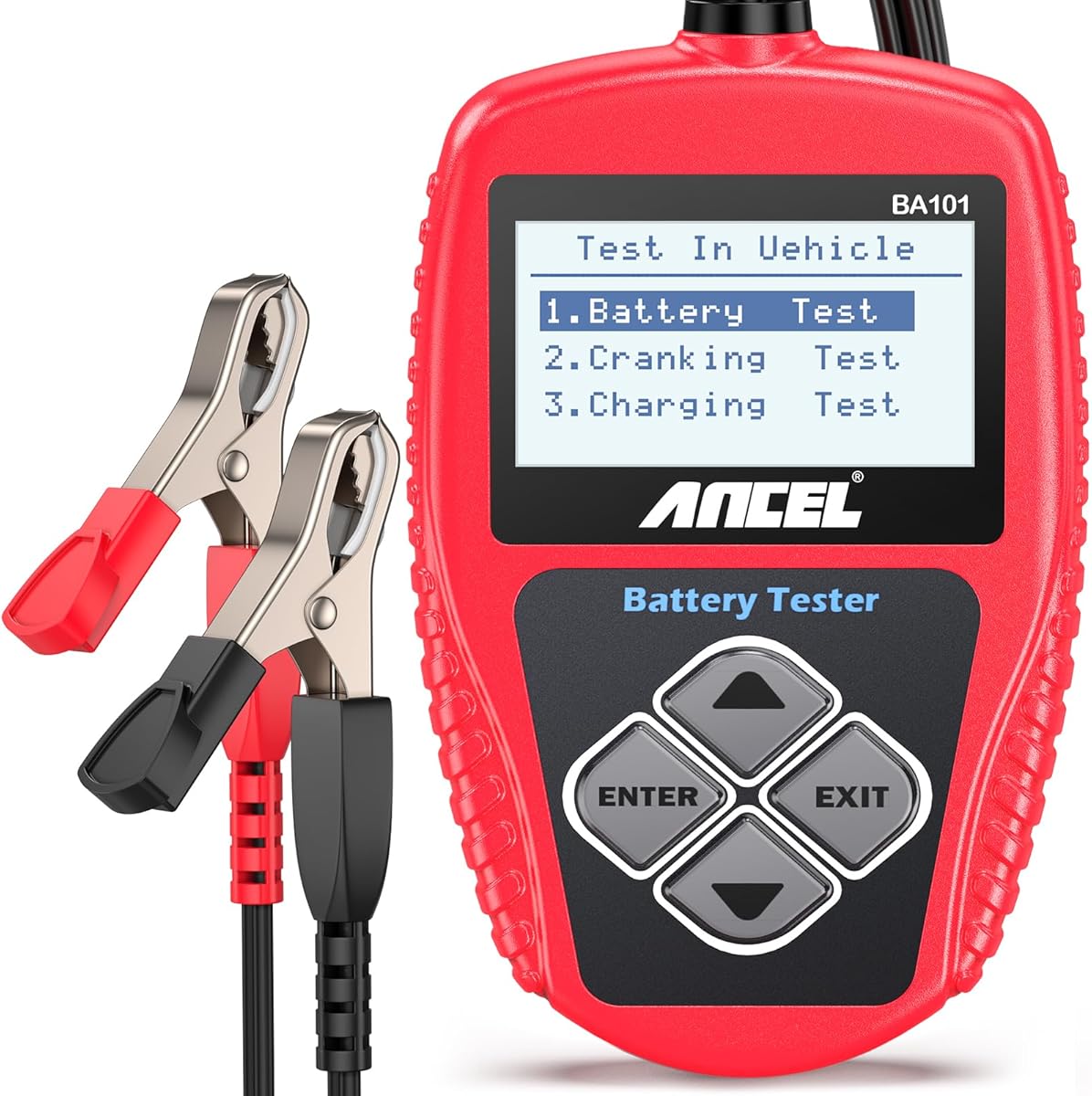
The ANCEL BA101 focuses on 12V automotive systems, delivering State of Health and Charge readings with fast one-handed operation powered directly from the vehicle battery. It supports global standards including JIS and DIN.
We may earn a commission when you buy through this link, at no additional cost to you.
Its built-in 4-in-1 protection guards against reverse polarity and short circuits to ensure safe testing even when working in tight engine spaces. The adjustable contrast screen is readable in sunlight or low light.
While it does not show internal resistance values explicitly like other models, its CCA and SOH metrics provide practical condition data for car maintenance. Users appreciate not needing to charge the tester itself before use.
Pick this for dedicated automotive diagnostics where understanding charging and cranking performance is critical. It is reliable for vehicle owners who want a straightforward way to spot battery problems early.
Multiple protection layers prevent damage from common electrical errors, making it safer to handle in high-stress automotive repair environments.
Powering directly from the battery under test removes setup delays, enabling quick checks on busy days or road trips.
We may earn a commission when you buy through this link, at no additional cost to you.
The ZOYI XR1 combines a 25,000-count multimeter with a battery internal resistance tester to serve as both an inspector and maintenance tool. It uses 4-wire Kelvin clips to minimize contact resistance errors.
We may earn a commission when you buy through this link, at no additional cost to you.
Users can adjust buzzer volume and auto-shutdown time to suit their workflow preferences and save battery during long sessions. The TFT color display with adjustable brightness enhances visual clarity during testing.
While rated lower than other options, it offers a budget-friendly way to gain multi-function capabilities without needing separate devices. Some users find the interface less polished compared to premium competitors.
Select this if you need a versatile unit for basic battery checks and general measurements at home. It provides practical features for those who want more than a simple voltage checker.
With capacitance, frequency, and temperature functions alongside battery testing, this device supports a broad range of electronic diagnostics.
Adjustable features like volume and power-off times let you tailor the device to your specific testing habits and environment.
We may earn a commission when you buy through this link, at no additional cost to you.
The RC3563 Analyzer delivers high precision and high efficiency through its intelligent control and Kalman filter algorithm. It is built with lightweight materials for portable use in production or research labs.
We may earn a commission when you buy through this link, at no additional cost to you.
Its simultaneous voltage and resistance measurements help users determine battery quality quickly without multiple steps. The energy-saving design ensures long operational hours between charges using standard phone chargers.
Though the controls are basic compared to digital interfaces on other units, its reliability makes it a strong choice for repetitive testing tasks. Users value its environmental friendly design which minimizes waste and power use.
This model works well for technical professionals who prioritize measurement stability over complex data logging. It provides quick, dependable insights into battery aging and health.
The smart algorithm processes test data rapidly, allowing for quicker batch analysis compared to slower manual testing devices.
Its light weight makes it ideal for moving between workstations or testing battery packs in different physical locations easily.
We may earn a commission when you buy through this link, at no additional cost to you.
The YR1035+ delivers a true four-wire testing system for accurate simultaneous resistance and voltage measurements. Its large LCD screen provides real-time results with clear readings that users can interpret easily.
We may earn a commission when you buy through this link, at no additional cost to you.
This compact and lightweight unit is ideal for field work and bench testing applications where portability is valued. It suits various battery performance testing, screening, and configuration tasks across multiple types.
While it lacks extra functions compared to some models, its perfect rating suggests high user satisfaction with core performance and reliability. The design prioritizes stability and accuracy for consistent results.
Choose this model if you need a dependable tool focused on core testing metrics without extra complexity. It works well for maintaining battery health in small business or hobbyist settings.
The LCD layout ensures measurements are easy to read at a glance, reducing eye strain during long testing sessions.
Users praise the device for consistent and accurate readings, making it a reliable choice for critical battery maintenance.
We may earn a commission when you buy through this link, at no additional cost to you.
The YR1035+ Combo supports measuring various batteries from lead-acid to button cells with a Kelvin clamp designed for lugs and electrodes. Its Type-C charging offers convenient power for repeated testing sessions.
We may earn a commission when you buy through this link, at no additional cost to you.
With a voltage range up to 100V and resistance up to 200 Ohm, it covers most common internal resistance testing needs without limitations. The clamp design allows you to free your hands during measurement.
This model shares core features with other units in the series but includes specific accessories for improved usability. Its 5.0 rating indicates users value its practical combination of tools and ease of use.
Select this if you need a reliable tester with extra clamps for difficult-to-reach battery terminals. It is effective for workshop environments where varied battery types require flexible testing options.
Specialized clamps handle different electrode shapes and sizes, ensuring secure connections even on awkward or corroded terminals.
Type-C charging aligns with most modern cables, simplifying power management when you are working away from traditional outlets.
We may earn a commission when you buy through this link, at no additional cost to you.
Choosing the right tester involves evaluating accuracy, compatibility, display, and data handling features to match your specific testing needs and workflow requirements.
Look for testers that use 4-wire Kelvin methods to eliminate lead resistance errors which is vital for low resistance values. Higher accuracy ensures reliable battery health data for critical diagnostics.
Prioritize models with Kelvin clamps to minimize interference from test wires during internal resistance measurement.
Ensure the tester covers the full voltage and resistance range of the batteries you test such as 12V automotive or small cells. Adequate ranges prevent limitations when handling diverse battery chemistries.
Check that the device supports the expected voltage inputs without exceeding its safety limits for consistent testing.
A clear TFT or LCD display with adjustable brightness helps read values in sunlight or dim workshops. Color screens provide better visualization for data and results.
Select units with intuitive layouts that show voltage and resistance simultaneously for faster interpretation.
Verify the tester supports your target battery types including lithium, lead-acid, NiMH, and alkaline to avoid buying multiple devices. Universal testers save space and cost.
Choose models that explicitly list the battery types and chemistries they can measure accurately.
Advanced testers offer history logs and PC exports to analyze battery health trends over time. This helps track degradation and plan replacements proactively.
Opt for devices with data export features if you need to report or archive test results.
Internal rechargeable batteries or Type-C charging extend usage between charges and reduce reliance on disposable cells. Long runtime ensures uninterrupted field work.
Look for auto-off timers and configurable power settings to conserve energy during idle periods.
Built-in protections against reverse polarity and overvoltage prevent damage to the tester and battery during accidental errors. This is crucial when testing automotive units.
Ensure the unit has a proper safety rating like CAT for your working environment to prevent risks.
Rugged housings like ABS with anti-drop features withstand drops and rough use in workshops. Durability extends device lifespan and reduces replacement costs.
Choose models designed with drop resistance and protective cases for tough field conditions.
Begin by powering on the device and selecting the correct voltage range or auto-mode for your battery type. Ensure the clamps or probes are clean and connected securely to battery terminals for accurate readings.
Allow the measurement cycle to complete while keeping the tester steady. Check displayed values against manufacturer thresholds to determine battery health and decide on charging or replacement needs.
Store the tester in a dry place and charge it fully when not in use. Clean the clamps regularly to prevent corrosion which can affect test accuracy over time.
Internal resistance testing measures the opposition to current flow inside a battery, indicating its health and age. Lower resistance typically means a healthier battery while higher resistance suggests degradation or failure risk.
A 4-wire Kelvin method separates current injection and voltage sensing leads to eliminate the resistance of test wires. This ensures precise measurements especially for low resistance batteries where lead resistance can skew results.
Most testers cover common chemistries like lithium lead-acid and NiMH but check compatibility specs before purchasing. Some units are specialized for automotive only while others handle small button cells.
Many models save records internally and offer PC connectivity via USB or Bluetooth. Data can usually be downloaded as CSV or Excel files for further analysis and reporting purposes.
Some professional units allow full-range self-calibration to maintain accuracy over time. Most consumer models are calibrated at factory but may require periodic checks for consistent results.
Testing cycles typically complete in a few seconds per battery depending on the device. Advanced testers can process up to five times per second for efficient batch screening in production.
The ZOYI ZT-XR1, RC3563, and FNIRSI HRM-10 stand out for their accuracy features and value across different needs. Each offers unique strengths whether you want versatility or budget-friendly performance.
Prioritize measurement precision and data handling features that align with your regular battery types and testing environment. Safety and durability are also key for long-term reliable use.
Always check current prices and availability before purchasing as these can change over time. Verify specific model details match your requirements to ensure a successful investment in battery maintenance tools.