Tadeto Digital
4.5Editor score
Lightweight and Portable Design
Fast and Slow Response Rates
4-Digit LCD Display with Backlight
Compare the top 10 Decibel Meters of 2026. Expert reviews, real user ratings, and detailed comparisons to help you choose the right sound level meter.
Finding the right Decibel Meter is essential for anyone concerned about noise levels in their home, workplace, or community. These devices provide accurate readings to help you monitor sound pressure and ensure a comfortable environment. Whether you are an audiophile, a parent, or a professional, having the right tool matters.
We have compared ten top-rated Decibel Meters based on accuracy, features, ease of use, and user feedback. Our analysis covers everything from basic handheld testers to advanced data logging models. We looked at real-world performance to ensure each pick delivers reliable results for various applications.
Each pick in this guide highlights key strengths and potential trade-offs to help you make an informed decision. The products listed are chosen for their value and performance in real-world scenarios. Please note that availability and specific features may change over time, so check the latest details before buying.
4.5Editor score

4.5Editor score

4.2Editor score
This section provides a side-by-side comparison of all ten Decibel Meters to help you quickly identify the best fit for your needs. We have summarized key specifications and features for each model to streamline your selection process.


The TopTes TS-501B is a robust and reliable Decibel Meter designed for both home and professional use. With a high rating from users, it delivers precise noise level readings across a wide range. Its standout feature is the large 2.25-inch LCD screen which ensures easy readability in any lighting condition.
We may earn a commission when you buy through this link, at no additional cost to you.
This device uses a precise condenser microphone to capture sound accurately. The A-weighting and C-weighting facilities allow for versatile measurement of both ambient noise and high-intensity mechanical sounds. The Max/Min measurement function helps track peak noise levels over time, which is crucial for identifying intermittent loud sounds.
While the device is battery-operated, it includes three durable batteries and has an automatic power-off function to conserve energy. The non-slip side design ensures a comfortable grip during extended use. Some users may find the frequency range limited compared to high-end professional models, but it suffices for most general applications.
We recommend the TopTes TS-501B for anyone needing a dependable tool for monitoring noise in homes, offices, or factories. It strikes an excellent balance between price and performance. The included carry case adds to its portability and protection, making it a great choice for frequent travelers or inspectors.
The built-in condenser microphone ensures that sound levels are captured with high fidelity, providing reliable data for analysis.
The backlit LCD screen allows for clear readings even in dimly lit environments, reducing the need for external light sources.
We may earn a commission when you buy through this link, at no additional cost to you.
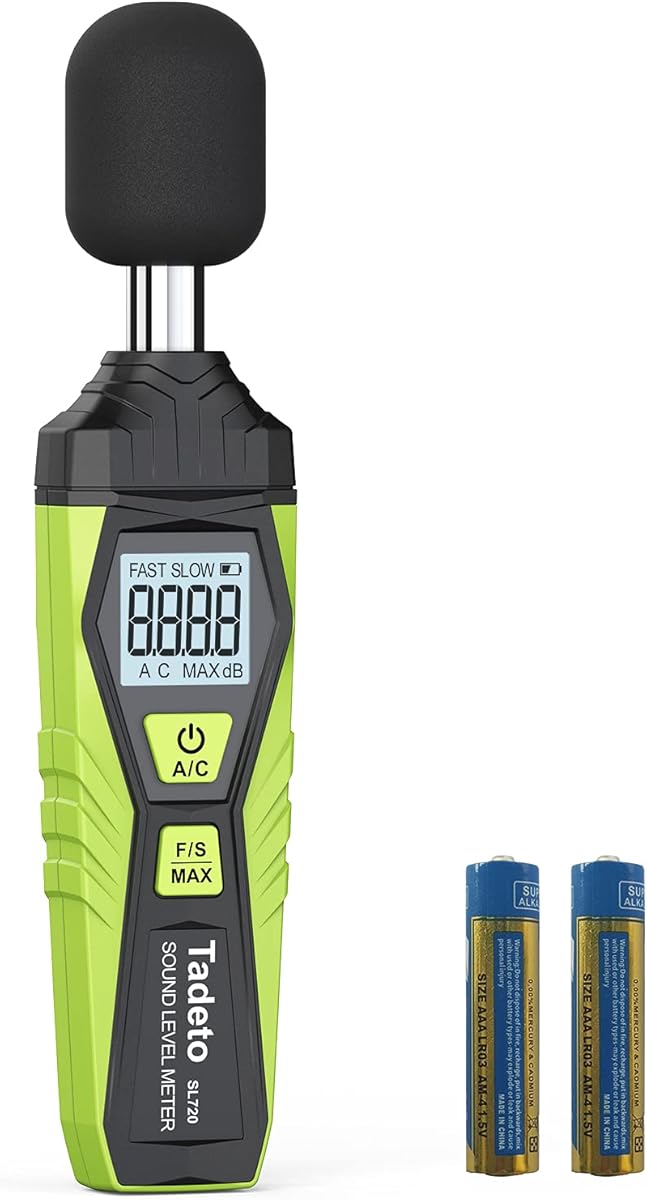
The Tadeto Digital Sound Level Meter is an excellent choice for those seeking a reliable Decibel Meter without breaking the bank. It offers a wide measuring range and real-time monitoring capabilities that are perfect for general environmental checks. Its compact and lightweight design makes it easy to carry around.
We may earn a commission when you buy through this link, at no additional cost to you.
This model features A and C weighting to simulate human ear responses to different noise intensities. The fast and slow response rates allow users to adapt the device to specific environments, whether monitoring steady-state noise or fluctuating traffic sounds. The 4-digit LCD display provides clear readings with a resolution of 0.1 dB.
While it is a budget-friendly option, it maintains a respectable level of accuracy suitable for home and light industrial use. The low voltage icon on the display ensures you are never caught off guard by a dead battery. However, it may lack some of the durability features found in premium models.
Ideal for students, homeowners, or anyone needing quick noise assessments, the Tadeto Digital offers great value. It covers a broad spectrum of uses from baby rooms to factories. If you need a basic yet effective tool for noise control, this is a solid option to consider.
Users can switch between fast and slow response rates to suit their specific testing needs, enhancing the versatility of the device.
The large digital display with backlight ensures that readings are visible and easy to record in various lighting conditions.
We may earn a commission when you buy through this link, at no additional cost to you.
The DURFICST Sound Level Meter stands out with its LCD color screen which adds a modern touch to noise measurement. With a high user rating, it promises precise data for both home and work environments. The inclusion of SONE units alongside dB offers a more intuitive way to understand perceived loudness.
We may earn a commission when you buy through this link, at no additional cost to you.
This device uses a condenser microphone with a broad frequency range to ensure professional-grade data collection. The A-weighted and C-weighted modes allow for tailored analysis of ambient and industrial noise respectively. The FAST and SLOW response modes help in capturing both steady and fluctuating noise levels accurately.
While the color screen is visually appealing, it may require more battery power compared to monochrome displays. However, the soft rubber wrapping and windbreak ball design enhance comfort and stability during outdoor use. The maximum and minimum recording features make it easy to track noise peaks over time.
We suggest this model for users who value visual clarity and detailed data presentation. It is particularly useful for acoustic fields like music performance where SONE units are relevant. The portability and comfort features make it a pleasure to use for extended periods of monitoring.
Support for both dB and SONE units allows users to measure intensity and perceived loudness for more comprehensive analysis.
The soft rubber wrapping and handheld design provide a secure grip, reducing fatigue during long testing sessions.
We may earn a commission when you buy through this link, at no additional cost to you.
The Goldeep Sound Level Meter is a highly rated portable tool for measuring sound levels in various settings. Its bright orange color makes it easy to spot if misplaced. The device is designed with comfort in mind, featuring an anti-slip grip and a windbreak ball for outdoor stability.
We may earn a commission when you buy through this link, at no additional cost to you.
With a measurement range of 30 to 130dB and ±1.5dB accuracy, it handles everything from quiet rooms to loud machinery. The A/C weighting modes allow for flexible noise testing suitable for different environments. The dB and SONE units cater to both technical users and those interested in perceived loudness.
While it lacks advanced data logging features, its simplicity is a strength for quick checks. The package includes batteries so you can start measuring immediately. The clear LCD display ensures readings are easy to interpret without straining your eyes in different lighting conditions.
This meter is perfect for daily tasks like checking neighbor noise or monitoring office environments. Its portability and user-friendly design make it a top choice for non-experts. If you need a reliable tool that is ready to use out of the box, this is an excellent pick.
Comes with batteries included so you can begin measuring noise levels immediately without extra purchases.
The windbreak ball design helps stabilize readings in breezy conditions for more accurate outdoor measurements.
We may earn a commission when you buy through this link, at no additional cost to you.
The green variant of the TopTes TS-501B adds environmental monitoring to its core noise measurement capabilities. This model is ideal for situations where temperature and humidity might affect acoustic performance. It maintains the same robust features of the orange version with a unique aesthetic appeal.
We may earn a commission when you buy through this link, at no additional cost to you.
It uses a precise condenser microphone for accurate sound capture. The A and C weighting modes allow for versatile noise analysis in diverse settings. The data hold function freezes readings for easy note-taking, and the max/min values track peak noise levels over time.
While the added sensors are useful, they add slightly to the weight of the device. However, the non-slip design ensures it remains comfortable to hold. The lifetime technical support and warranty provide peace of mind for long-term users who rely on this tool regularly.
We recommend this version for environmental monitoring or industrial sites where climate control is a factor. It bridges the gap between simple sound meters and comprehensive environmental tools. The clear display and intuitive controls make it accessible for users of all experience levels.
Built-in sensors for temperature and humidity provide a more complete picture of the environment affecting sound levels.
Lifetime technical support ensures you have assistance whenever you encounter issues or need advice on usage.
We may earn a commission when you buy through this link, at no additional cost to you.
The RISEPRO Digital Sound Level Meter offers a practical solution for noise monitoring with its dual range capability. It is widely applicable for personal, family, and business use. The device is compact and easy to handle, making it suitable for on-the-go assessments.
We may earn a commission when you buy through this link, at no additional cost to you.
With an accuracy of ±1.5dB, it provides reliable readings for various environments. The time and frequency weighting features ensure that measurements are tailored to the specific type of noise being tested. Auto power off helps extend battery life when the device is not in active use.
The dual ranges allow for more precise measurement across different noise levels. However, the frequency range is somewhat limited compared to professional models. The gift box packaging makes it a nice choice for gifting to colleagues or students interested in acoustics.
Ideal for checking or monitoring sound levels in home or office settings, this meter is straightforward to use. It includes a black carrying pouch for protection and portability. If you need a simple tool for occasional checks, this is a functional and affordable option.
Dual ranges allow for accurate readings across different noise levels ensuring versatility in measurement scenarios.
Auto power off functionality conserves battery life by turning off the device when not in use.
We may earn a commission when you buy through this link, at no additional cost to you.
The DANOPLUS Data Logger is a high-end Decibel Meter designed for users who need to track noise over time. It can record up to 43,000 data points which can be exported to a PC for detailed analysis. The rechargeable battery ensures you can use it for extended periods without frequent replacements.
We may earn a commission when you buy through this link, at no additional cost to you.
This device features a colored screen with line chart display for visual noise data changes. The 3-color light alarm system alerts you when noise levels exceed set thresholds. A/C frequency weighting and DC output allow for professional-grade noise analysis in industrial settings.
While it is more expensive, the data logging capabilities are unmatched in this category. It requires a connection to a PC for data export which may present a slight learning curve. However, the ability to analyze trends over time is invaluable for compliance and detailed auditing.
We recommend this model for industrial professionals or researchers who need comprehensive data records. It is perfect for environments where noise levels must be monitored continuously. The advanced features justify the cost for those who require more than simple momentary readings.
Export capabilities allow you to analyze trends and patterns with Excel making it useful for reporting and compliance.
The 3-color alarm system provides immediate visual feedback on noise levels ensuring safety and compliance.
We may earn a commission when you buy through this link, at no additional cost to you.
The SW-525A Sound Level Meter is designed for fixed monitoring in specific locations. Its wall hanging type allows for continuous noise assessment in rooms or hallways. The large screen red LCD display ensures that readings are visible from a distance.
We may earn a commission when you buy through this link, at no additional cost to you.
This model is ideal for places where constant noise monitoring is necessary, such as schools or public spaces. The alarm function alerts you when noise levels exceed acceptable limits. It offers a straightforward solution for maintaining a quiet environment without needing to hold the device.
Since it is not portable, it is best suited for stationary applications. The setup is simple requiring minimal configuration to start monitoring. While it lacks advanced data logging, its reliability and ease of use make it a great tool for passive noise control.
We suggest this for facility managers or parents who want to keep track of ambient noise levels passively. It provides a constant visual reference that is easy to interpret. If you need a set-it-and-forget-it solution for noise alerts, this is an effective choice.
Designed to be wall-mounted for continuous noise tracking without needing constant human intervention.
The built-in alarm provides immediate feedback when noise levels rise above safe limits.
We may earn a commission when you buy through this link, at no additional cost to you.
The Tadeto Digital Pro enhances the standard model with added alarm features and multiple measurement ranges. It is well-suited for product quality control and noise engineering. The audible and visual alarms ensure you are alerted instantly to high noise levels without missing any readings.
We may earn a commission when you buy through this link, at no additional cost to you.
With 5 adjustable measurement ranges, this meter offers flexibility for various noise intensities. The A/C weighting and fast/slow response modes allow for detailed environmental analysis. The backlight display ensures readings are clear in low light conditions.
While the alarms are a key feature, they may consume more battery power. The device is lightweight and portable for easy transport between sites. It is widely applicable for business, studies, and industrial use where noise control is critical for compliance or safety.
We recommend this for environments where noise thresholds must be strictly maintained. The alarms act as a reliable safeguard against excessive noise exposure. It combines portability with advanced features making it a robust tool for professionals in various fields.
Audible and visual alarms provide immediate feedback when noise exceeds set limits ensuring safety compliance.
Five adjustable ranges allow for precise measurement across different noise levels for accurate data collection.
We may earn a commission when you buy through this link, at no additional cost to you.
The FNIRSI FDM-02 features a 2-inch IPS screen with light and dark themes for clear viewing. It is ideal for parents, musicians, and office workers who need real-time noise monitoring. The curve mode displays 30 seconds of sound changes which is perfect for tuning audio systems.
We may earn a commission when you buy through this link, at no additional cost to you.
With a condenser microphone and A/C weighting, it captures sound accurately across a range of environments. The rechargeable battery ensures long usage without frequent replacements. The device supports noise records with thresholds to track specific noise events over time.
While it lacks data export, the curve mode provides visual insights that are useful for audio calibration. The compact design makes it easy to carry anywhere. It is a modern tool that combines style with functionality for everyday sound checks.
We suggest this for home theater tuning or tracking neighborhood noise. The ability to view noise trends over 30 seconds offers a dynamic view of sound. It is a stylish and practical choice for those who appreciate modern design and useful features.
Curve mode displays 30 seconds of sound changes helping you analyze dynamic noise patterns easily.
IPS screen with light and dark themes ensures comfortable viewing in any lighting environment.
We may earn a commission when you buy through this link, at no additional cost to you.
Choosing the right Decibel Meter depends on your specific needs and environment. This guide outlines the key factors to consider to ensure you select a device that meets your accuracy and functionality requirements.
Ensure the meter covers the range of noise levels you expect to encounter. Most models offer 30 to 130dB which is suitable for most applications. A wider range provides more flexibility for both quiet and loud environments.
Check the minimum and maximum limits to confirm it fits your specific use case.
Accuracy determines how close the reading is to the true sound level. Look for devices with ±1.5dB or better accuracy for reliable results. Higher resolution like 0.1 dB allows for more precise tracking of small changes in noise.
Prioritize accuracy if you need to comply with noise regulations or standards.
A and C weighting modes simulate the human ear's response to different frequencies. A-weighting is ideal for general environmental noise while C-weighting is better for high-intensity mechanical noise. Ensure the device supports the modes relevant to your testing needs.
Select a meter with both modes for maximum versatility across different noise types.
Fast and slow response times help capture different types of noise fluctuations. Fast is suitable for fluctuating sounds like traffic while slow is better for steady noise. A device with switchable response times offers more control over your measurements.
Consider your environment to decide which response time will give you the most useful data.
A clear display is essential for reading results easily in various lighting conditions. Look for backlit screens or color displays for better visibility. The size of the numbers and clarity of the screen impact how quickly you can interpret data.
Choose a display type that is comfortable for your eyes during extended use.
Decide between battery-operated and rechargeable models. Battery-operated units are convenient for immediate use while rechargeable ones reduce long-term costs. Check the battery life to ensure it lasts for your intended duration of use.
Consider the availability of replacement batteries or charging options for your location.
Features like Max/Min tracking, data hold, and alarms add significant value to a meter. Data logging capabilities are crucial for long-term noise monitoring and compliance reporting. Assess which features are essential for your specific workflow.
Do not pay for unnecessary features if you only need basic noise level readings.
A sturdy build ensures the device can withstand drops or rough handling in industrial settings. Non-slip grips and protective cases enhance usability and safety. Ergonomics play a role in how comfortable the device is to hold for long periods.
Choose a design that fits comfortably in your hand and is easy to transport.
To use a Decibel Meter effectively, turn it on and allow it to initialize. Set the desired weighting mode and response time based on your environment. Hold the device at ear level and ensure it is facing the noise source for accurate readings.
After taking readings, save any important data using the data hold or logging functions. If your device has alarms, set them to alert you when noise exceeds safe levels. Always store the device in a protective case to prevent damage when not in use.
For maintenance, keep the microphone clean and free of dust or debris. Replace batteries regularly or charge the device as needed. Calibrate the meter periodically if possible to maintain accuracy. Refer to the user manual for specific instructions on your model.
A-weighting simulates how the human ear hears low-intensity noise and is suitable for general environmental monitoring. C-weighting measures high-intensity noise and is better for industrial or mechanical sound analysis.
Most consumer Decibel Meters have an accuracy of around ±1.5dB to ±2.0dB. This is sufficient for home and general use but professional-grade devices may offer higher precision.
Yes, many models are portable and suitable for outdoor use. Some include windbreaks or cases to protect them from wind and moisture during outdoor testing.
Basic models provide real-time readings while advanced models can log data internally or via PC connection. Data logging allows for tracking noise levels over time for detailed analysis.
For general use, calibration is rarely required but professional models may need annual calibration. Check the manual for specific recommendations based on your usage frequency and environment.
Most Decibel Meters use standard AAA batteries which are easy to replace. Some advanced models feature rechargeable batteries that connect via USB for convenience.
While helpful for personal reference, official noise complaints often require certified equipment. Check local regulations for legal noise measurement requirements in your area.
Fast response captures fluctuating noise for traffic or traffic while slow response smooths out steady noise. Switch between them to match the type of sound you are measuring for the best data.
We have reviewed ten top Decibel Meters ranging from budget-friendly options to advanced data loggers. Each pick offers unique features suited to different needs and applications. Whether you need a simple tool or a comprehensive monitoring system there is a device on this list for you.
Consider what features are most important to you such as accuracy, display clarity, or data logging capabilities. Prioritize durability and ease of use if you plan to use the device frequently or in challenging environments. Your specific use case will determine the best fit.
Remember to check current availability and features before purchasing as product details may change. We hope this guide helps you find the perfect Decibel Meter for your requirements. Stay informed about noise levels and maintain a comfortable environment with the right tool.