
Lowrance Active Imaging 3-in-1
4.6Editor score
FishReveal Smart Target view
High-level clarity detail
Supports Medium and High CHIRP
Discover the top down and side imaging transducers for 2026. Compare features, ratings, and compatibility to find the perfect sonar solution for your boat.
Finding the right down and side imaging transducer is crucial for modern anglers who want to locate fish and structure with precision. These devices provide detailed views of the underwater environment, helping you identify fish holding areas quickly and efficiently.
We compared ten top-rated models based on imaging clarity, coverage range, compatibility with popular fish finders, and overall build quality. Our analysis focuses on real user ratings and technical specifications to ensure you get reliable performance on the water.
Each pick highlights key features like CHIRP sonar, MEGA imaging, and temperature sensors. Remember that prices fluctuate, so check the current listings before making your final decision to ensure you get the best value for your investment.
4.6Editor score

5.0Editor score

4.6Editor score
This side-by-side comparison highlights the key specifications of the top ten transducers available this year. Use this table to quickly assess compatibility, frequency ranges, and imaging capabilities to find the model that fits your specific fishing needs.


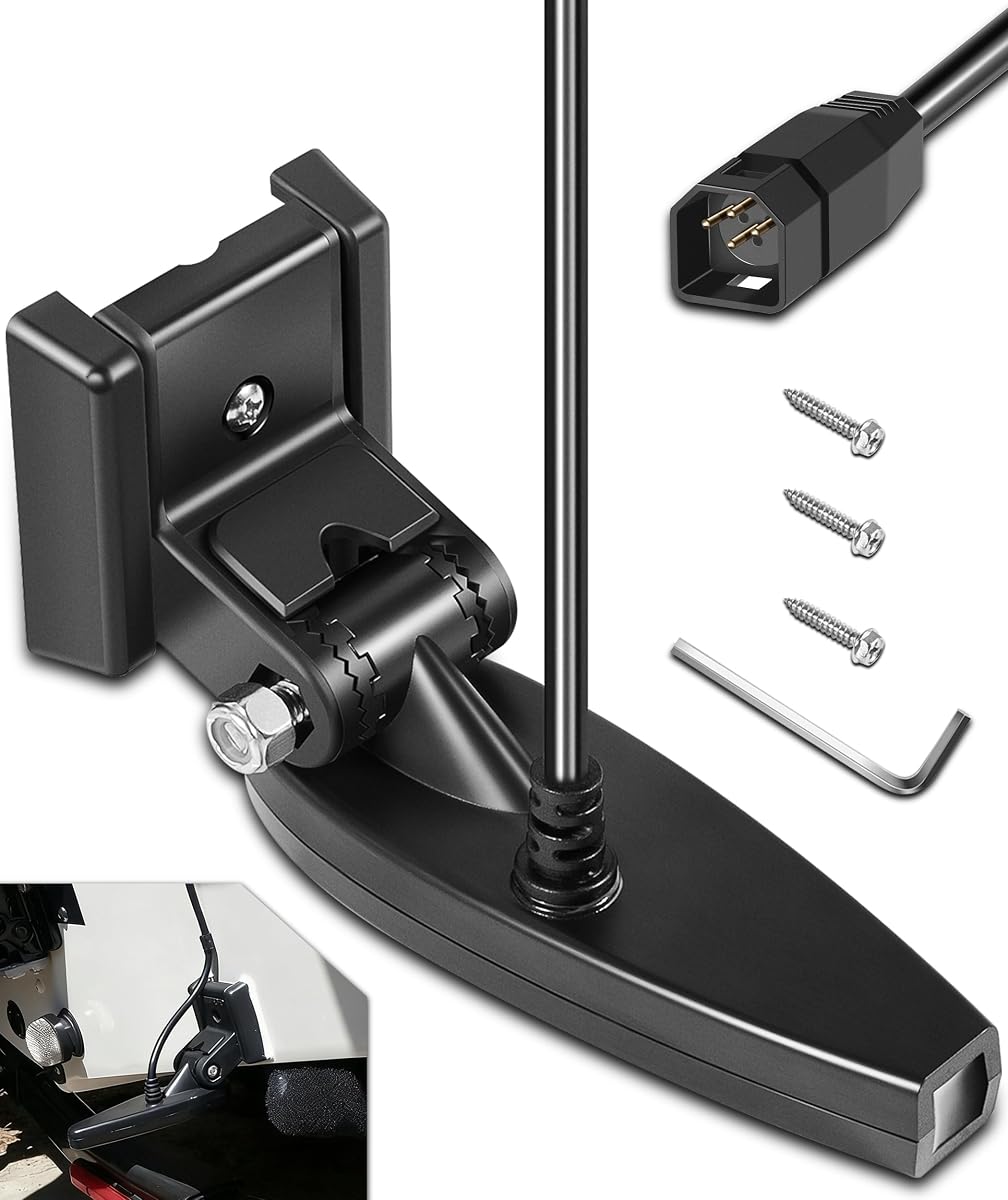

This transducer offers a perfect blend of high-resolution imaging and wide coverage. With a 5.0 rating, it stands out for its ability to reveal detailed underwater structures and fish-holding cover.
We may earn a commission when you buy through this link, at no additional cost to you.
The Compact MEGA Side Imaging+ technology delivers crystal-clear views using dual frequencies. The extensive 400-foot range allows you to scan large areas quickly, saving time when searching for prime spots.
While it comes at a higher cost, the superior image quality justifies the investment for serious anglers. The only limitation is ensuring your fish finder supports the specific G3 models listed for full functionality.
If you prioritize detailed structure recognition and wide scanning capabilities, this is the top choice. It transforms how you view the underwater world, making fishing more efficient and productive.
The dual frequency setup of 455 kHz and 1.1 MHz ensures that you see fine details of baitfish and vegetation.
The durable screw-on connector and secure mount ensure stable performance even in rough water conditions.
We may earn a commission when you buy through this link, at no additional cost to you.
Lowrance Active Imaging provides unmatched detail in structure recognition. It combines CHIRP sonar with SideScan and DownScan for a comprehensive view of the water column.
We may earn a commission when you buy through this link, at no additional cost to you.
The FishReveal Smart Target view helps distinguish fish from structure on high-detailed DownScan images. This feature alone saves time by allowing quicker identification of potential targets.
While it offers exceptional clarity, it is best suited for those with compatible HDS or Elite FS displays. The higher price point reflects the advanced technology and premium build quality.
Choose this transducer if you need top-tier target identification and structure definition. It is a powerful tool for anglers who want the most detailed data possible.
This exclusive view helps you easily recognize fish from structure and cover with exceptional clarity.
The refined detail helps you identify rockpiles, standing timber, and weedbeds at greater distances.
We may earn a commission when you buy through this link, at no additional cost to you.
This model offers a solid entry point into side and down imaging technology. It is highly rated for its reliability and straightforward compatibility with popular HELIX units.
We may earn a commission when you buy through this link, at no additional cost to you.
The imaging capabilities provide clear views of bottom contours and structures. While not as detailed as MEGA imaging, it offers excellent value for recreational anglers on a budget.
The transom mount design is simple to install, making it accessible for DIY setups. Just ensure your specific HELIX model supports the full capability of the unit for best results.
If you want to upgrade your sonar without breaking the bank, this is a strong contender. It delivers functional imaging that significantly improves your chances of finding fish.
It works with a wide range of HELIX models ensuring you can upgrade older units easily.
You get reliable imaging performance without the high cost associated with advanced units.
We may earn a commission when you buy through this link, at no additional cost to you.
This transducer combines MEGA Side Imaging with DualBeam PLUS sonar for a versatile fishing tool. It is designed to fit seamlessly into APEX and SOLIX ecosystems.
We may earn a commission when you buy through this link, at no additional cost to you.
The side imaging extends 125 feet out to each side, giving a good view of the surrounding area. The inclusion of a temperature sensor adds valuable data for monitoring water conditions.
While the range is not as extensive as the latest 400-foot models, it is still effective for many fishing scenarios. The ONIX compatibility has some frequency limitations that you should verify.
For users with older SOLIX models needing an upgrade, this is a reliable option. It balances performance and compatibility to help you find fish holding structures efficiently.
Two sonar beams combine to offer great detail and a generous coverage area for better target separation.
Includes a built-in temperature sensor and a 20-foot cable for straightforward setup.
We may earn a commission when you buy through this link, at no additional cost to you.
This bundle offers a complete solution with a 7-inch display and included MEGA Side Imaging transducer. It provides 3x more detail than standard imaging sonar for superior clarity.
We may earn a commission when you buy through this link, at no additional cost to you.
The enhanced GPS includes coverage of 10,000+ lakes and continental coastlines. Real-time mapping with AutoChart Live allows you to create depth maps while boating.
The keypad control is user-friendly and allows reliable operation in any weather. While it is a higher investment, the integrated navigation and imaging make it a complete package.
If you need a turnkey solution with advanced mapping, this is ideal. It simplifies your setup by providing both the finder and the transducer in one ready-to-use unit.
Equipped with Humminbird Basemap this chartplotter includes coverage of 10,000+ lakes.
AutoChart Live creates maps of depth contours bottom hardness, and vegetation while boating.
We may earn a commission when you buy through this link, at no additional cost to you.
This transducer is tailored for HELIX 7 models offering CHIRP Side and Down Imaging capabilities. It delivers a clear view of structure using 455 kHz frequencies.
We may earn a commission when you buy through this link, at no additional cost to you.
The Dual Spectrum CHIRP sonar ensures clean returns with a range of 150-220kHz. This helps in distinguishing fish and structure more accurately in various conditions.
It comes with a 20-foot cable and temperature sensor, making it ready for installation. Note that it is not compatible with newer MEGA models, so compatibility is key.
For HELIX 7 owners, this is a reliable upgrade path. It provides robust imaging performance without requiring a full unit replacement.
The 150-220kHz CHIRP range allows for flexible tuning to specific water depths.
Includes mounting hardware and a temperature sensor for a complete experience.
We may earn a commission when you buy through this link, at no additional cost to you.
This transducer provides SideScan and DownScan capabilities with a compact 6-foot cable. It is designed for users who need a reliable transom mount solution.
We may earn a commission when you buy through this link, at no additional cost to you.
The 9-Pin connector ensures stable data transfer for Elite Ti2 and HDS Carbon units. The refined detail helps in identifying weed beds and drop-offs effectively.
However, the shorter cable might limit mounting positions on larger boats. Also, you may need an adapter cable for certain setups, adding complexity to the installation.
If you have a small boat or limited mounting space, this is a practical choice. It offers solid imaging quality for its price point and size.
The high-level clarity helps you quickly identify fish-holding structure like rock piles.
Uses a standard 9-Pin connector but requires adapter cable for some compatible units.
We may earn a commission when you buy through this link, at no additional cost to you.
This kit is designed to support Side Scan and Down Scan transducers on your boat. It ensures your unit is mounted securely and optimally for best performance.
We may earn a commission when you buy through this link, at no additional cost to you.
The refined detail focus means it is designed to work with high-clarity models. It is compatible with Elite Ti and GO series displays for a complete setup.
Keep in mind this is a mounting kit, not the transducer itself. You will need to pair it with a compatible Active Imaging unit for full functionality.
For users upgrading their mounts, this is a secure option. It ensures stability which is crucial for maintaining consistent imaging data.
Supports Side Scan and Down Scan frequencies for flexible imaging options.
Designed for easy installation with standard transom mounts for quick setup.
We may earn a commission when you buy through this link, at no additional cost to you.
This transducer is a dedicated Down Imaging unit for a wide range of HELIX models. It uses 455/800 kHz frequencies to provide crisp high-resolution details.
We may earn a commission when you buy through this link, at no additional cost to you.
The DualBeam PLUS sonar combines two beams for great detail and a wide coverage area. It helps you distinguish fish from structure easily with clear scan images.
The impact-release installation bracket protects the unit during beaching or shallow water trips. However, it lacks side imaging, so it focuses purely on depth views.
If you prioritize depth clarity over wide area scanning, this is a great choice. It is reliable for targeting specific structures directly below the boat.
Includes impact-release installation bracket and required hardware for added protection.
This Dual Beam Transducer is specially designed to provide clear scan images and detection data.
We may earn a commission when you buy through this link, at no additional cost to you.
This is a cost-effective option for anglers needing reliable Down Imaging. It works with select HELIX Down Imaging models and legacy units.
We may earn a commission when you buy through this link, at no additional cost to you.
The fish-eye view gives you a clear perspective of what is directly below the boat. The built-in temperature sensor adds utility without extra cost.
Installation is straightforward with a 20-foot cable. While it does not offer side scanning, it performs well for its specific depth-focused purpose.
For those upgrading older units, this provides a modern imaging boost. It is a solid, no-fuss choice for focused fishing scenarios.
Works with select HELIX Down Imaging models PiranhaMAX models, and legacy models.
Includes a built-in temperature sensor and a 20-foot cable for easy setup.
We may earn a commission when you buy through this link, at no additional cost to you.
Choosing the right transducer involves evaluating several critical factors to ensure compatibility and performance.
Look for MEGA Side Imaging or Active Imaging depending on your brand. These technologies provide higher resolution than standard imaging.
Prioritize transducers that offer clear target separation and detail to identify fish-holding structures easily.
Dual frequencies like 455 kHz and 800 kHz allow you to switch between coverage and detail.
Ensure the transducer supports the frequencies your fish finder unit is designed to process.
Check that the transducer is explicitly compatible with your fish finder model. Incompatibility can render expensive features useless.
Match the brand of the transducer with your fish finder for optimal integration and software support.
Transom mount transducers are the most common and easiest to install. Ensure your boat hull allows for a clean mount.
Verify the cable length is sufficient to reach your fish finder unit without strain.
Side imaging ranges vary from 125 feet to 400 feet. Wider ranges help you cover more water quickly.
Choose a range that matches the size of the water bodies you typically fish.
Built-in temperature sensors and CHIRP sonar add value by providing water data and better target clarity.
Decide if you need advanced features like AutoChart Live or FishReveal based on your fishing style.
Look for durable housings and reliable connectors to withstand water pressure and impact.
Impact-release brackets can protect your transducer during shallow water launches.
Check the manufacturer warranty period. A one-year warranty is standard for most electronics.
Ensure the brand has good customer support in case you face installation or software issues.
Ensure the transducer is fully submerged in water before turning on your unit to prevent damage.
Adjust the sensitivity settings to minimize noise and maximize the clarity of your fish returns.
Regularly clean the face of the transducer to remove barnacles or dirt that might interfere with sonar signals.
Down imaging shows what is directly beneath the boat, providing a vertical view. Side imaging scans to the left and right, showing a wider area of the water column and structure.
Not always. If your current unit supports the new frequencies and software updates, you can upgrade just the transducer. Check compatibility first.
Most modern transducers can see depths of 400 feet or more. The actual depth depends on water conditions and settings.
Yes, MEGA imaging offers significantly higher resolution and detail. It helps in identifying specific structures and fish more clearly.
CHIRP sonar sends a continuous range of frequencies rather than a single pulse. This results in better target separation and detail.
Many models are rated for both fresh and saltwater. Always check the specific product specs for saltwater corrosion resistance.
Blurry images may be caused by improper mounting angle, boat speed, or water conditions. Adjust the tilt and slow down to improve clarity.
The Humminbird XM 14 HW CMSI T and Lowrance Active Imaging 3-in-1 stand out as top picks for their advanced features.
Prioritize compatibility and imaging resolution to ensure you get the most value from your investment.
Always check current listings for the best pricing and availability before purchasing.