
ASUS Dual GeForce RTX 3050 6GB GDDR6 OC Edition
4.6Editor score
NVIDIA Ampere Architecture
2nd Gen RT Cores
IP5X Dust Resistance
Discover the top VR ready graphics cards for immersive gaming. Compare specs, ratings, and performance to find the best GPU for your virtual reality setup.
Finding the right VR ready graphics card is essential for immersive virtual reality experiences. A capable GPU ensures smooth frame rates and high visual fidelity in demanding headsets.
We compared eight top rated models based on architecture, memory, and ray tracing capabilities. Our analysis highlights performance strengths to help you choose the perfect match for your system.
Each pick below showcases key specs and real user ratings to guide your decision. Remember that availability and pricing can shift quickly, so verify details before purchasing today.
4.6Editor score

4.7Editor score

4.5Editor score
This side by side table lets you quickly compare the core specifications of all eight featured graphics cards. Check memory, clock speeds, and key technologies to find the best fit for your needs.



The MSI Gaming GeForce GTX 1660 Super Ventus XS OC delivers robust performance for virtual reality without breaking the bank. With a high 4.7 user rating, it stands out as a dependable choice for entry level VR experiences.
We may earn a commission when you buy through this link, at no additional cost to you.
Its 6GB GDDR6 memory and 1815 MHz boost clock ensure smooth rendering in most modern VR apps. The dual fan cooling system keeps temperatures low during extended sessions, maintaining consistent frame rates essential for comfort.
While it lacks dedicated ray tracing cores found in newer RTX models, the Turing architecture still provides excellent rasterization performance. The trade-off is acceptable for users prioritizing value and reliable performance over cutting-edge lighting effects.
This card is ideal for gamers upgrading from older GPUs who want a seamless transition into virtual reality. Its balance of speed, efficiency, and cost makes it a top recommendation for budget conscious VR enthusiasts.
High boost clocks and GDDR6 memory ensure stutter free gameplay in headsets like Quest Link or Vive.
Dual fan design with optimized airflow keeps the card cool even during intensive gaming sessions.
We may earn a commission when you buy through this link, at no additional cost to you.
ASUS Dual GeForce RTX 3050 brings modern Ampere technology to budget friendly VR setups. Its 4.6 rating reflects solid performance and build quality. making it a premium choice for entry level users seeking future proofing.
We may earn a commission when you buy through this link, at no additional cost to you.
The 2nd generation RT Cores and Tensor Cores enable ray tracing and DLSS support. These features enhance visual fidelity and performance, allowing smoother VR experiences without requiring high end hardware.
Its compact 2 slot design maximizes compatibility with smaller cases while maintaining cooling efficiency. IP5X dust resistance adds durability. ensuring longevity even in less controlled environments like home offices.
Buyers seeking the latest features in a smaller footprint will appreciate this model. It offers a balanced blend of innovation and practicality for those stepping into VR with limited case space.
Ampere architecture provides improved power efficiency and throughput for better VR frame rates.
IP5X dust protection and stainless steel bracket protect the card against environmental factors.
We may earn a commission when you buy through this link, at no additional cost to you.
The XFX RX 580 GTS XXX Edition offers incredible value for budget builders entering VR. With a 4.5 rating and 8GB GDDR5, it handles VR titles surprisingly well despite its age and lower cost.
We may earn a commission when you buy through this link, at no additional cost to you.
AMD VR Ready Premium certification ensures compatibility with major headsets and low latency performance. The Polaris architecture delivers solid rasterization, making many VR games playable at acceptable settings without excessive expense.
It requires a 500 watt power supply which is higher than modern equivalents. However, the trade-off is worth it for users prioritizing raw memory capacity and initial cost savings over energy efficiency.
This card is perfect for those on a tight budget who still want a decent VR experience. Its large memory buffer helps in scenarios where VRAM becomes a bottleneck for texture loading.
One of the cheapest ways to get a capable VR GPU for basic to moderate experiences.
Optimized for stutter free virtual reality environments with leading headset compatibility.
We may earn a commission when you buy through this link, at no additional cost to you.
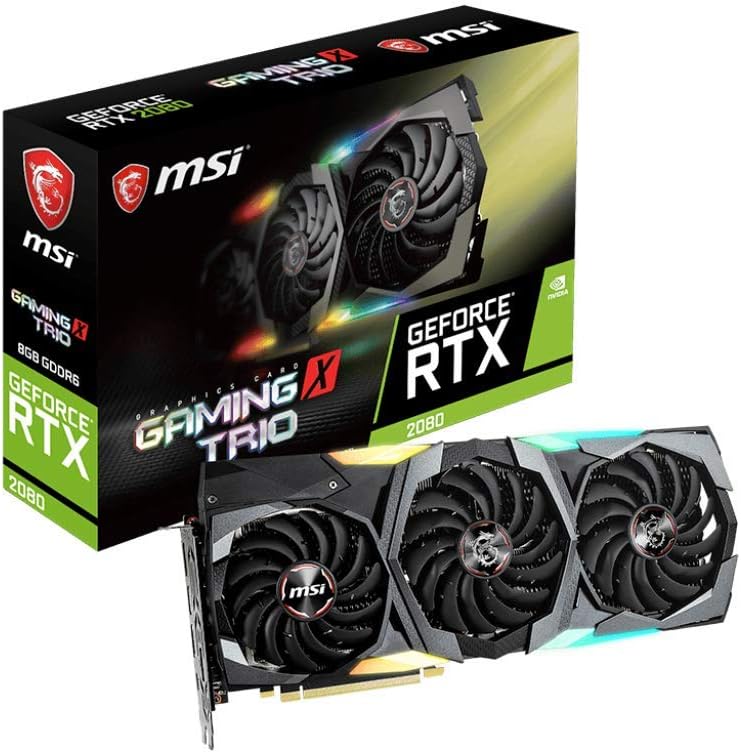
The MSI RTX 2080 Gaming X Trio Renewed offers powerful performance for VR enthusiasts looking for more capability. Its 4.4 rating suggests reliability and a renewed unit can provide great value compared to new models.
We may earn a commission when you buy through this link, at no additional cost to you.
With 8GB GDDR6 and RTX features, it handles demanding VR applications with ease. The 256-bit interface ensures sufficient bandwidth for high resolution rendering which is crucial for immersive virtual environments.
Buying renewed means you should check return policies carefully as these are pre-owned items. Still, the performance leap from entry cards makes it a compelling choice for those willing to take a slight risk.
This model suits users who need extra power for VR content creation or high fidelity gaming. It bridges the gap between budget options and high end cards with robust specifications.
256-bit interface supports heavy data throughput needed for complex VR scenes.
Certified pre-owned status often comes with warranty and significant savings.
We may earn a commission when you buy through this link, at no additional cost to you.
This MSI Gaming RTX 2080 delivers exceptional performance for VR and high resolution gaming. Its 4.3 rating reflects solid build quality and consistent performance for users needing more than basic specs.
We may earn a commission when you buy through this link, at no additional cost to you.
The 1860 MHz boost clock provides a noticeable speed advantage over lower tier cards. Combined with RTX ray tracing, it enables lifelike lighting effects in supported VR titles and applications.
Power requirements are higher with dual 8pin connectors needed. This ensures stable performance under load but means users must verify their power supply can handle the extra draw without issues.
Ideal for power users seeking high fidelity experiences, this card remains a strong contender. Its reliability and performance make it a smart pick for demanding VR workflows and gaming.
1860 MHz boost ensures fast processing for complex virtual reality renderings.
Dedicated RT cores enable realistic lighting and reflections in VR worlds.
We may earn a commission when you buy through this link, at no additional cost to you.
The GPVHOSO RTX 2060 Super brings RTX features and 8GB memory at a competitive price. Its 4.2 rating indicates decent performance for gamers wanting to try VR without overspending.
We may earn a commission when you buy through this link, at no additional cost to you.
Turing architecture enables real-time ray tracing and DLSS for better frame rates. This makes VR titles look better and run smoother, enhancing the overall immersion for the user.
While it supports up to three displays, connectivity options are standard. Users should verify driver support and cooling quality before purchasing as third-party models vary in build.
This card is a practical choice for mid-range builders. It balances cost and capability well, offering modern features like DLSS to extend the life of your VR setup.
AI rendering increases frame rates for smoother virtual reality experiences.
Optimized drivers and latency tuning for seamless virtual reality environments.
We may earn a commission when you buy through this link, at no additional cost to you.
This 51RISC RX 580 offers a budget friendly path into virtual reality with 8GB of memory. Its 4.0 rating suggests it meets expectations for entry level users on a strict budget.
We may earn a commission when you buy through this link, at no additional cost to you.
Polaris architecture delivers fluid artifact free performance for older VR titles. The 2048 stream processors ensure enough compute power for basic rendering needs without expensive upgrades.
It uses PCIe 3.0 and a 500 watt minimum power requirement. While older technology, it remains reliable for those building a first PC or upgrading a system with limited funds.
Buyers wanting the lowest cost entry point will find this card suitable. It covers fundamental VR needs well and can serve as a stepping stone to more powerful hardware later.
Lowest price point for a capable 8GB VRAM card ready for basic VR.
Easy installation with standard slots for hassle free setup.
We may earn a commission when you buy through this link, at no additional cost to you.
The MSI RTX 3050 Ventus 2X 6G OC brings efficient Ampere performance to small builds. Its 4.6 rating highlights strong reliability and performance for users needing a compact GPU.
We may earn a commission when you buy through this link, at no additional cost to you.
With HDMI 2.1a support and DLSS, it ensures compatibility with modern displays and VR headsets. The Ventus cooling maintains stable operation even during extended use sessions without excessive heat.
The 96-bit interface limits bandwidth compared to higher-end cards. This can impact performance in heavy VR scenes but remains acceptable for entry to mid-level gaming experiences.
It is ideal for gamers upgrading small form factor PCs who need VR capability. The balance of size, features, and brand trust makes it a smart choice for specific build constraints.
HDMI 2.1a output ensures compatibility with latest VR displays and standards.
Optimized fan design keeps noise and heat low for quiet operation.
We may earn a commission when you buy through this link, at no additional cost to you.
Selecting the right GPU requires balancing memory, architecture, and power needs for virtual reality.
VRAM determines how much texture data the card can hold. For modern VR, 8GB is preferred to avoid stuttering in complex environments. Lower VRAM like 6GB may limit performance in newer titles.
Aim for 8GB GDDR6 if possible for future proofing and smoother experiences.
Newer architectures like Ampere offer better efficiency and features like DLSS. These AI tools boost frame rates which is critical for VR comfort. Ray tracing also adds realism but demands more power.
Prioritize cards with DLSS support to maintain high refresh rates in headsets.
The memory interface width affects data bandwidth. Wider interfaces like 256-bit allow faster access to VRAM. Narrower buses like 96-bit can bottleneck performance in high resolution scenarios.
Check the interface width to ensure it matches your performance goals for VR.
VR ready cards vary in power draw. High end models may require 500 watts or more. Ensure your power supply has enough connectors and capacity to avoid instability.
Verify your PSU wattage before purchasing to guarantee stable operation.
Sustained VR sessions generate significant heat. Cards with dual or triple fan setups dissipate heat better. Good cooling prevents thermal throttling which can ruin immersion.
Look for cards with robust cooling to maintain performance during long sessions.
VR often connects via DisplayPort or HDMI. Ensure your card has enough ports for your headset and monitors. Newer HDMI 2.1a ports support higher refresh rates.
Confirm the correct output types match your headset requirements before buying.
Major brands like MSI, ASUS, and XFX usually offer better build quality and support. Third party models may vary. Warranty and driver support are key for long term use.
Choose established brands for better peace of mind and customer service.
Higher budget allows for better performance and longevity. However, entry cards can suffice for basic VR. Decide how much you plan to use VR before spending.
Balance your budget with the level of immersion you need in your setup.
Install the graphics card securely in the PCIe slot and connect all power cables. Install the latest drivers from the manufacturer to ensure VR compatibility.
Clean the card regularly using compressed air to remove dust from fans. This prevents overheating and extends the lifespan of the hardware.
Monitor temperatures using software tools during VR sessions. Adjust fan curves if needed to maintain low heat levels for consistent performance.
A VR ready card has enough performance and memory to meet headset standards like those from SteamVR. It must support high frame rates and low latency rendering to prevent motion sickness.
While 6GB works for many current titles, 8GB is recommended for future proofing. VR games demand large textures, and running out of memory causes stuttering.
Ensure your power supply has enough wattage and the correct PCIe power connectors. Most VR cards require at least 500 watts for stable operation.
Download the latest drivers from the manufacturer website like NVIDIA or AMD. After installation, restart your PC to ensure the drivers are correctly loaded.
Laptops with dedicated VR ready GPUs can support VR. However, thermal throttling may be an issue. Check that the laptop has the required ports and power.
Ray tracing adds realism but is not required for basic VR. DLSS often helps more with performance in VR. Focus on high frame rates for comfort instead.
We have explored eight top rated graphics cards that deliver solid performance for virtual reality. Each option offers unique strengths whether you need budget entry or premium features.
Prioritize VRAM and architecture when choosing to ensure smooth long term performance. Look for cards with DLSS and adequate cooling to maintain comfort during play.
Check current availability and pricing before purchasing as these can change frequently. Select the model that fits your system and budget for the best VR experience.