
HiLetgo ADS1256 5V 8 Channel 24 Bit ADC Data Acquisition Board Module High Precision AD Collecting Data Acquisition Card
4.6Editor score
24-bit high resolution
Eight input channels
SPI communication protocol
Explore the top 10 Arduino ADC boards for 2026. Compare 16-bit precision, I2C vs SPI, and real user ratings to find your perfect match.
Analog to digital converters are essential for reading sensors with microcontrollers. They turn voltage signals into numbers your Arduino can process for projects.
We compared ten top rated boards based on resolution, channel count, and interface type. Our list includes verified user feedback and detailed technical specs.
Each pick shows key strengths and ideal use cases for makers. Prices change frequently so check current listings before buying your next development board.
4.6Editor score

4.7Editor score

5.0Editor score
This side-by-side table compares all ten selected boards. Look at resolution, channels, and interface to find the right fit for your sensor needs.


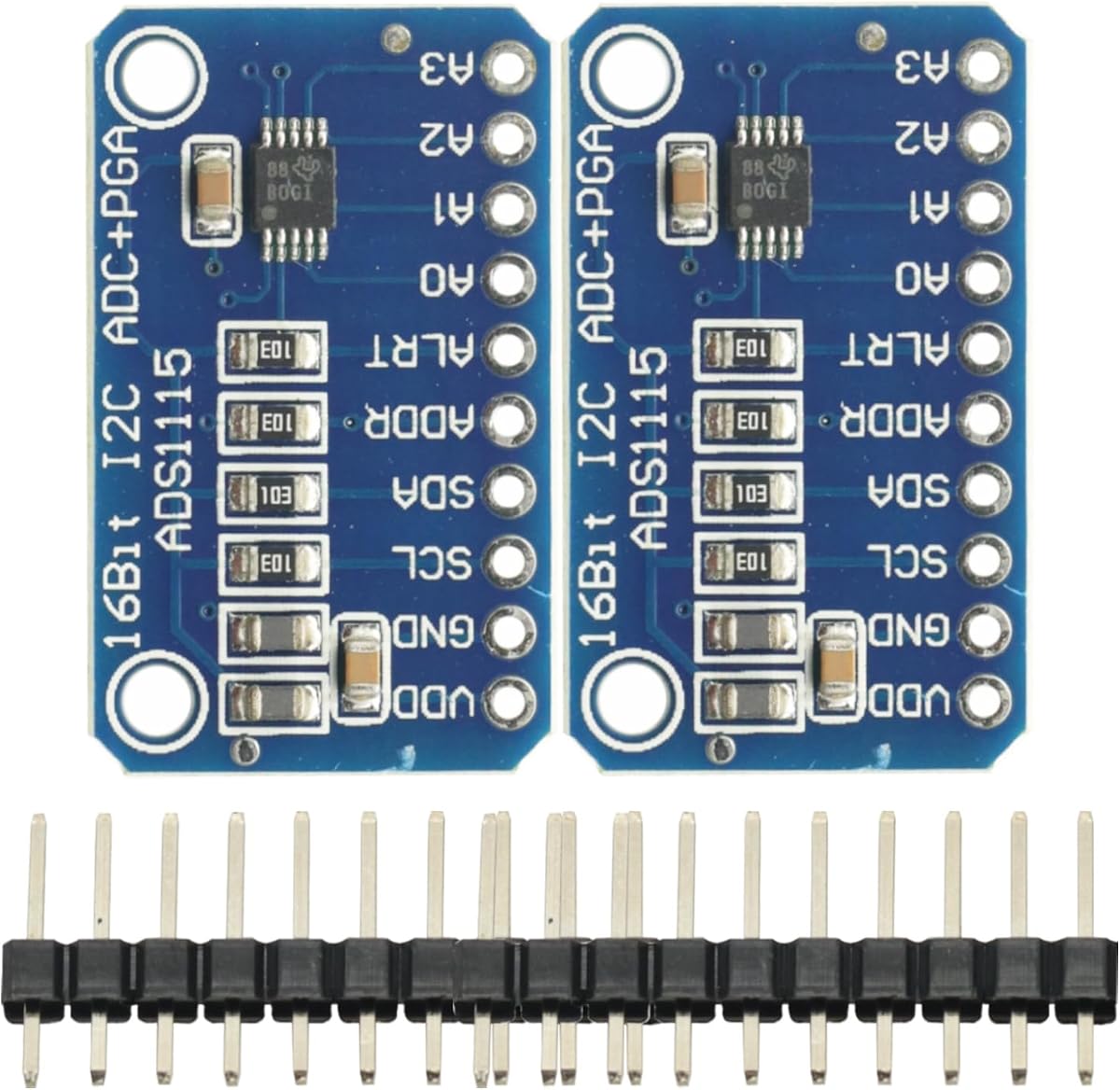


This ADS1115 module offers reliable 16-bit conversion with four channels. It is rated highly for accuracy and ease of use.
We may earn a commission when you buy through this link, at no additional cost to you.
The programmable gain amplifier helps measure small signals. You can adjust ranges from ±0.256V to ±6.144V for better sensitivity.
Trade-offs include limited data rate and no SPI support. These are acceptable for most slow sensor projects.
Ideal for hobbyists needing multiple ADCs. Get this pack for scalable projects with consistent quality.
High resolution ensures accurate voltage measurements for delicate sensors like thermocouples.
I2C wiring keeps connections simple and reduces pin usage on your board.
We may earn a commission when you buy through this link, at no additional cost to you.
The ADS1256 brings 24-bit precision for high accuracy needs. It supports eight channels for complex setups.
We may earn a commission when you buy through this link, at no additional cost to you.
SPI communication allows faster sampling than I2C. The onboard reference improves stability during readings.
Complexity increases with more pins and setup steps. This is fine for advanced users.
Perfect for lab-grade projects. Choose this if precision is your top priority.
24-bit depth captures minute voltage changes often missed by standard ADCs.
Eight inputs allow monitoring many sensors without adding extra modules.
We may earn a commission when you buy through this link, at no additional cost to you.
This two-pack delivers full ADS1115 features at minimal cost. It holds a perfect rating from buyers.
We may earn a commission when you buy through this link, at no additional cost to you.
All key specs match pricier options including gain and ranges. The value is hard to beat.
Headers may need soldering before use. This small effort saves money.
Great for classrooms or bulk use. Start your project with these reliable boards.
Two boards let you build redundant or multi-node systems affordably.
Seven voltage ranges cover both tiny and larger sensor signals.
We may earn a commission when you buy through this link, at no additional cost to you.
This three-pack offers solid specs for the price. It includes gain and comparator features.
We may earn a commission when you buy through this link, at no additional cost to you.
Multiple units help expand channel capacity across multiple devices. Setup remains straightforward.
Quality varies slightly with user rating. Still useful for many projects.
Use for spare units or larger builds. Good backup option for makers.
Three boards support distributing sensors across different locations easily.
Built-in comparator helps trigger alerts without extra code.
We may earn a commission when you buy through this link, at no additional cost to you.
This four-pack provides excellent scale for large sensor arrays. Specs match standard ADS1115 modules.
We may earn a commission when you buy through this link, at no additional cost to you.
Differential inputs improve noise rejection in harsh environments. Auto shut down saves power.
Build is basic but functional. Solder headers first for reliability.
Best for mass deployments or teaching. You get many units cheaply.
Differential mode filters noise for cleaner readings from long wires.
Auto shut down reduces current draw when idle.
We may earn a commission when you buy through this link, at no additional cost to you.
Another highly rated two-pack with full ADS1115 specs. It offers flexibility and reliability.
We may earn a commission when you buy through this link, at no additional cost to you.
Programmable gain helps adapt to different signal levels. Ranges cover most needs.
Simple design keeps costs down. Ensure headers are secure.
Suitable for home automation. Use one per sensor node.
Gain lets you fine-tune sensitivity for specific sensors.
Wide supply range works with 3.3V or 5V systems.
We may earn a commission when you buy through this link, at no additional cost to you.
This pack features quality ENIG plating for durability. It supports 3.3V logic well.
We may earn a commission when you buy through this link, at no additional cost to you.
Good library support for C++ and Python. Designed for ESP32 users.
Headers may require soldering. This ensures better contact.
Pick for ESP32 projects. The finish helps solder joints last.
Gold plating resists oxidation and makes soldering easier.
Logic levels match 3.3V boards without extra shifters.
We may earn a commission when you buy through this link, at no additional cost to you.
Unique for simultaneous 8-channel sampling at high rates. Uses SPI for speed.
We may earn a commission when you buy through this link, at no additional cost to you.
Sync feature captures multi-channel data at exact times. Good for audio or vibration.
Rating suggests setup challenges. Documentation may be thin.
Use for specialized audio or motor monitoring. Not for simple tasks.
All channels sample at once to avoid timing errors.
200kHz allows capturing faster changing signals.
We may earn a commission when you buy through this link, at no additional cost to you.
This four-pack has high ratings for stability. All units perform consistently.
We may earn a commission when you buy through this link, at no additional cost to you.
Simple wiring keeps project build easy. Four channels cover most sensors.
Headers likely need soldering. Prepare tools beforehand.
Ideal for workshops needing spares. Use for sensor networks.
Multiple units work alike for uniform data collection.
Low noise design ensures reliable sensor values.
We may earn a commission when you buy through this link, at no additional cost to you.
A single standard board with good features. It works well for small projects.
We may earn a commission when you buy through this link, at no additional cost to you.
Comparator mode allows simple triggers. Full gain control is included.
Only one unit limits expansion. Good for initial testing.
Get for prototyping. Add more boards as needed.
Comparator outputs digital signals when thresholds are met.
Easy to try basic ADC functions without bulk.
We may earn a commission when you buy through this link, at no additional cost to you.
Choosing the right ADC requires knowing resolution, channels, and interface needs.
Resolution determines how precisely voltage is converted to digital. 16-bit is standard for many sensors. 24-bit offers higher precision for tiny signals.
Select higher resolution if you need extreme accuracy in measurements.
Count how many analog sensors you need at once. Most boards have 4 channels. Some offer 8 for complex setups.
Ensure the board covers all inputs you plan to use simultaneously.
I2C uses fewer pins and is easier to wire. SPI is faster but uses more pins. Match your microcontroller options.
Choose I2C for simplicity or SPI for speed needs.
Programmable Gain Amplifiers let you adjust voltage ranges. This helps measure very small voltages. Some boards include this feature.
Look for PGA if you use low-voltage sensors.
Ensure the ADC supports your board voltage. Many work from 3.3V to 5V. Avoid mismatches to prevent damage.
Check supply range matches your Arduino or ESP32 voltage.
Quality affects reliability. Better boards have clean traces and clear labels. Some offer gold plating for durability.
Opt for better finishes if soldering repeatedly.
Libraries simplify coding. Look for C++ or Python options. Community support helps debug issues.
Prefer boards with active library communities.
Buying packs reduces cost per unit. This helps for multi-node projects. Consider single units for initial tests.
Packs are better for large scale deployment.
Connect VCC and GND to your microcontroller power. Use logic levels matching your board.
Wire SDA and SCL pins for I2C. Add pull-up resistors if needed for stable signals.
Keep boards away from heat and moisture. Store in static-safe bags when not using.
Arduino lacks analog inputs. An ADC board converts analog signals to digital. This lets your project read sensors like temperature or light. It bridges voltage values to code.
Yes, 16-bit resolution is sufficient for most sensor tasks. It captures fine voltage changes accurately. Use 24-bit only for ultra-fine needs.
Most work with ESP32. Ensure voltage levels match. Some boards include logic tolerance. Check specs for compatibility.
Some models like ADS1115 support differential inputs. This helps reduce noise. Others offer single-ended only.
Use the Arduino Library Manager. Search for ADS1115 and install. Many popular libraries are available. Follow examples to start.
Yes, I2C boards can share the bus. Use different addresses. This allows expanding channels. Limit is usually four per bus.
This guide reviewed ten top ADC boards. Each offers unique features for makers. Pick based on your channel needs.
Prioritize resolution and gain if precision matters. Simpler boards suit basic projects.
Prices change often. Verify current listings and specs before buying.